
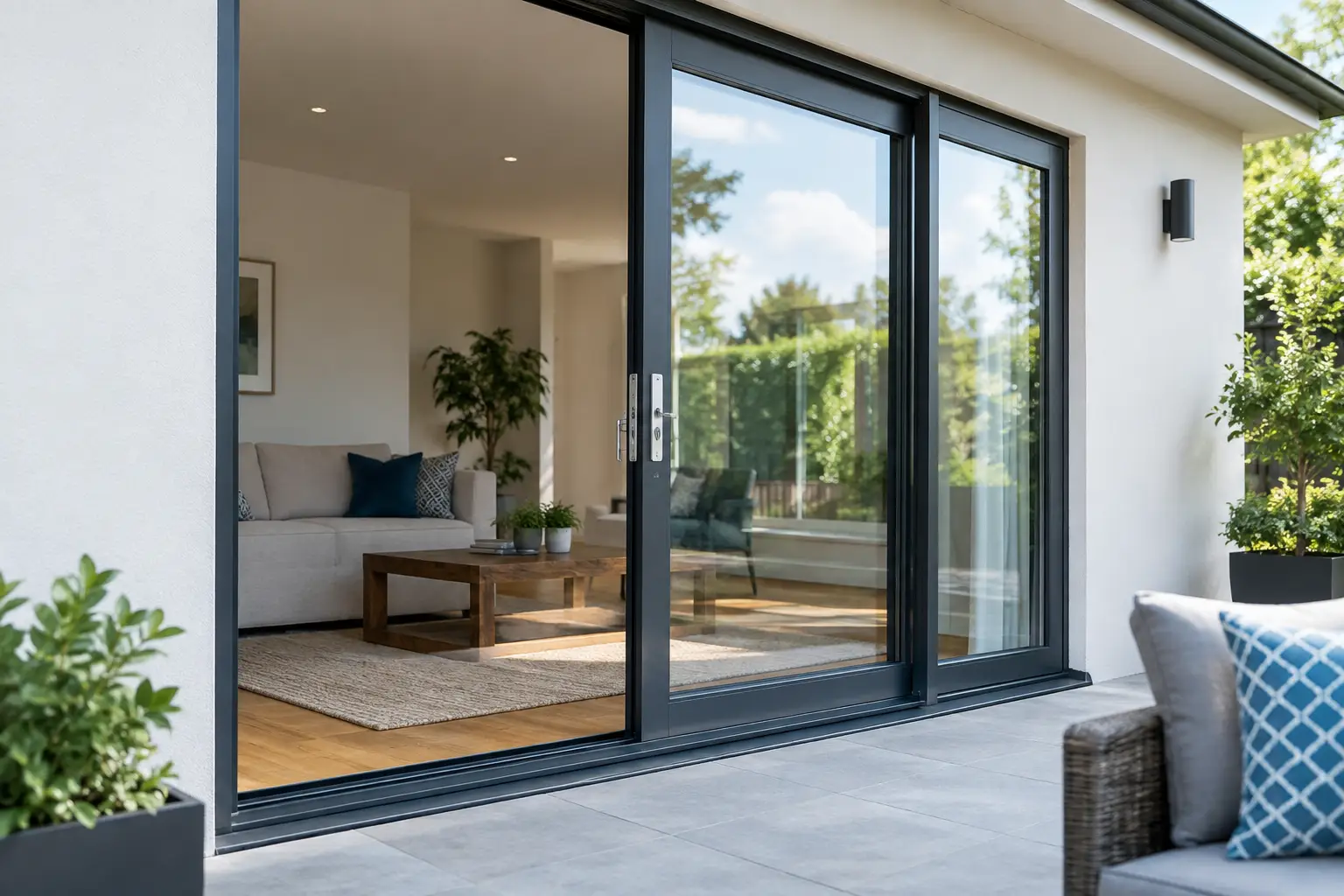
A patio door should make a rear extension feel open, not leave you wondering whether the largest opening in the house is adequately protected. Secure aluminium patio doors pair the strength and precision of an aluminium frame with properly specified locks, safety glass and professional installation. The result is a bright, modern connection to the garden that does not compromise everyday peace of mind.
For homeowners, self-builders and trade buyers, the key point is simple: security is not one feature on a brochure. It is the performance of the complete door set. The frame, sash, locking points, glazing, track, threshold and fixing method all need to work together.
What makes aluminium patio doors secure?
Aluminium is an excellent starting material for large glazed doors. It is strong, stable and well suited to slim profiles, allowing substantial glass panels without the bulky sections often associated with older patio doors. However, frame material alone does not make a door secure. A well-engineered system must be manufactured accurately, fitted with approved components and installed square within a sound opening.
Quality aluminium sliding and bifold systems use multi-point locking rather than relying on a single latch. Depending on the design, this may include hook bolts, shootbolts, locking points along the meeting stile and secure keeps fixed into the frame. These components make it much harder to force the sash away from the frame when the door is locked.
Sliding doors also need effective anti-lift protection. Because the panels run on a track, a secure system is designed to prevent a closed sash from being lifted out of its channel. On larger doors, the quality of the rollers and track matters too. Panels should move smoothly and close positively without needing to be slammed or forced into position.
Start with the right door configuration
The best configuration depends on how you use the opening. A bifold can open almost the full width of a wall and is ideal where you want the house and patio to function as one space in warm weather. A sliding door generally leaves more of the aperture glazed when closed, with fewer vertical frame lines and a more panoramic view.
Neither option is automatically more secure. A correctly specified Schuco ASFD75 Bifold Door, for example, can offer substantial opening flexibility alongside multi-point locking, while a Schuco ASE80 Sliding Door can provide a highly engineered solution for broad glazed openings. The right choice comes down to panel size, threshold detail, layout and the security specification available for that exact configuration.
Be especially careful with very wide or unusually tall designs. Larger panels place greater demands on the frame, rollers, hinges and installation. This does not mean they are unsuitable, but it does mean the chosen system needs to be within its tested size limits. Asking a supplier to confirm maximum sash sizes and glass weights is a sensible part of comparing quotations.
Bifold security depends on every panel
With a bifolding door, the lead door is normally the everyday access door and deserves close attention. It should have a reliable handle, cylinder and locking arrangement, while the folding panels must lock securely into the frame when stacked closed. The hinges and intermediate panel connections should be system-approved components, not substituted hardware that changes the tested performance of the set.
A traffic door is convenient for taking the bins out or letting the dog into the garden without opening the full arrangement. It can also reduce wear on the folding mechanism, provided it is properly locked each time the house is secured.
Sliding door security centres on the meeting point
For a slider, the meeting stile is a critical detail. This is where two moving panels meet, or where the opening sash closes against a fixed panel. Look for a positive locking arrangement, strong interlock sections and anti-lift measures designed for the selected system.
A system such as Cortizo COR Vision Plus is often chosen for its slim, architectural appearance. The specification still needs to account for the practical details behind that clean sightline: correct glass build-up, compatible locks, secure fixed-panel restraint and a professionally formed threshold.
Specify glazing as a security component
Glass occupies most of a patio door, so it must be part of the security discussion. Toughened safety glass is commonly used in doors because it breaks into small, comparatively blunt fragments if damaged. Laminated glass uses an interlayer that holds the panes together after impact, making it more difficult to create and maintain an opening.
The best choice depends on the location and required performance. Laminated glass can be particularly worth considering for accessible ground-floor doors, side returns or properties with a less overlooked garden. It may add cost and weight, which can affect panel size limits and hardware selection. That is why it should be chosen as part of the door design, not added at the end of the process.
Double glazing is often sufficient for many projects, while triple glazing can improve thermal performance in suitable systems. Triple-glazed units are heavier, however, and this may reduce the maximum permitted sash width or height. A good quotation will explain the glazing option rather than simply presenting triple glazing as an automatic upgrade.
Look beyond a lockable handle
A lockable handle is useful, but it is only one layer of protection. The locking cylinder should be suited to the door system and installed to the correct projection, so it does not stand unnecessarily proud of the handle backplate. Hardware finish matters visually, but compatibility and durability matter more.
When comparing secure aluminium patio doors, ask whether the exact door design has been tested to an appropriate security standard, such as PAS 24 where applicable. Testing relates to a particular combination of profile, hardware, glazing and configuration. A door can use a recognised aluminium profile but still differ in performance if the lock, glass or panel layout changes.
For projects with planning, insurer or development requirements, establish the required standard before ordering. Retrofitting a different locking arrangement after manufacture can be difficult and may not deliver the expected certification.
Installation is part of the security specification
An excellent patio door can underperform if it is poorly fitted. The opening must be measured accurately, the structure checked for adequate support and the frame fixed at the correct points. Packers, fixings and perimeter sealing all have a role in keeping the door aligned and resistant to movement.
Poor alignment can cause more than draughts. It may prevent hooks or bolts from engaging fully, make a sliding sash difficult to close or leave inconsistent gaps around the frame. These faults are often mistaken for hardware problems when the underlying issue is installation.
Threshold design also needs careful consideration. A low threshold creates a clean transition to the patio and can assist accessibility, but it must be detailed correctly for weather performance and drainage. In exposed locations, a fully recessed threshold without adequate drainage can create avoidable water-management issues. Security, thermal efficiency and weather protection should be reviewed together rather than treated as separate choices.
A practical checklist before you order
Before approving a patio door, make sure the quotation clearly identifies the following:
- the aluminium system, opening configuration and panel sizes
- the locking arrangement, cylinder type and anti-lift protection where relevant
- the glass specification, including whether toughened or laminated panes are used
- the security testing or certification available for the specified design
- the threshold, drainage and weathering detail
- whether supply, survey and installation are included, and who is responsible for each stage
This level of detail makes quotations easier to compare fairly. A lower initial price may reflect a simpler glass unit, fewer locking points, a different threshold or supply-only pricing rather than an equivalent finished installation.
Security without sacrificing the view
The appeal of aluminium is that it can deliver both strength and refined proportions. Thermal-break aluminium profiles combined with energy-efficient glazing help create doors that are not only secure but also suitable for year-round living. You should not have to choose between a slim frame, a warm room and a properly protected garden entrance.
At Bifolding Door Factory, the most successful projects begin with the actual opening and the way the household will use it, rather than a one-size-fits-all door choice. Whether you need an expansive bifold for an extension or a large-format slider for uninterrupted views, specify the security package at the same time as the colour, glazing and layout. That is the point at which a patio door becomes a considered part of the building, not just a striking piece of glass.