
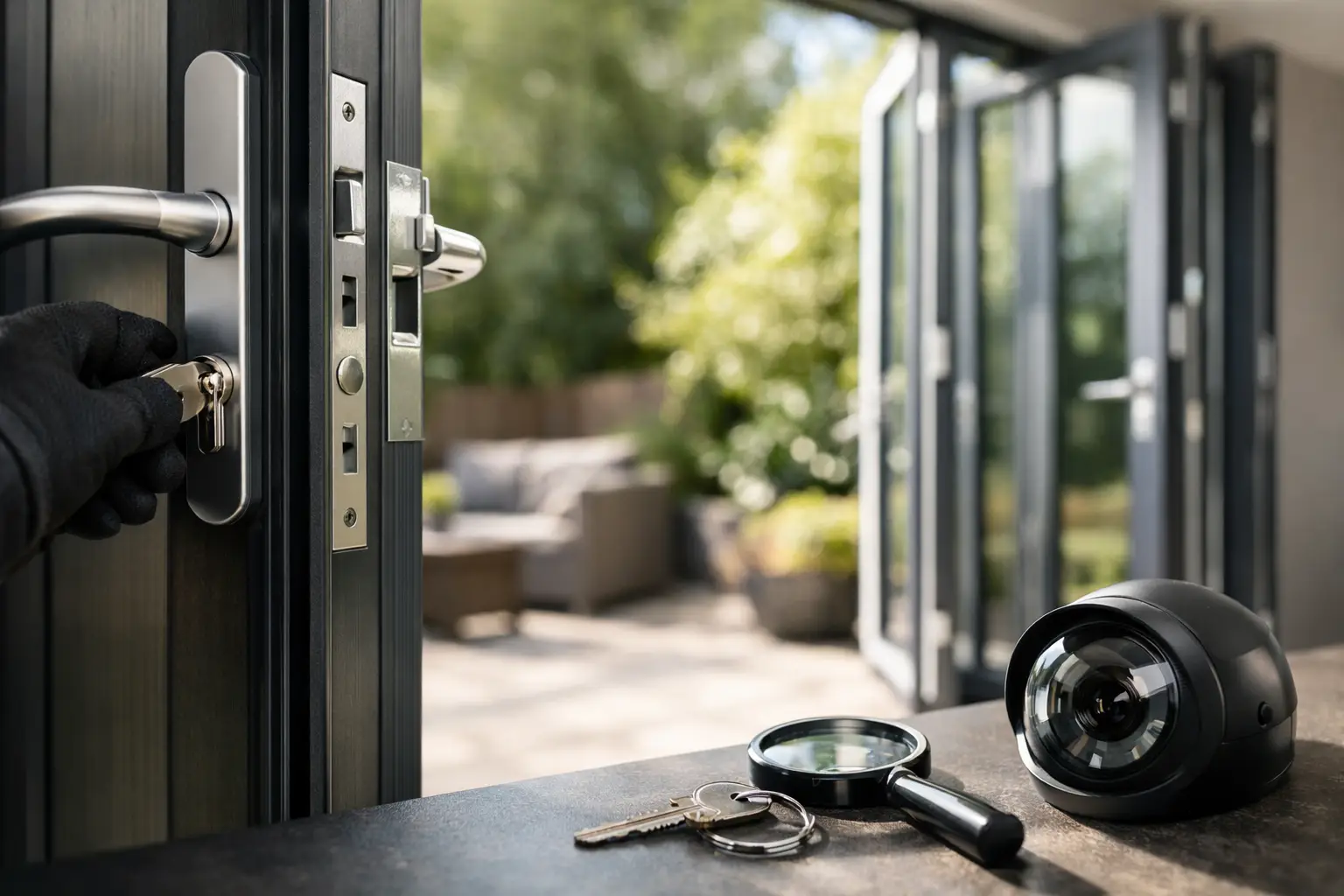
If you are planning a rear extension or replacing old patio doors, security is usually the moment where the glossy brochure stops mattering and the practical questions start. Are bifold doors secure enough for a family home? In a well-made, properly specified aluminium system, yes – but security depends on far more than the number of panels or how slim the sightlines look.
That matters because bifolds sit in a vulnerable part of the house. They often open onto a garden, a side return or a less visible elevation, and they include a lot of glass. Buyers rightly want reassurance that the doors are not just attractive and thermally efficient, but also difficult to force, lift or tamper with.
Are bifold doors secure compared with other patio doors?
Bifold doors can be very secure, but they are only as good as the system design, the hardware specification and the installation quality. A cheap, lightly built door with basic gearing and poor alignment is not comparable to a tested aluminium system from an established manufacturer.
This is where the comparison with sliding doors often gets oversimplified. Some people assume a sliding door is automatically safer because it has fewer moving parts. Others assume a bifold is safer because it has multiple locking points across the opening. The truth is that either style can perform well when the frame, rollers, locks, glazing and fitting are right.
With a quality bifold such as Cortizo Bifold Plus, Schuco ASFD75 Bifold doors, ASFD90.Hi Bifold Doors or Origin OB36 Bifold Doors, security is built into the system rather than added as an afterthought. Multi-point locking, internally beaded glazing, strong aluminium profiles and tested hardware all contribute to overall resistance.
What actually makes bifold doors secure?
Security is not one feature. It is a package of details working together.
The first is the frame and sash construction. Aluminium is naturally strong, and a properly engineered thermally broken aluminium profile gives you good structural integrity without bulky sections. That matters because forced entry attempts often target weak points in corners, meeting stiles or hardware fixings, not the centre of the glass.
The second is the locking arrangement. Most premium bifolds use multi-point locks on the main traffic door, with shoot bolts or locking rods securing the intermediate panels into the head and threshold. When the doors are closed, the panels interlock, creating a chain of connected sections rather than separate weak leaves. On a good system, the lead door, floating mullions and panel junctions are all designed to resist levering.
The third is the glazing. Toughened safety glass is standard in many applications, but security can be improved further with laminated glass, particularly on accessible elevations. Laminated units hold together when struck, which slows entry and creates more noise and time pressure for an intruder. For many projects, this is one of the most worthwhile upgrades.
The fourth is how the door is fitted. Even an excellent system can be compromised by poor packers, out-of-square openings, badly fixed frames or incorrect roller adjustment. Misalignment affects more than smooth operation. It can reduce compression on seals, weaken lock engagement and create opportunities for prying.
Are all bifold doors equally secure?
No, and this is where buyers need to be careful.
Two aluminium bifolds can look similar online and be very different in practice. One may use approved, tested hardware and profile combinations from a recognised system house. Another may be assembled to hit a headline price, with downgraded cylinders, generic handles or glass specifications that do not match the rest of the build quality.
Security claims should always be looked at in context. Ask whether the door has been tested to recognised standards, whether the lock cylinder is anti-snap and anti-drill where relevant, and whether the hardware is specified as part of the system rather than swapped in later.
For homeowners and trade buyers alike, this is where established products earn their place. Systems such as Smarts Visofold 1000 Bifold Doors, Smarts Visofold 6000, Origin OB49 Bifold Doors and Schuco bifold ranges are chosen not just for appearance, but because the profile, hardware and manufacturing route are known quantities.
The weak points to pay attention to
If you want a realistic answer to are bifold doors secure, it helps to understand where problems usually come from.
The traffic door is the main one to inspect because it is the primary access leaf and carries the principal lock. Check what type of multi-point lock is fitted, how many engagement points it uses and whether the handle and cylinder are suited to an exposed external door rather than an internal partition-style setup.
Panel alignment is another issue. Bifolds rely on precise tolerances. If the doors are badly adjusted, lock points may not throw fully into keeps, and compression between meeting stiles can be inconsistent. That can affect both weather performance and security.
Threshold choice also matters. A low threshold can look cleaner and improve accessibility, but the system needs to be designed so that reduced step-over height does not mean reduced rigidity or poor weathering in exposed conditions. This is a specification question, not a reason to avoid bifolds.
Glass specification is often overlooked. Standard double glazing may be perfectly suitable, but on ground-floor openings, laminated security glass is worth discussing. It adds cost, but it is a practical upgrade for vulnerable locations.
How security testing helps
Testing matters because it tells you the door has been assessed as a complete product, not just described as secure in marketing language.
In the UK, buyers will often look for compliance linked to recognised security standards and compatible hardware. That does not mean every secure door will be identical, but it does mean there should be evidence behind the claim. The most dependable route is a system manufactured to approved specifications and installed as intended.
This is especially important on larger openings. Wide apertures, corner openings and flush thresholds all place more demand on the frame, rollers and hardware. A tested premium system gives more confidence that the door has been engineered for those conditions rather than stretched beyond its comfort zone.
Bifold doors and everyday security habits
Even a high-spec door still relies on normal day-to-day use.
Many security issues come from doors not being fully locked. With bifolds, homeowners sometimes pull the panels shut and assume that is enough. It is not. The locking handle needs to be operated fully so the multi-point mechanism engages. If the traffic door is left on latch only, you are not getting the protection the system was designed to deliver.
Keys, handles and restrictors also need sensible management. If side windows, rooflights or nearby doors create easy reach-in access, that should be considered as part of the whole opening design. Security is not just about the bifold in isolation. It is about the room layout, external access and sightlines too.
Are bifold doors secure for family homes?
For most family homes, yes – provided you buy the right system and do not treat installation as a secondary detail.
Aluminium bifolds from reputable manufacturers are commonly specified in extensions, renovations and self-build projects because they can combine slim aesthetics, strong thermal performance and credible security. The presence of more glass does not automatically make them unsafe. Modern glazing and frame design are far more advanced than older patio door products people may still have in mind.
The better question is not simply whether bifolds are secure, but whether the exact bifold you are being quoted is secure. Ask what system it is, what locking hardware is included, what glass is specified, whether the frame is internally beaded, and who is carrying out the installation. Those answers tell you much more than a generic yes or no.
What to check before you buy
If you are comparing quotes, focus on the details that directly affect performance. Confirm the manufacturer and system name, check the locking and cylinder specification, ask whether laminated glass is available, and make sure the installer is working with the approved components for that door rather than mixing parts to reduce cost.
It is also sensible to ask how the door will be configured. The number of panels, the position of the traffic door, the threshold type and the overall width can all influence usability and security. A well-designed three-panel bifold and a poorly planned five-panel bifold are not equal just because both are aluminium.
At Bifolding Door Factory, that product-by-product approach matters because buyers are often balancing style, budget, thermal performance and security at the same time. The right answer is rarely the cheapest option or the most expensive one. It is the system that has been properly specified for the opening, the exposure and the way you will actually use it.
If you are still weighing up the options, treat security as part of the full buying decision rather than a late-stage tick box. A bifold door should look good and open beautifully, but the best systems also give you the quiet confidence that once locked, they are doing exactly the job they should.