
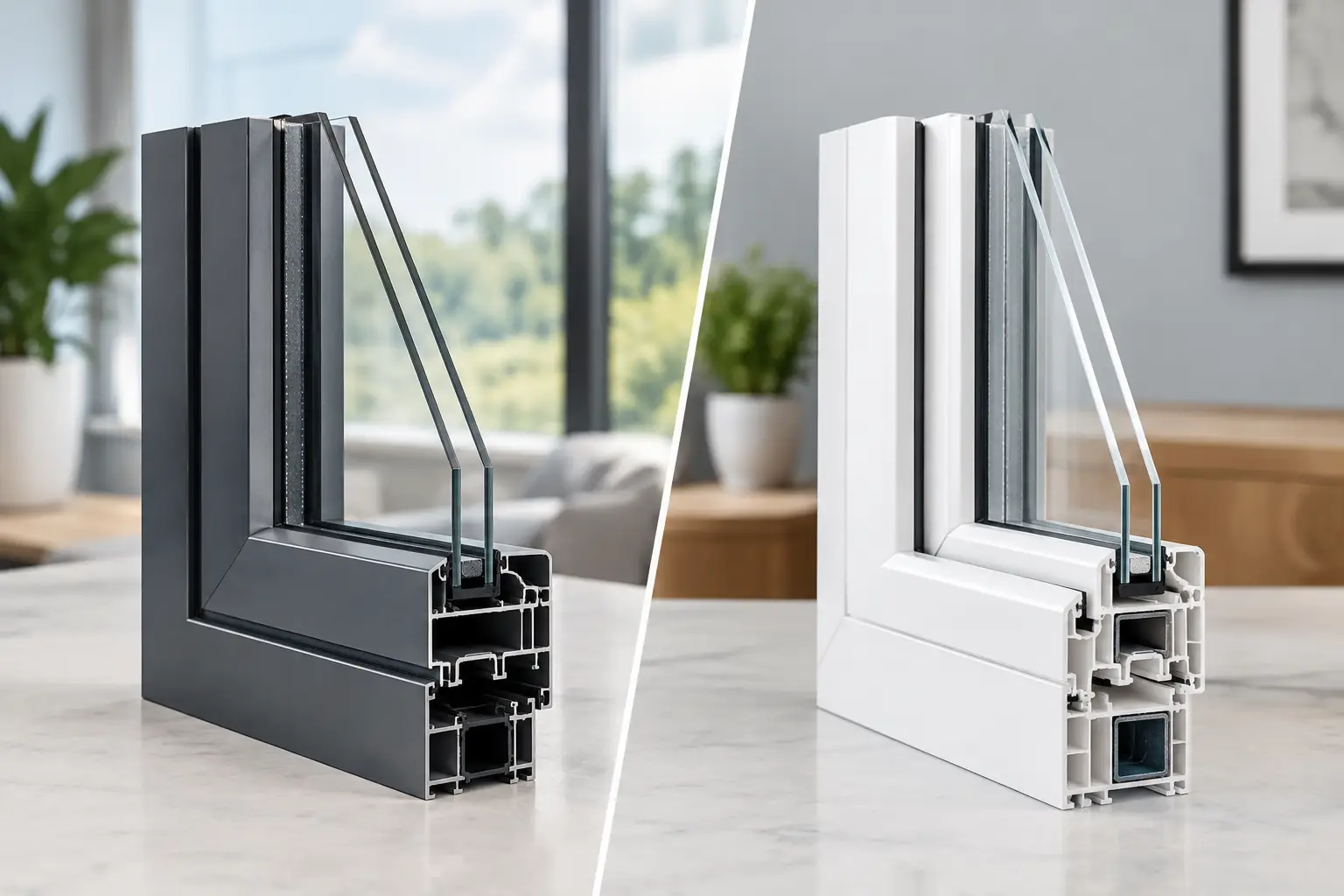
A rear extension with wide glazed doors can quickly make older uPVC windows look heavy, while a whole-house replacement project may make aluminium appear needlessly expensive. The aluminium vs uPVC windows decision is not simply about modern looks or the lowest initial price. It affects sightlines, glass area, energy performance, maintenance and how well every opening works with the rest of the property.
For most UK projects, both materials can provide secure, double- or triple-glazed windows that meet current expectations for comfort and weather resistance. The better choice depends on the size of the opening, the architectural style, your budget and whether the windows need to sit alongside aluminium bifolds, sliding doors or roof glazing.
Aluminium vs uPVC Windows: the key difference
uPVC is an insulated plastic profile with internal chambers designed to slow heat transfer. It has been the familiar choice for replacement windows for decades because it offers good thermal performance at an accessible price. Modern uPVC can look far better than earlier generations, particularly in flush casement styles, and it remains a sensible option for many standard-sized windows.
Aluminium is a strong, lightweight metal. In a quality modern window, the inner and outer faces of the frame are separated by a thermal break. This insulating barrier, combined with energy-efficient glazing, prevents the frame from becoming a direct route for heat loss. It is a very different proposition from old uninsulated aluminium frames.
The material’s strength allows aluminium profiles to be slimmer while carrying larger panes of glass. That is why it is frequently specified for contemporary extensions, feature windows and projects where aluminium doors are already central to the design. Systems such as Smarts Alitherm 400 Windows, Cortizo Casement Windows and Schuco AWS80SC Casement Windows are designed to deliver this combination of fine sightlines, weather performance and thermal efficiency.
Sightlines, daylight and design
Aluminium’s principal visual advantage is its strength-to-frame ratio. Slimmer frames can increase the visible glass area, particularly on larger fixed lights, tall casements and grouped window designs. On a garden-facing elevation, those extra millimetres matter: they keep the view cleaner and admit more daylight without making the opening larger.
uPVC frames are usually wider because the material needs more profile depth to achieve its strength and insulation. This is rarely a concern on modest bedroom or bathroom windows. It becomes more noticeable when several windows are joined together, when an opening is unusually wide, or when the windows need to align with slim aluminium sliding or bifold door frames.
Colour is another practical distinction. White uPVC remains popular, and coloured or woodgrain foils give more choice than many homeowners expect. Aluminium offers a broader premium finish, however, including durable powder-coated colours, textured options and the ability to specify different colours inside and out. Anthracite grey, black and bronze-toned finishes are common, but a carefully chosen lighter shade can be equally effective on a period renovation.
For a minimal appearance, concealed-sash designs such as Cortizo Hidden Sash Windows can make opening and fixed sections look alike from outside. That level of uniformity is harder to achieve with conventional uPVC profiles.
Thermal performance: look beyond the frame material
It is tempting to assume uPVC is always warmer because plastic is naturally insulating. Equally, it is easy to assume aluminium is colder because it is metal. Neither shortcut gives a useful buying decision.
A window should be assessed as a complete unit. Its U-value is influenced by the frame, glass specification, spacer bars, seals, opening configuration and installation. A well-specified thermally broken aluminium window with high-performance double glazing can achieve excellent results. Triple glazing may improve figures further in some designs, although it adds weight and cost and is not automatically the right answer for every property.
Ask for the performance of the exact window configuration rather than a headline figure taken from a different size or glass build-up. Large areas of glass can perform very differently depending on orientation and solar gain. South- and west-facing rooms may benefit from useful winter sunlight but can overheat in summer, especially in a highly glazed extension. Solar-control glass, ventilation and shading deserve discussion at the same time as U-values.
Good installation is just as important. Poor perimeter sealing, unsuitable cavity closers or weak junction detailing can undermine an otherwise high-performing product. This is one reason projects benefit from experienced surveying and employed installation teams rather than treating the window as an isolated purchase.
Security and British weather performance
Both aluminium and uPVC windows can be manufactured with multi-point locking, internally beaded glazing and toughened or laminated glass where required. Security depends on the tested system, hardware, glazing and fitting standard, not the material name on its own.
Aluminium has a natural advantage where larger or more exposed openings require stiffness. Its rigidity helps frames retain their shape under wind load and repeated use, which is valuable on elevated sites and wide window arrangements. Quality uPVC systems are fully capable for normal domestic openings, but reinforcing may be needed in certain sizes, which can increase profile bulk.
For either material, check that the proposed product is suitable for the property exposure, opening size and intended glazing weight. A window facing a sheltered suburban garden has different demands from one on a coastal elevation or an exposed hillside. Drainage design, gasket quality and accurate installation all influence long-term weather tightness.
Cost, lifespan and maintenance
uPVC generally has the lower upfront cost, particularly for straightforward white replacement windows. If you are replacing several ordinary-sized openings and the design does not call for slim frames, it can offer strong value and a worthwhile improvement over ageing units.
Aluminium costs more initially. The gap varies with size, colour, glass, hardware and the complexity of the installation, so broad price comparisons can be misleading. On larger glazed elevations, aluminium may be the more logical investment because it can achieve proportions that uPVC cannot match as elegantly. It can also create a more coordinated result beside systems such as a Schuco ASE80 Sliding Door or Cortizo COR Vision Sliding Door.
Both require little routine maintenance. Clean the frames and glass, keep drainage paths clear, and have moving hardware checked and adjusted when necessary. uPVC can discolour or lose surface quality over a very long period, especially with lower-grade finishes and strong sun exposure. Powder-coated aluminium is highly durable and colour-stable when properly specified and maintained, although it can still be scratched or damaged by building work.
Lifespan should be considered alongside the cost of disruption. Replacing windows twice over the life of a property is rarely a saving. The best value usually comes from selecting an approved system suited to the opening, then ensuring it is manufactured and fitted correctly.
When uPVC is the right choice
uPVC is often the practical choice for budget-led renovations, rental properties and traditional homes with regular-sized openings. A well-made, properly glazed uPVC casement can be secure, efficient and attractive without consuming funds needed for insulation, roofing or other essential work.
It also works where matching existing white frames is important, or where there is no aluminium door system on the same elevation. The key is not to buy solely on a low quote. Compare glass thickness, reinforcement, locking, trickle ventilation requirements, guarantees and the installer’s scope of work.
When aluminium is worth specifying
Choose aluminium when the project benefits from larger panes, narrow sightlines and a crisp architectural finish. It is especially compelling for extensions with bifold or sliding doors, contemporary self-builds, bays, corner windows and picture windows where the frame should recede rather than dominate.
Aluminium is also an effective way to create consistency across a project. Matching window and door colours, hardware and sightlines gives an extension a considered finish. At Bifolding Door Factory, this can be planned alongside premium aluminium door and window systems rather than chosen as an afterthought once the structural openings are complete.
Do not specify aluminium purely because it is fashionable. On a small cottage window, a chunky frame replacement may be out of keeping with the building, and a carefully selected heritage-style solution may be more appropriate. Planning constraints, conservation-area requirements and existing proportions should always guide the design.
Make the decision using the opening, not a rule of thumb
Before ordering, establish the finished structural opening sizes, desired glass lines, required ventilation, glazing safety zones and the location of any doors beside the windows. Then compare like-for-like quotations with the same glass specification, finish, handle range, cill detail, removal work and installation scope.
A strong aluminium or uPVC window is one that suits the building and performs properly for decades. Start with the view you want to frame, the warmth you need to retain and the way the windows must connect with the rest of the glazing. The right material normally becomes clear once those details are on the table.