
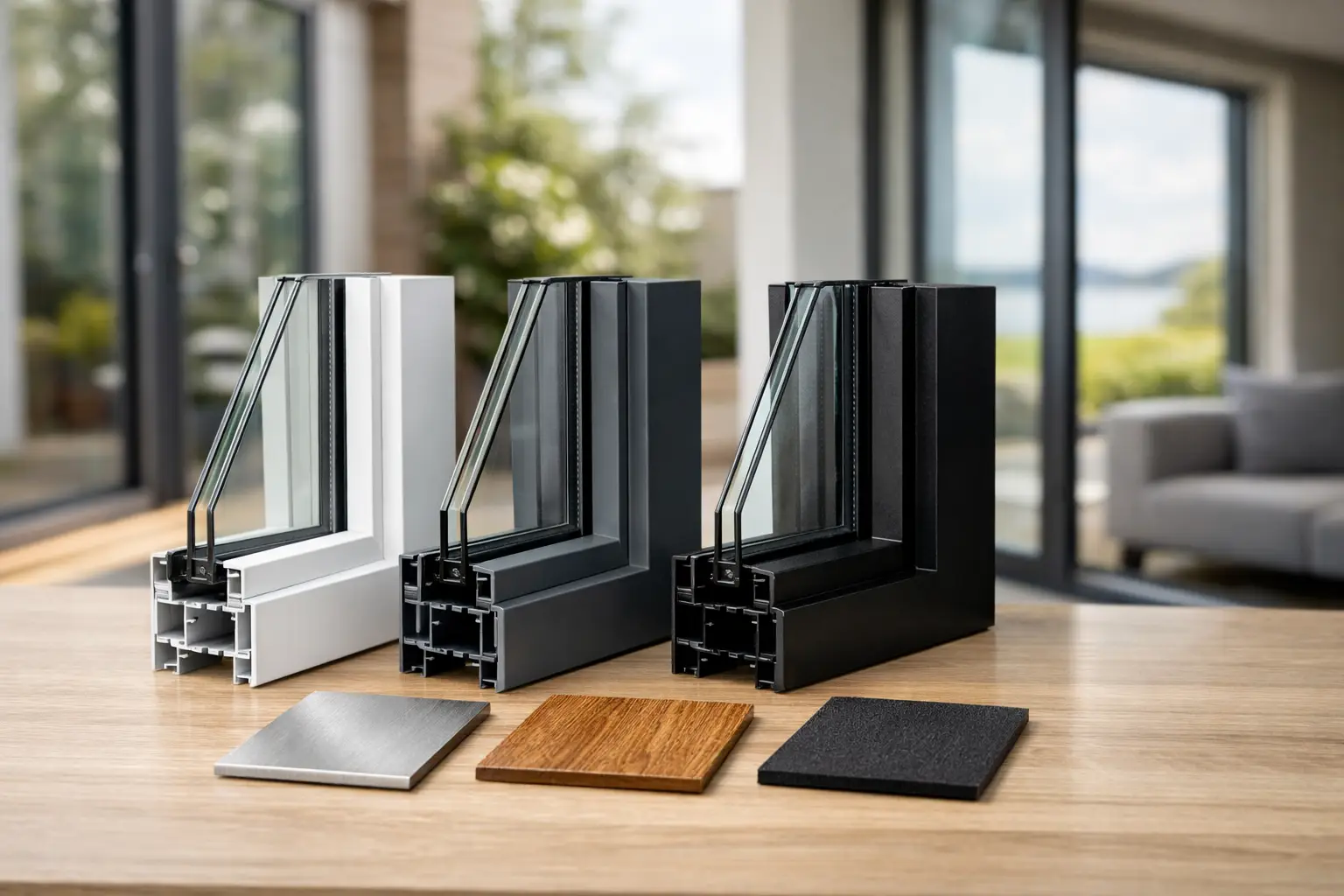
A black aluminium window can make a modest rear extension look sharper. A poorly chosen black finish, however, can show dust, salt deposits and fingerprints far more readily than the brochure suggests. That is why choosing the best aluminium window finishes is not simply a question of picking a RAL colour. The coating, texture, location and way the windows connect with doors, brickwork and interior finishes all affect how the project looks and performs years later.
For most UK homes, a high-quality architectural powder-coated finish is the sensible starting point. It offers extensive colour choice, dependable weather resistance and a finish that can be matched across aluminium windows, bifold doors, sliding doors and roof glazing. But there are worthwhile alternatives, particularly where a metallic appearance, a distinctive texture or a coastal specification is required.
What makes the best aluminium window finishes?
The best finish is one that suits the building, can be properly specified for the exposure level and is applied by an approved manufacturer or specialist processor. Aluminium naturally resists corrosion, but the visible surface needs a durable treatment to protect it from weathering, everyday cleaning and UV exposure.
A quality finish should provide consistent colour, even coverage around corners and joints, and a surface that remains stable over time. It should also be considered alongside the system itself. A slim casement system such as Cortizo Casement Windows or Schuco AWS80SC Casement Windows can look very different in a soft matt grey than in a reflective metallic shade, even when the frame dimensions are identical.
There is no universal winner. A family home in a leafy inland location has different needs from a coastal self-build, a city flat with stringent planning requirements or a contemporary extension with large-format Cortizo COR Vision Sliding Doors nearby.
Powder-coated aluminium: the most flexible choice
Powder coating is the finish specified on the majority of modern aluminium windows in the UK. The aluminium profile is carefully prepared, coated with coloured powder and cured in an oven to create a tough, even surface. It is a proven option for residential projects because it combines design freedom with practical durability.
The main advantage is colour choice. Standard shades such as Anthracite Grey, often RAL 7016, black, white and popular greys are widely available, while specialist RAL colours can help windows sit comfortably beside cladding, rendered walls or existing joinery. Matt finishes are especially popular because they reduce glare and give aluminium a more considered, architectural appearance.
For a full replacement or extension project, powder coating also makes it easier to coordinate products. The same or closely matched colour can be used on Smarts Alitherm 400 Windows, Smarts Visofold 1000 Bifold Doors and a Smarts Visoglide Plus sliding door. This matters where windows and doors are visible together across an open-plan kitchen or garden elevation.
Not every powder coat performs identically. The grade of powder, preparation process and warranty all matter. Dark colours on south-facing elevations absorb more heat, so the system must be fabricated correctly to allow for normal thermal movement. A reputable supplier will specify approved finishes for the frame system rather than treating colour as an afterthought.
Matt, satin or gloss?
Matt is the default choice for contemporary homes. It softens reflections, disguises minor marks better than high gloss and works well with modern brick, render and timber. Satin has a gentle sheen and can suit homes that need a slightly more traditional look. Gloss creates a stronger visual statement but tends to reveal surface marks and surrounding reflections more clearly.
Texture changes the result again. Fine-textured powder coats feel less flat and can be forgiving in busy family spaces. They are often an excellent choice for dark frames, although the exact effect should be viewed on a real sample rather than a screen.
Anodised finishes: a refined metallic appearance
Anodising is not paint. It is an electrochemical process that enhances the natural oxide layer on aluminium, creating a metallic surface that is integral to the profile rather than sitting on top of it. Typical tones include silver, bronze, champagne and darker metallic shades.
This finish is valued for its crisp, premium appearance and long-term resistance to wear. It can be particularly effective on commercial-style glazing, contemporary façades and minimal-frame designs, where the aluminium itself is intended to be part of the visual language.
The trade-off is reduced colour freedom and a different aesthetic from powder coating. Anodised aluminium will not provide the near-black, heritage green or soft off-white options available with powder coating. It can also show variation between batches more readily, so it is wise to order all matching elements together where possible. For an extension using Cortizo Hidden Sash Windows and large sliding doors, confirm that the chosen finish is available across every system before finalising the design.
Dual-colour windows: solve the inside and outside separately
Many projects benefit from a different finish inside and out. External anthracite grey, black or bronze may suit the architecture, while a white, light grey or warmer neutral internal frame keeps rooms brighter and integrates more easily with plaster, painted timber and kitchen finishes.
Dual-colour aluminium windows are a practical answer when exterior planning expectations and interior design priorities do not align. They are particularly useful in period properties, where a restrained external shade can sit alongside a more contemporary internal scheme.
There is an additional cost, and lead times may be longer than for a standard single-colour order. It is still often better value than compromising the room interior for the sake of the façade, especially on large areas of glazing.
Choosing colour for the building, not just the trend
Anthracite grey remains popular because it is versatile, but it is not automatically the right choice. On a shaded north-facing elevation, very dark frames can appear heavy. Against pale render or warm brick, a softer grey, bronze or muted green may bring more depth without dominating the façade.
Black delivers strong definition and suits modern extensions, particularly when repeated in sliding doors, gutters or steel details. White frames remain effective where the aim is to maximise light and keep the window visually quiet. Bronze and dark metallic tones are increasingly specified for premium renovations because they offer warmth without imitating timber.
If the property is in a conservation area or subject to planning controls, colour should be checked early. The most appropriate finish may be driven by the local setting, not personal preference. Samples should be viewed outdoors against the actual brickwork or render, ideally at different times of day.
Coastal and high-exposure locations need more care
Salt air, driving rain, industrial pollution and regular moisture increase the demand on any external finish. Homes close to the coast should not rely on a colour name alone. Ask about the coating specification, recommended maintenance and whether the proposed finish is appropriate for the site exposure.
Regular cleaning is more significant in these locations. Salt and airborne contaminants should be removed with clean water and a mild, non-abrasive detergent, following the manufacturer’s care guidance. Avoid solvent cleaners, abrasive pads and aggressive pressure washing around seals, joints and drainage routes.
A darker finish is not inherently unsuitable near the coast, but it must be properly specified and maintained. This is one area where the lowest initial price can become a false economy.
Finishes and thermal performance: what is connected?
The finish does not create thermal efficiency on its own. That comes primarily from a thermally broken aluminium system, correctly specified energy-efficient glazing, suitable glass coatings and professional installation. Quality systems separate the inner and outer aluminium sections with an insulating thermal break, reducing heat transfer through the frame.
Finish selection still supports the overall result in practical ways. A well-applied coating protects the frame surface, while a coordinated specification avoids unsuitable combinations of components. When comparing quotations, look beyond the advertised colour and establish the exact window system, glazing unit, hardware, thermal values and installation scope.
A practical specification checklist
Before approving aluminium window colours, confirm four points: the exact finish code and sheen level; whether it is standard, textured or special order; its suitability for the building’s exposure; and whether doors, windows, rooflights and trims can be supplied in a consistent finish. A physical sample is essential for special shades, metallic effects and wood-effect coatings.
Also check what is covered by the finish warranty and who is responsible for any remedial work should there be a visible issue on delivery. On a project with multiple products and phases, accurate scheduling matters as much as the colour selection.
The right finish should make the glazing feel intentional rather than merely coloured. Start with the architecture, specify the coating for the site, and choose a system supplier and installer who can match the details across the whole opening. That is how aluminium windows keep their clean, premium appearance long after the extension has stopped being new.