
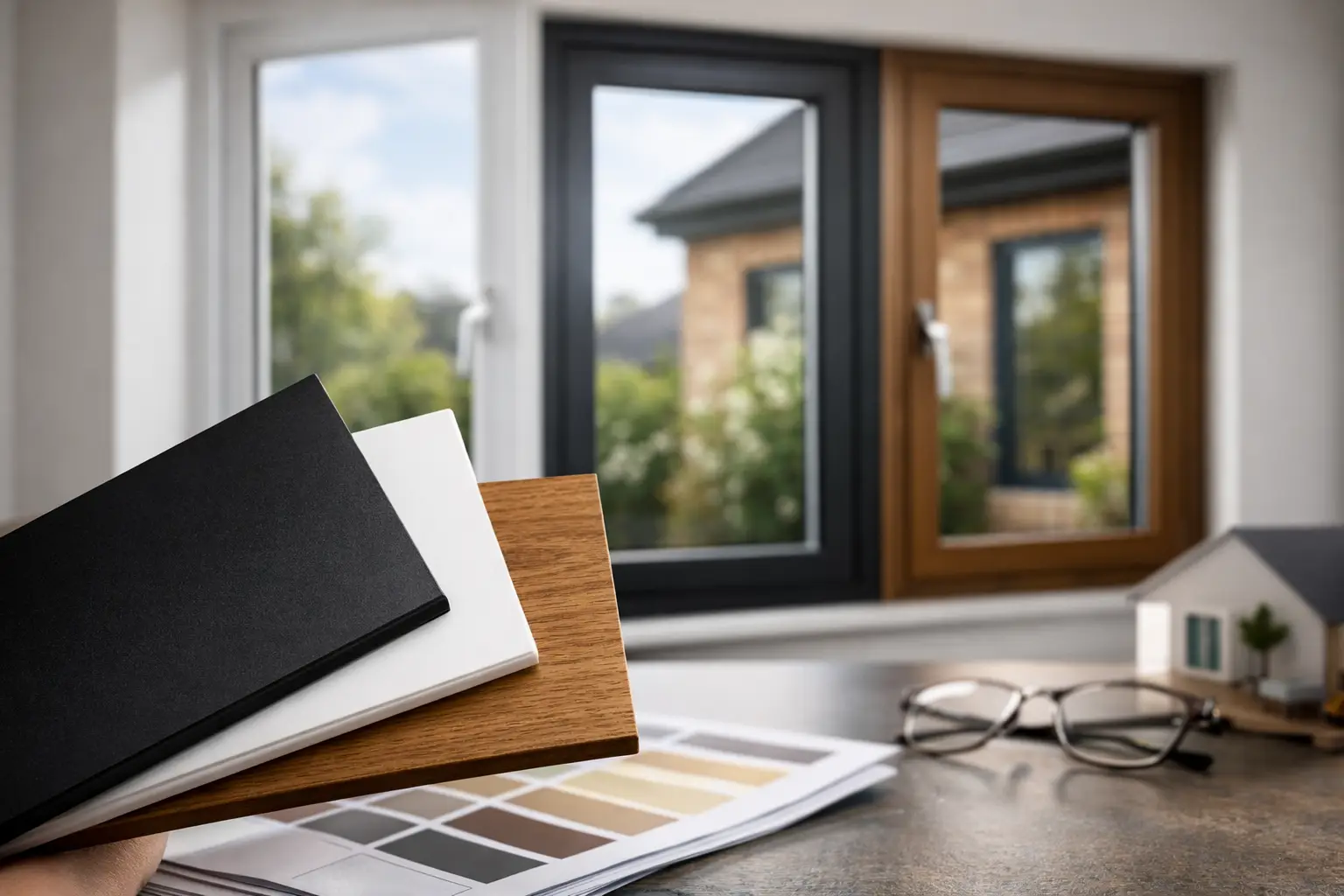
The finish on an aluminium window is not a minor decorative choice made at the end of a project. It affects how the frame sits against brickwork, render and doors, how easily it shows everyday marks, and how well it continues to look after years of British weather. This window frame finish guide sets out the decisions worth making before your windows go into production.
For extensions, renovations and self-builds, aluminium is a strong choice because it combines slim sightlines with a thermally broken profile and energy-efficient glazing. The finish then gives that high-performance frame its visual character – from a soft, contemporary grey to an architectural black, a textured surface or a carefully matched heritage shade.
Window frame finish guide: start with the building
There is no single best window finish. The right specification depends on the age and style of the property, the surrounding materials, the elevation of the building and the other glazing products in the scheme.
A contemporary rear extension with Cortizo Hidden Sash Windows and large sliding doors often benefits from a consistent dark finish. Anthracite grey remains popular because it gives crisp definition without the hardness of pure black. Black can look striking against pale render, timber cladding and modern brick, but it is less forgiving of dust, pollen and water spotting, especially on exposed south-facing elevations.
For period properties or softer elevations, muted greys, warm whites, greens and bronze-toned finishes can feel more considered than a default dark frame. The important point is to assess real samples outdoors. A colour that appears neutral under showroom lighting can look noticeably cooler, darker or bluer in daylight.
Also consider the roofline, guttering, fascias, external doors and steelwork. Matching every element exactly is not always necessary. Coordinating undertones usually creates a better result than trying to force an almost-match between materials with different textures and gloss levels.
Powder-coated aluminium: the standard choice
Most premium aluminium windows are finished with a polyester powder coating. The process applies a dry powder to the prepared aluminium profile before it is cured in an oven, creating a consistent protective coating. It is a practical choice for residential glazing because it offers a broad colour range, good resistance to weathering and a finish that is straightforward to maintain.
A quality powder-coated finish should be specified as part of an approved system, not treated as an afterthought. The profile preparation, coating process and curing all affect long-term appearance. This matters on high-value installations where the windows sit alongside products such as Smarts Alitherm 400 Windows, Schuco AWS80SC Casement Windows or bifold doors with extensive glazed areas.
Powder coating can be supplied in standard and non-standard RAL colours, subject to the individual system and manufacturing lead time. Standard colours are often the most cost-effective route. Bespoke colours can make sense where a planning condition, an architect’s palette or an existing façade requires a specific match, but they may increase price and extend production time.
Gloss, matt and textured finishes
Colour is only half of the specification. The sheen and surface texture change the appearance substantially.
Matt finishes have a low-reflective, understated look that works particularly well on modern homes. They tend to disguise light dust and fingerprints better than glossier alternatives, although they can show scuffs if damaged. A satin finish adds a little more light reflection and can suit both traditional and contemporary designs.
Textured powder coating has a subtly grainy surface. It is popular for darker colours because it gives the frame more depth and is often more forgiving of minor handling marks than a smooth finish. It also creates a less industrial appearance on wide doors and large window arrangements. The trade-off is that texture can hold dirt more readily in very exposed locations, so regular gentle cleaning remains worthwhile.
Gloss finishes are less commonly chosen for contemporary aluminium windows, but they can be appropriate where a project calls for a sharper, more formal look. Ask to see a full-size sample rather than relying on a small colour card. The larger the glazed opening, the more obvious the difference in sheen becomes.
Should internal and external frame colours match?
Single-colour windows are the simplest option, with the same finish visible inside and outside. This works well where a homeowner wants a clean, consistent look and the external colour complements the interior scheme.
Dual-colour aluminium frames offer more freedom. A dark external finish can suit the elevation, while a lighter internal colour helps a room feel brighter and is easier to coordinate with plaster, cabinetry or timber flooring. White inside with anthracite grey outside remains a practical combination, but soft grey, black and metallic tones can also work indoors when used consistently across windows, sliding doors and bifolds.
The decision is particularly relevant in open-plan extensions. If a Cortizo COR Vision Sliding Door is specified in a dark external finish but the adjacent windows are white internally, check the whole internal elevation rather than choosing each item separately. Consistent internal sightlines and colour treatment make the finished room feel intentional.
Match the finish across windows and doors
A project can include casement windows, fixed lights, roof lanterns, bifold doors and sliding doors from different systems. They can often be coordinated in the same named colour, but they should be specified together from the outset.
The word “anthracite” is not enough. Confirm the precise RAL reference, whether the finish is smooth or textured, its gloss level and which side of each product receives the colour. A near-match between one supplier’s smooth grey and another’s textured grey may be visible when the products meet on the same elevation.
This is also why a like-for-like product comparison matters. The frame finish should be considered alongside sightlines, opening configuration, glass specification, hardware and threshold details. For example, Origin OB36 Bifold Doors and Schuco ASFD75 Bifold Doors have different design characteristics, even when finished in the same colour. The best choice is the one that delivers the desired appearance and performance as a complete system.
Do darker window frames get hotter?
Yes. Darker frames absorb more solar heat than pale ones, particularly on south- and west-facing elevations. Aluminium handles this well when it is part of a correctly designed thermally broken system, but colour choice should still be made with realistic expectations.
The exterior finish itself does not determine a window’s thermal efficiency. Frame design, thermal breaks, glass units, warm-edge spacers, installation quality and airtight detailing have far greater influence on heat loss and comfort. However, on heavily glazed elevations, solar gain through the glass can become a key consideration. Solar-control glazing may be more relevant than changing a frame from black to grey.
For coastal, high-exposure or urban locations, discuss the environment before finalising the coating specification. Salt air, persistent moisture, airborne pollutants and abrasive debris increase the demands placed on any external finish. A suitable architectural-grade coating and sensible cleaning routine provide better long-term protection than choosing colour on appearance alone.
Cleaning and protecting the finish
Aluminium finishes are low-maintenance, not maintenance-free. Wash the frames periodically with warm water, a soft cloth and mild, non-abrasive detergent, then rinse and dry where practical. This removes grime, salt deposits and pollution before they build up.
Avoid scouring pads, abrasive creams, strong solvents and harsh alkaline cleaners. These can dull or damage the coating. Take extra care during building work too: wet plaster, cement, brick-cleaning chemicals and metal filings should not be allowed to sit on finished frames.
Small scratches should be assessed rather than covered with an off-the-shelf touch-up paint immediately. A visible repair can be worse than a minor mark, especially on a textured or metallic finish. For more significant damage, seek advice from the supplier or installer while the product details are available.
Make the finish decision before ordering
Finalise colour, internal and external treatment, surface texture and hardware colour before approving your order. Changes after production begins are rarely simple, particularly where windows must align with large sliding doors, roof glazing or bifold systems.
At Bifolding Door Factory, the most successful schemes begin with the full elevation in mind: frame proportions, glass, opening style and finish working together rather than competing for attention. Choose samples in daylight, confirm the precise finish in writing, and select a coating suited to the building’s exposure. That small amount of care at specification stage helps the windows look as considered in ten years as they do on installation day.