
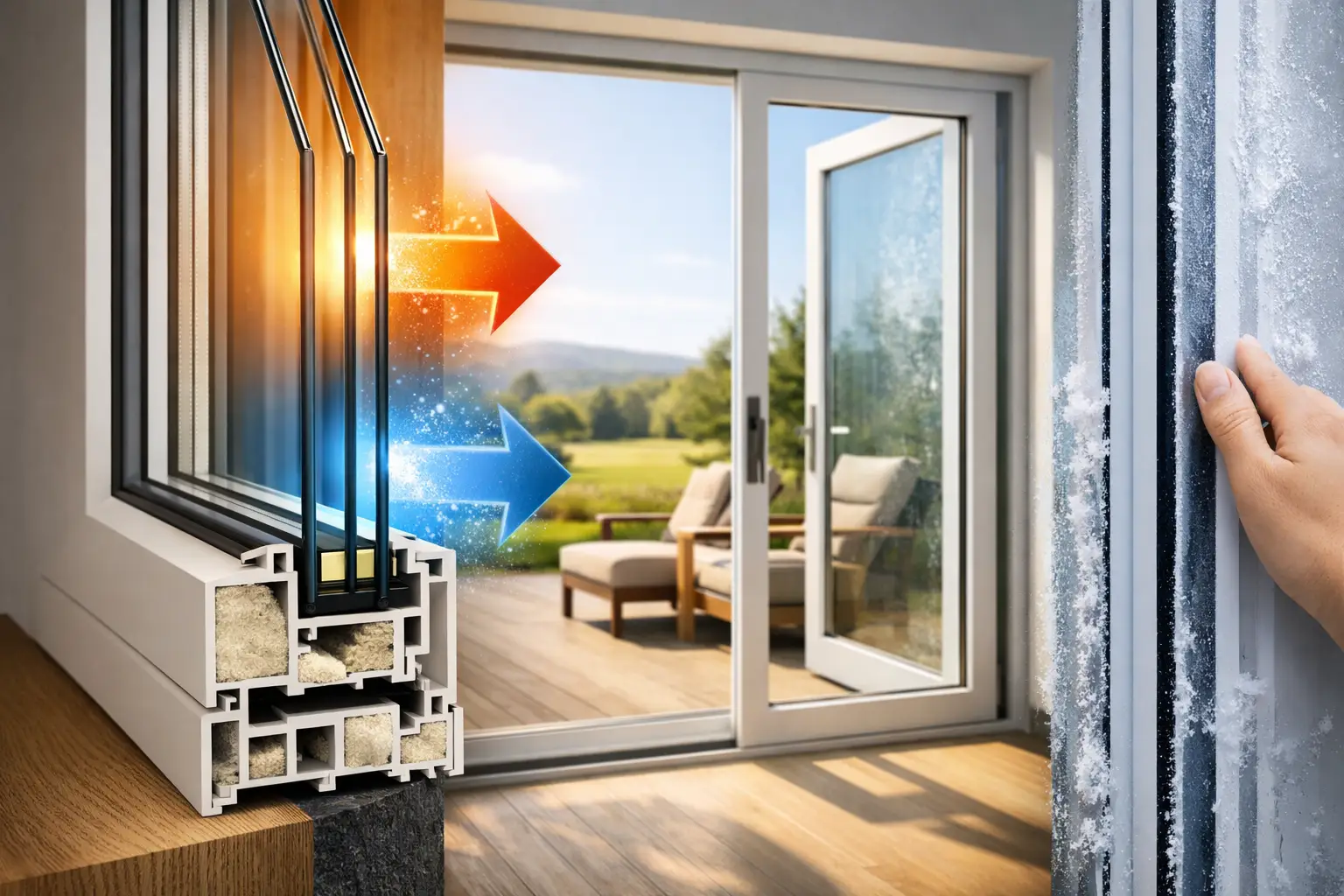
A patio door can look superb in a brochure and still be the weak point in an extension once winter arrives. That is usually where thermal performance patio doors start to matter – not as a marketing phrase, but as the difference between a room that feels comfortable all year and one that loses heat around a large glazed opening.
For homeowners, renovators and trade buyers, the challenge is simple enough: you want large panes of glass, slim aluminium frames and easy access to the garden, without turning the back of the house into a cold spot. The answer is not one headline figure on its own. Good thermal performance comes from the whole door system – frame design, thermal break, glazing specification, weather sealing, threshold choice and installation quality.
What thermal performance patio doors actually mean
When people compare patio doors, they often jump straight to U-values. That makes sense, but it only tells part of the story. The thermal performance of a patio door refers to how effectively the complete unit resists heat transfer from inside to outside.
In practical terms, lower U-values are better. A well-designed aluminium system with a proper thermal break and energy efficient double or triple glazing can achieve strong results without compromising on sightlines. However, the number only matters if it reflects the actual configuration being supplied. Glass type, pane size, spacer bars and opening arrangement all affect the final result.
This is why like-for-like comparison matters. A bifold and a sliding door may both be aluminium, both powder coated, and both fitted with low-emissivity glass, yet still perform differently because the frame sections, gasket design and panel layout are not the same.
Why frame design matters as much as the glass
Glass usually takes up most of the visible area, so buyers naturally focus on the glazing. But with aluminium patio doors, the frame design is just as important to thermal efficiency. Aluminium is strong, stable and ideal for slim modern doors, but on its own it is conductive. That is where the thermal break comes in.
A thermal break separates the internal and external aluminium sections with an insulating barrier. In premium systems, that barrier is carefully engineered as part of the full profile design, rather than treated as an afterthought. Combined with well-sealed joints and quality gaskets, it helps reduce heat loss and improves comfort near the door line.
This is one reason established systems from manufacturers such as Schuco, Cortizo, Smart Systems and Origin remain popular. The performance is designed into the product, not added later. For a homeowner, that means a better chance of getting doors that feel as good as they look. For trade professionals, it means more confidence in specification and fewer unpleasant surprises at installation stage.
Thermal performance patio doors and glazing choices
The glazing specification has a direct impact on energy performance, but there is always a balance to strike. Double glazing is still the standard choice for many projects and can deliver very good results when paired with the right aluminium system. Triple glazing may improve thermal performance further, but it adds weight, affects panel sizes and can alter how the door operates.
That trade-off matters more on larger opening formats. A slim sliding door with expansive panes may benefit from keeping overall sash weight under control, whereas a high-performance bifold on a more sheltered opening may suit a different specification. Solar gain matters too. South-facing doors can help warm a room naturally in colder months, but too much glass without the right coating can make summer overheating more likely.
Spacer bars, gas-filled units and low-E coatings all contribute to the end result. What matters is not choosing the most expensive option by default, but choosing glazing that suits the orientation of the opening, the size of the panels and the performance target for the room.
Bifold or sliding door – which performs better?
This depends on the system and the priorities of the project. There is no universal winner.
Bifold doors create a wide, open connection to the garden and remain a strong option for rear extensions and kitchen-diners. Modern systems such as Smarts Visofold 1000 Bifold Doors, Schuco ASFD75 Bifold doors, Cortizo Bifold Plus and Origin OB49 Bifold Doors can offer strong thermal performance when correctly specified. But bifolds have more frame sections, more moving parts and more gasket lines than a comparable sliding door. That means more potential points where design quality and installation standards become critical.
Sliding doors often have fewer vertical frames and can deliver a cleaner glass-heavy appearance. Systems such as the Smarts Visoglide Plus sliding door, Schuco ASE60 Sliding Door, Schuco ASE80 Sliding Door and Cortizo COR Vision Sliding Door are often chosen for slim sightlines and larger panes. In some cases, a sliding system can be thermally competitive because it has fewer door leaf junctions than a bifold arrangement.
That said, very slim sliding doors can involve their own compromises. Ultra-minimal sightlines are attractive, but the best-looking section is not automatically the best-insulated one. Buyers should be wary of reducing the decision to aesthetics alone.
Installation has a direct effect on thermal efficiency
Even the best door system can underperform if it is poorly installed. Gaps around the perimeter, poor packers, badly prepared structural openings or weak sealing details can all undermine the thermal performance of patio doors.
This is where experience matters. A large glazed opening needs accurate surveying, suitable support, careful levelling and correct perimeter sealing. Threshold details also need proper thought. A low threshold improves access and helps create a flush transition to outside, but it must be detailed correctly to avoid water ingress and air leakage.
For supply-only buyers, that means coordinating the opening, tolerances and fitting method properly before the doors arrive. For supply-and-install projects, it means using a team that understands the system being fitted rather than treating all aluminium doors as interchangeable. Good installation protects not just performance figures on paper, but day-to-day comfort.
What to check when comparing systems
A product comparison should go beyond brochure claims. Ask what U-value is being quoted and whether it is centre pane, whole door or a best-case configuration. Check the glazing make-up, maximum panel sizes and whether the quoted performance reflects the actual style you want.
It is also worth checking air permeability, weather testing and threshold options. In the UK, a door has to deal with wind, rain and repeated temperature changes. A system that performs well in laboratory data but is awkward to fit or less forgiving on site may not be the best choice for every project.
For trade buyers and self-builders, support from the supplier matters too. Clear technical information, consistent manufacturing standards and accurate pricing all help you make sensible comparisons early on. That reduces the risk of value engineering a project in the wrong place.
Matching thermal performance patio doors to the project
The right patio door depends on how the room will be used. In a modest extension where furniture layout and everyday access matter, a bifold may still be the best answer even if a sliding door offers slightly larger panes. In a contemporary new build focused on wide views and minimal framing, a sliding system may make more sense.
Budget also plays a part. Premium systems tend to justify their cost through better engineering, better hardware and more refined thermal detailing, but not every project needs the highest-end product in the range. Sometimes a solid mid-range aluminium system with the right glazing and correct installation gives the best overall value.
This is why a product-led approach is useful. Comparing named systems and real configurations is far more helpful than talking about patio doors in general. The best choice usually comes from balancing thermal efficiency with sightlines, opening style, structural opening width, threshold detail and price.
For buyers looking at a nationwide UK project, that level of comparison is often what separates a straightforward purchase from an expensive misstep. At Bifolding Door Factory, that is why system-by-system advice tends to be more useful than broad claims.
If you are choosing between bifold and sliding doors, start with how the opening needs to work, then test each option against thermal performance, not just appearance. The door that looks right on day one should still feel right in January.