
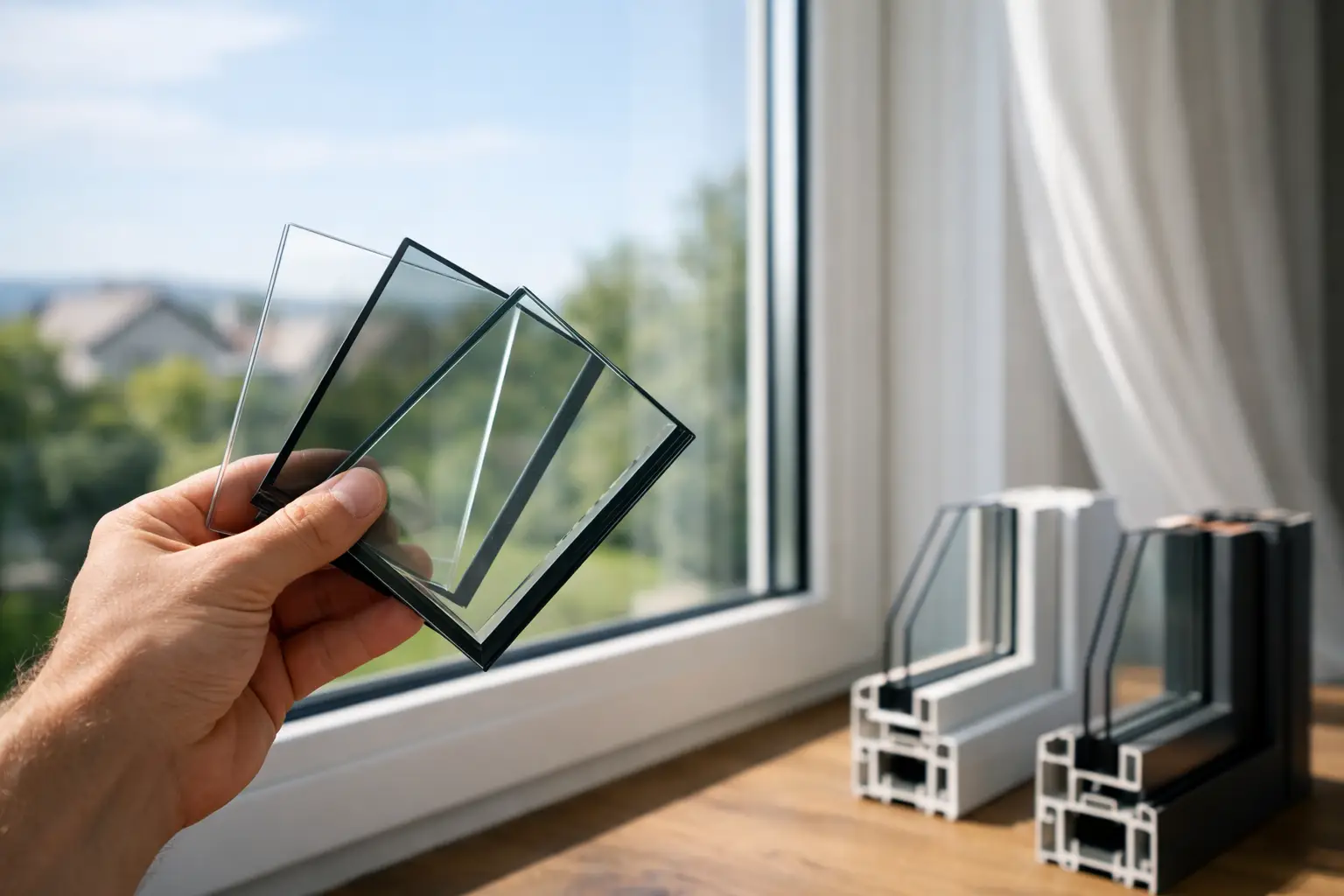
A new window can look exceptional in a showroom and still disappoint once fitted if the glass specification is wrong. Cold spots beside the frame, traffic noise, overheating in a south-facing extension and poor privacy are usually glazing decisions, not simply window decisions. Knowing how to choose window glazing means looking beyond the phrase “double glazed” and matching the glass build-up to the way your home faces, functions and is used.
For a replacement project, self-build or glazed extension, glazing should be specified alongside the aluminium system from the outset. It affects thermal performance, sightlines, opening weights, safety requirements and price. The right choice creates a comfortable room throughout the year without compromising the clean, slim-frame appearance that makes modern aluminium windows so popular.
Start with the room, orientation and opening size
There is no single best glazing unit for every elevation. A large west- or south-facing window receives very different solar exposure from a smaller north-facing bathroom window. Likewise, a street-facing bedroom needs a different priority from a garden-room window overlooking a private patio.
Begin with what the room needs most. For a kitchen extension with broad glazed doors, limiting excessive solar gain may be more valuable than pursuing the very lowest possible centre-pane U-value. For a north-facing home office, retaining heat and reducing draughts will usually lead the decision. On a busy road, acoustic performance may take priority, while bathrooms, overlooked gardens and ground-floor side windows often need privacy or enhanced security glass.
Size matters too. Larger panes admit more light and can provide wonderful uninterrupted views, but they are heavier. This can affect sash sizes, hardware selection and the practical operation of windows or doors. A specialist should confirm that the proposed glass thickness and unit weight are suitable for the chosen frame and opening configuration.
How to choose window glazing for thermal efficiency
Most homeowners start with double or triple glazing. Both can perform very well when correctly manufactured and installed within a thermally broken aluminium window system.
A standard insulated double-glazed unit has two panes separated by a spacer bar, with an insulating gas such as argon in the cavity. Modern low-emissivity, or low-E, coatings reflect heat back into the room while allowing useful daylight through. Paired with a quality aluminium frame with a thermal break, this offers a strong balance of thermal performance, cost, weight and slim sightlines for many UK homes.
Triple glazing adds a third pane and a second cavity. It can improve insulation and may make sense on colder elevations, highly insulated self-builds or projects targeting particularly low energy demand. However, triple glazing is not automatically the right upgrade. The units are thicker and heavier, can reduce solar gain, and may not suit every frame, sash size or budget. Depending on the glass make-up, a high-performance double-glazed unit can be the more sensible specification for a renovation.
Do not compare glazing by a single headline figure alone. Ask whether a quoted U-value relates to the centre of the glass, the glazed unit or the complete window. The whole-window value is the more useful measure because it accounts for the frame, edge of glass and overall construction. Good installation is equally critical. A high-performing unit cannot compensate for poor sealing, unsuitable tolerances or gaps around the perimeter.
Low-E coatings and warm-edge spacer bars
Low-E glass is a core part of an energy-efficient specification. The microscopic coating is typically positioned inside the sealed unit, where it helps reduce heat loss without making rooms feel dark. Warm-edge spacer bars around the perimeter of the unit further reduce heat transfer at the edge of the glass and can help limit the risk of internal condensation.
For homeowners upgrading older windows, this combination is often where the comfort difference becomes most noticeable: warmer inner glass surfaces, fewer cold edges and a more consistent temperature close to the window.
Control sunlight before it becomes overheating
Floor-to-ceiling glazing is a major asset in an extension, but it needs solar control planning. Sun-facing elevations can become uncomfortable in summer, especially where wide bifold or sliding doors are combined with roof lights or lantern roofs.
Solar-control glass uses a specialist coating to reduce the amount of solar energy passing into the room. It can be particularly useful for south- and west-facing areas, conservatory replacements and rooms with large expanses of glass. The trade-off is that the more aggressively a coating controls solar gain, the more it may affect light transmission and the appearance of the glass. Some products also show a slight tint or reflective quality in certain conditions.
This is why glass should be considered alongside shading, roof overhangs, ventilation and the building’s layout. In a heavily glazed kitchen-diner, modest solar-control glazing combined with opening windows and external shading can be more effective than relying on any one measure alone. Your installer should discuss the orientation of the property rather than simply applying the same glass to every opening.
Specify safety and security glass where it is required
Safety glazing is not an optional cosmetic upgrade in many locations. Toughened or laminated safety glass is required in critical areas where people may fall against it, including many low-level panes, doors and glazing close to doors. Requirements depend on the size, height and position of the glass, so they should be checked as part of the design and survey process.
Toughened glass is heat-treated to increase strength and breaks into small, relatively blunt fragments if it fails. Laminated glass contains an interlayer that holds broken panes together. This makes it a strong choice where retained integrity, improved security or some acoustic benefit is required.
For accessible ground-floor windows, sidelights and large glazed doors, laminated inner panes can provide added resistance to forced entry. Security, however, is a system performance issue. Glass should work with secure locking, correctly designed beads, tested frame profiles and professional fitting. Premium systems such as Smarts Alitherm 400 Windows, Cortizo Casement Windows and Schuco AWS80SC Casement Windows should be specified with their approved components, not treated as frames that can accept any arbitrary glass build-up.
Reduce noise with the right acoustic glass build-up
If your property is near a main road, railway, school or late-night venue, acoustic glazing deserves more than a box tick. The best solution is rarely just “thicker glass”. Sound reduction improves when the panes are different thicknesses, known as asymmetric glazing, because they disrupt different sound frequencies. Acoustic laminated glass can also make a meaningful difference.
The sealed unit needs to be designed as a complete build-up. A typical acoustic specification may use panes of different thicknesses with a laminated layer on one side, but the ideal combination depends on the noise source and the window system. Low-frequency road noise, for example, behaves differently from voices or aircraft noise.
Bear in mind that sound can travel through trickle vents, wall junctions and poorly sealed installation gaps. Well-made windows will not achieve their potential if the surrounding installation is neglected. This is one reason to choose experienced installers who understand both product tolerances and the details of a weather-tight, insulated perimeter seal.
Privacy, appearance and daylight are part of the decision
Obscure glass is often used in bathrooms, utility rooms and side elevations where neighbouring properties overlook the space. It comes in varying levels and patterns, from lightly textured finishes that retain more light to denser obscured options for greater privacy. Consider the view from both sides, particularly at night when interior lighting makes rooms more visible externally.
Tinted, reflective and decorative glazing can define the look of a project, but should be used with care. Darker or heavily coated glass may suit a contemporary elevation, yet it can alter internal daylight and create a different external appearance depending on the weather. A sample viewed against the proposed aluminium frame colour is far more informative than choosing from a small swatch alone.
For heritage-style replacements or character properties, glazing bars, sightlines and glass reflection may matter as much as thermal numbers. For contemporary projects, a system such as Cortizo Hidden Sash Windows can emphasise the glass area, making glass quality and visual consistency especially noticeable.
Check the specification, not just the quotation total
A clear quotation should state the window system, glass make-up, safety glass locations, coatings and any solar-control, acoustic or privacy upgrades. If triple glazing is proposed, it should also confirm that the selected profile, hardware and opening sizes are designed to carry it.
It is worth asking whether the price includes surveying, delivery, installation, making good, disposal and certification where applicable. For supply-only orders, trade buyers should verify glass dimensions, unit thicknesses, handing and site handling arrangements before manufacture. Glass units are made to order, and changes late in a project can be costly.
At Bifolding Door Factory, glazing is considered as part of the complete fenestration package, whether the project requires supply only or a nationwide UK supply-and-install service. That matters when windows sit beside bifold doors, sliding doors or roof glazing, where performance, colour, sightlines and safety specifications need to work together.
The most effective next step is to share your drawings, property orientation and priorities before the order is placed. A good glazing specification should not just meet regulations on paper. It should make the room quieter on a wet evening, warmer beside the glass in winter and more enjoyable when the sun is at its strongest.