
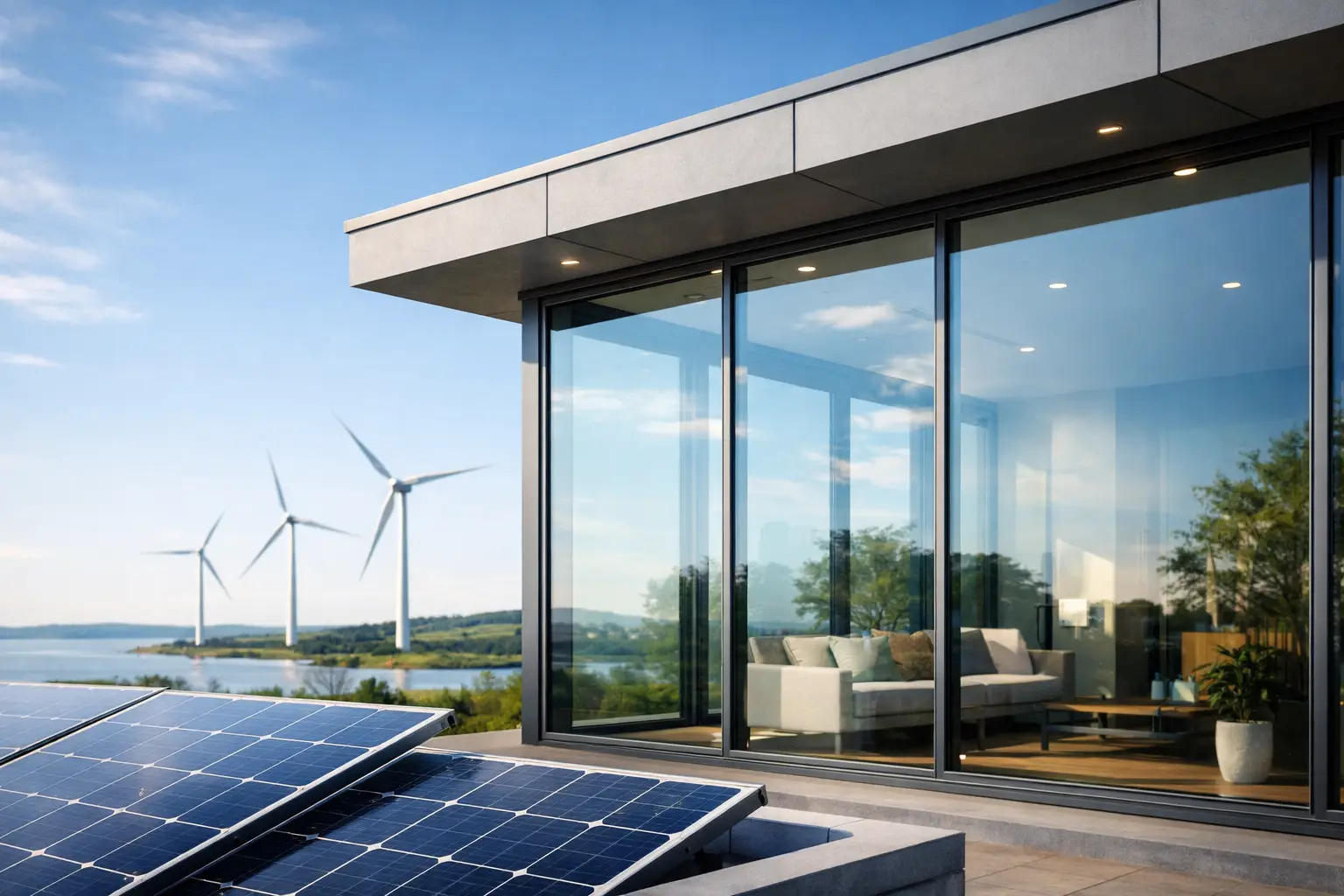
A lot of glazing choices look impressive on a showroom screen. Far fewer still look like the right decision after a cold January night, a hot south-facing afternoon, and the first full heating bill. That is why energy efficient glazing trends matter right now. Buyers are no longer comparing doors and windows on looks alone. They are asking harder questions about U-values, solar control, frame design, glazing upgrades and whether the promised performance will still hold up once the system is installed in a real home.
What is actually changing in energy efficient glazing trends?
The biggest shift is that glazing is now being specified as part of a whole system rather than as a standalone glass upgrade. A decade ago, many buyers focused on double or triple glazing in simple terms. Now the conversation is more precise. The glass, spacer bar, gas fill, coating, frame material, thermal break and installation quality all affect the end result.
That matters particularly with large-format aluminium doors and windows. Slim sightlines remain a major priority, but the market has moved well beyond the old assumption that slimmer aluminium frames must mean weaker thermal performance. Modern thermally broken systems, paired with the right glass specification, can deliver strong results without losing the clean, contemporary look that drives demand for bifolds, sliders and fixed glazing.
For homeowners, the trend is straightforward. Better comfort, less overheating, lower heat loss and more predictable running costs. For architects, builders and trade buyers, the trend is more technical. It is about balancing compliance, aesthetics, structural requirements and realistic budgets on a product-by-product basis.
Lower U-values matter, but they are not the whole story
One of the clearest energy efficient glazing trends is the push towards lower overall U-values. That is useful, but it is also where many comparisons become misleading. Glass performance on its own is not the same as whole-door or whole-window performance. A centre-pane figure can look excellent on paper while the complete installed unit performs very differently.
For that reason, serious buyers are paying closer attention to tested system values. On aluminium products, the frame design and thermal break are critical. A well-designed system such as Schuco ASE80 Sliding Door, Cortizo COR Vision Plus Sliding Door or Schuco AWS80SC Casement Windows can combine slim framing with strong thermal credentials, but only when the full specification is considered.
There is also a practical limit to chasing the lowest number. Triple glazing can improve performance, but it adds weight, affects hardware loads and can change sightlines, leaf sizes and budget. In some projects, high-spec double glazing is the better fit. In others, triple glazing earns its place. The right answer depends on orientation, opening sizes, exposure and the performance target for the property.
Solar gain is getting more attention
Heat loss used to dominate most glazing conversations. Now overheating is a much bigger concern, particularly in extensions with wide openings, roof lights and large south or west-facing elevations. That has pushed solar control glass much further up the specification list.
This is one of the more important energy efficient glazing trends because it reflects how people actually use their homes. Large panes bring in valuable light, but unmanaged solar gain can make a living space uncomfortable from late spring onwards. The goal is not to block daylight unnecessarily. It is to control excessive heat while keeping the space bright and usable.
That is why glazing selection increasingly depends on orientation. A north-facing opening may prioritise insulation and light transmission. A south-facing extension may need a more careful balance between winter warmth and summer control. Roof glazing often needs a different strategy again.
Bigger glass, better performance
Demand for larger panes has not slowed. If anything, it has accelerated. Homeowners still want broad openings, minimal frame interruption and stronger indoor-outdoor connection. The difference now is that they also expect those larger glazed areas to perform properly through winter and summer.
That is where premium system design has become more valuable. Sliding doors such as the Smarts Visoglide Plus sliding door, Schuco ASE60 Sliding Door and Cortizo COR Vision Sliding Door are often specified because they preserve more glass area than a more heavily framed alternative. But glass area alone is not the point. The best-performing systems pair that visual lightness with credible thermal detailing, quality seals and the right glazing makeup.
Bifold systems are evolving in the same way. Products such as Smarts Visofold 1000 Bifold Doors, Schuco ASFD75 Bifold doors, ASFD90.Hi Bifold Doors and Cortizo Bifold Plus are being chosen not just for opening width and appearance, but for how effectively they combine thermal efficiency, weather performance and everyday usability. Slimmer design is still attractive, but not at the cost of draughts, poor thresholds or disappointing real-world insulation.
Warmer edge spacers and improved glass coatings
Some of the most useful improvements are not especially visible. Warm edge spacer bars are now a standard expectation on better specified glazing, helping reduce heat loss around the perimeter of the sealed unit. Low-emissivity coatings have also become a more informed part of the buying conversation.
This matters because the gains are cumulative. Better spacer technology, improved coatings, gas-filled units and strong frame design all contribute to the final result. None of them should be treated as a magic fix on their own.
For buyers comparing quotations, this is where detail matters. Two door sets can look similar in photos and differ notably in specification. That is why transparent, system-led comparison is so useful when choosing between options that on the surface appear almost identical.
Aluminium is staying strong in the market
Another clear trend is that aluminium remains the preferred material for many premium renovations and self-builds. The reason is not just aesthetics. It is the combination of slim profiles, durability, colour flexibility and improved thermal engineering.
Older assumptions about aluminium being cold are increasingly out of date when applied to modern thermally broken systems. Products such as Origin OB36 Bifold Doors, Origin OB49 Bifold Doors, Smarts Alitherm 400 Windows and Cortizo Hidden Sash Windows show how aluminium can meet contemporary expectations around appearance and performance when correctly specified.
That said, aluminium is not automatically the right answer for every project. Budget-led replacements or traditional properties may point buyers elsewhere. But for contemporary extensions, garden rooms, kitchen remodels and modern new-build homes, aluminium continues to lead because it solves several design and performance requirements at once.
Glass specification is becoming more bespoke
Buyers are increasingly moving away from one-size-fits-all glazing packages. That is a healthy shift. The front elevation, rear extension and roof light on the same property may all benefit from different glass specifications.
Acoustic glass can make sense near busy roads. Solar control glass can be worthwhile on exposed elevations. Obscure glazing remains important for privacy. Triple glazing may be justified in one area and unnecessary in another. This is where experienced system guidance matters, because better specification is not about adding every upgrade. It is about choosing the right combination for the way the building faces, functions and is occupied.
Trade professionals already work this way, but more homeowners are catching up fast. They want to know what they are paying for and what practical difference it makes. That has made product comparison more detailed and far more performance-led.
Installation quality is part of the glazing trend too
There is a reason experienced suppliers talk about installation as much as product choice. Energy performance is not preserved automatically once the unit leaves the factory. Poor fitting, weak perimeter sealing, inadequate packers or bad interface detailing can undermine a very good system.
This is particularly relevant with large sliding doors, bifolds and feature windows. Tolerances matter. Threshold integration matters. So does how the frame meets the surrounding structure. A properly manufactured, properly installed door or window will almost always outperform a stronger paper specification fitted badly.
That is why more buyers are asking who is actually carrying out the work, what system is being supplied, and whether the components are approved and tested together. Those are sensible questions, not sales detail.
What buyers should watch next
Looking ahead, expect energy efficient glazing trends to keep moving towards more exact system comparison rather than broader marketing claims. Buyers are getting better at spotting the difference between a headline number and a fully considered specification. They are also less willing to trade comfort for aesthetics, even on design-led projects.
The strongest systems in the market will be the ones that hold those priorities together – slim profiles, strong thermal performance, credible security, dependable weathering and flexible configuration. That applies whether you are specifying bifolds for an extension, a large-span slider for a self-build or replacement windows across a renovation.
If you are comparing products now, the best starting point is not the most dramatic brochure image. It is asking how the full system performs in a British home, through a British winter and a British summer, with the opening sizes and glass areas you actually want. That is usually where the right glazing choice becomes much clearer.