
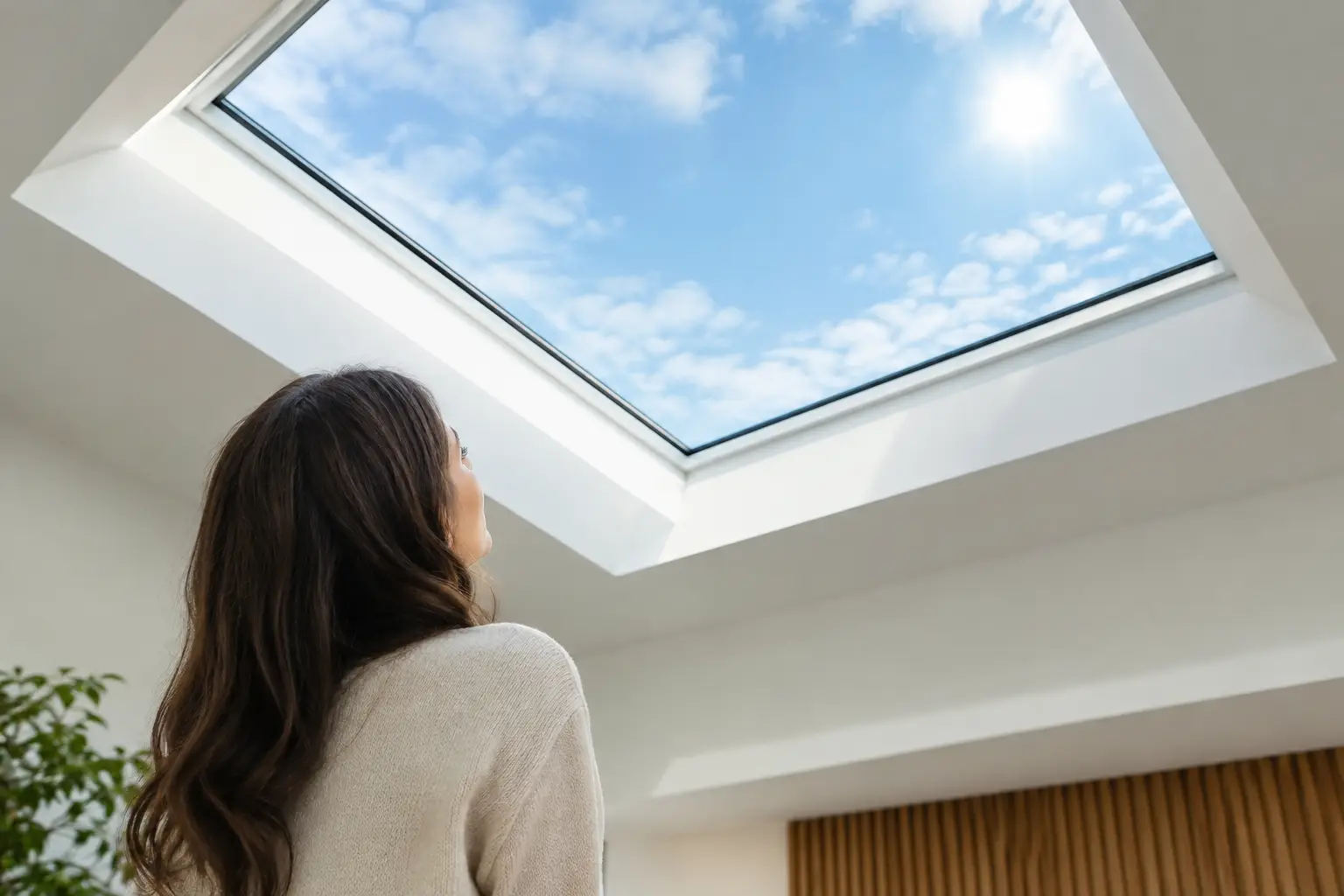
A rooflight can transform a rear extension that would otherwise feel deep and enclosed. It can also become the part of the room homeowners notice first on a cold January morning if it has been poorly specified or fitted. So, do rooflights lose heat? Yes, any glazed opening loses more heat than a well-insulated solid roof. The more useful question is how much heat it loses, and whether the rooflight has been designed as part of a thermally efficient roof build-up.
A quality aluminium rooflight with a thermal break, energy-efficient sealed units and a properly insulated upstand can deliver excellent real-world performance. It will not perform exactly like 150mm or 200mm of modern roof insulation, but it can bring daylight, views and usable living space without making the extension uncomfortably cold.
Do rooflights lose heat more than a solid roof?
They do. Solid insulated roofs are designed primarily to resist heat flow, whereas rooflights must balance insulation with transparency. Glass, edge seals, spacers and frames all provide a route for heat to move from the warm interior to colder outside air.
That difference does not mean rooflights are inefficient by default. Older single-glazed units, basic plastic domes and poorly sealed installations deserve their reputation for cold surfaces and draughts. Modern fixed rooflights are very different products. They use insulated frames, low-emissivity glass coatings, gas-filled cavities and warm-edge spacer technology to reduce heat loss significantly.
The comparison should also be honest. A large rooflight will have a greater effect on a room’s total heat demand than a small one, regardless of its quality. If a project needs extensive overhead glazing, choosing the lowest sensible whole-unit U-value and keeping the rooflight area proportionate to the room are both important.
Start with the whole rooflight U-value
When comparing products, ask whether the quoted figure applies to the glass alone or to the complete rooflight. The centre-pane U-value, often shown as Ug, measures the insulating performance at the middle of the sealed glass unit. It is useful, but it does not account for the frame, perimeter seals or glass edge.
For a meaningful comparison, look for the whole-unit U-value. A lower figure means less heat transfer, measured in W/m²K. This figure gives a more realistic indication of how the rooflight will perform once it is installed.
Double glazing can be a strong choice for many extensions, particularly where the rooflight is sensibly sized and the surrounding roof is well insulated. Triple glazing can reduce heat loss further, but it adds weight and may slightly reduce the amount of daylight entering the room. It can be particularly worthwhile for larger rooflights, north-facing rooms or projects where the rest of the glazing has been specified to a very high thermal standard.
The frame matters as much as the glass. Aluminium is exceptionally strong and allows clean, slim sightlines, but untreated aluminium conducts heat readily. Premium aluminium rooflight systems use a thermal break – an insulating section separating the internal and external parts of the frame. This is essential for reducing heat transfer and helping internal frame surfaces stay warmer.
Glass specification changes the result
Not all energy-efficient glazing is the same. A well-specified rooflight glass unit usually combines several elements that work together rather than relying on a single coating.
Low-emissivity glass helps reflect heat back into the room. Argon gas between panes improves insulation compared with air, while warm-edge spacers reduce heat loss around the perimeter of the glass. Laminated inner glass is commonly used in overhead applications for safety, and the outer pane is generally toughened to withstand impact and thermal stress.
Solar control glass deserves careful consideration. Rooflights face the sky and can admit substantial solar energy, especially on south- or west-facing extensions. Solar-control coatings limit the amount of solar heat entering the room while retaining useful daylight. This can make a large glazed kitchen extension more comfortable in summer, but stronger solar control also reduces the free warmth available on sunny winter days and can slightly alter the appearance of the glass.
There is no universal best specification. A compact north-facing extension may prioritise daylight and a low U-value. A large south-facing kitchen-diner with bifold doors may need a more balanced solar-control specification to avoid overheating. The right choice depends on orientation, rooflight size, room use and the amount of other glazing in the design.
Heat loss is often an installation problem
A high-performing rooflight can be undermined by a poor roof opening. The junction between the frame, upstand and roof insulation is where thermal bridging and air leakage can occur. That is why product quality and installation quality must be assessed together.
The upstand should be insulated and properly detailed so the roof insulation meets the rooflight perimeter without gaps. Flashings and weathering details must suit the roof finish, whether that is a flat membrane roof, tiles or another approved covering. Internally, the vapour control layer and plasterboard finish should be continuous and carefully sealed.
Air leakage is not always as obvious as a visible draught. A poorly sealed perimeter can allow warm, moist indoor air into the roof construction, increasing the risk of local condensation and making the room harder to heat. Accurate survey, manufacturer-approved installation details and careful finishing are not optional extras on a high-specification extension.
For supply-and-install projects, Bifolding Door Factory uses experienced employed installers who understand that a rooflight has to work with the roof build-up, not simply sit in an opening. On supply-only projects, the installer should follow the system manufacturer’s fitting guidance and coordinate with the roofer before the opening is formed.
Condensation does not always mean the rooflight is failing
Condensation on the room-side glass is usually caused by warm, moisture-laden indoor air meeting a colder surface. Cooking, showering, drying laundry and entertaining in an open-plan space all raise humidity. Even a good rooflight can show temporary condensation if ventilation is poor and the room is cold.
Modern insulated glazing reduces this risk by keeping the inner pane warmer. However, it cannot remove moisture from the air. Background ventilation, effective extractor fans and a sensible heating pattern remain important, particularly in kitchens and bathrooms.
External condensation can look alarming but is often a positive sign. It occurs when the outside pane becomes very cold because little indoor heat is escaping through the glass, then moisture in the outdoor air settles on it. It normally clears as temperatures rise and is not evidence of a failed sealed unit.
Rooflight size and placement affect comfort
A rooflight should be sized for the room rather than chosen solely for the biggest possible view of the sky. One carefully positioned, well-insulated fixed rooflight can distribute light further into an extension than a larger opening placed in the wrong area.
Placement above a dining table, kitchen island or circulation route can create a bright focal point while avoiding unnecessary glazing over less-used parts of the room. Multiple smaller rooflights can also offer flexibility, although every additional unit introduces more frame area and more roof junctions to detail.
Consider the wider glazing scheme as well. Slim-frame systems such as the Cortizo COR Vision Sliding Door or Schuco ASE80 Sliding Door can bring generous light through a rear elevation. If the room already has substantial south-facing glass, a modest rooflight with solar-control glazing may be a better thermal and comfort decision than covering a large section of roof in glass.
Practical ways to keep a rooflight efficient
The best results come from specification decisions made before work begins. Choose a thermally broken aluminium rooflight with a published whole-unit U-value, then match the glazing specification to the extension’s orientation and use. Ensure the structural opening, insulated upstand and roofing details are agreed by the builder, roofer and installer early in the project.
Blinds can add privacy, manage glare and improve perceived comfort at night, but they should not be treated as a substitute for good glazing. Likewise, underfloor heating near a rooflight can make a room feel pleasant, yet it cannot solve a thermal bridge or leaky perimeter seal.
A rooflight should earn its place in the roof by making the room brighter, more welcoming and more useful. Specify the frame, glass and installation with the same care you would give to premium bifold doors or sliding doors, and the view overhead can be an asset through every British season.