
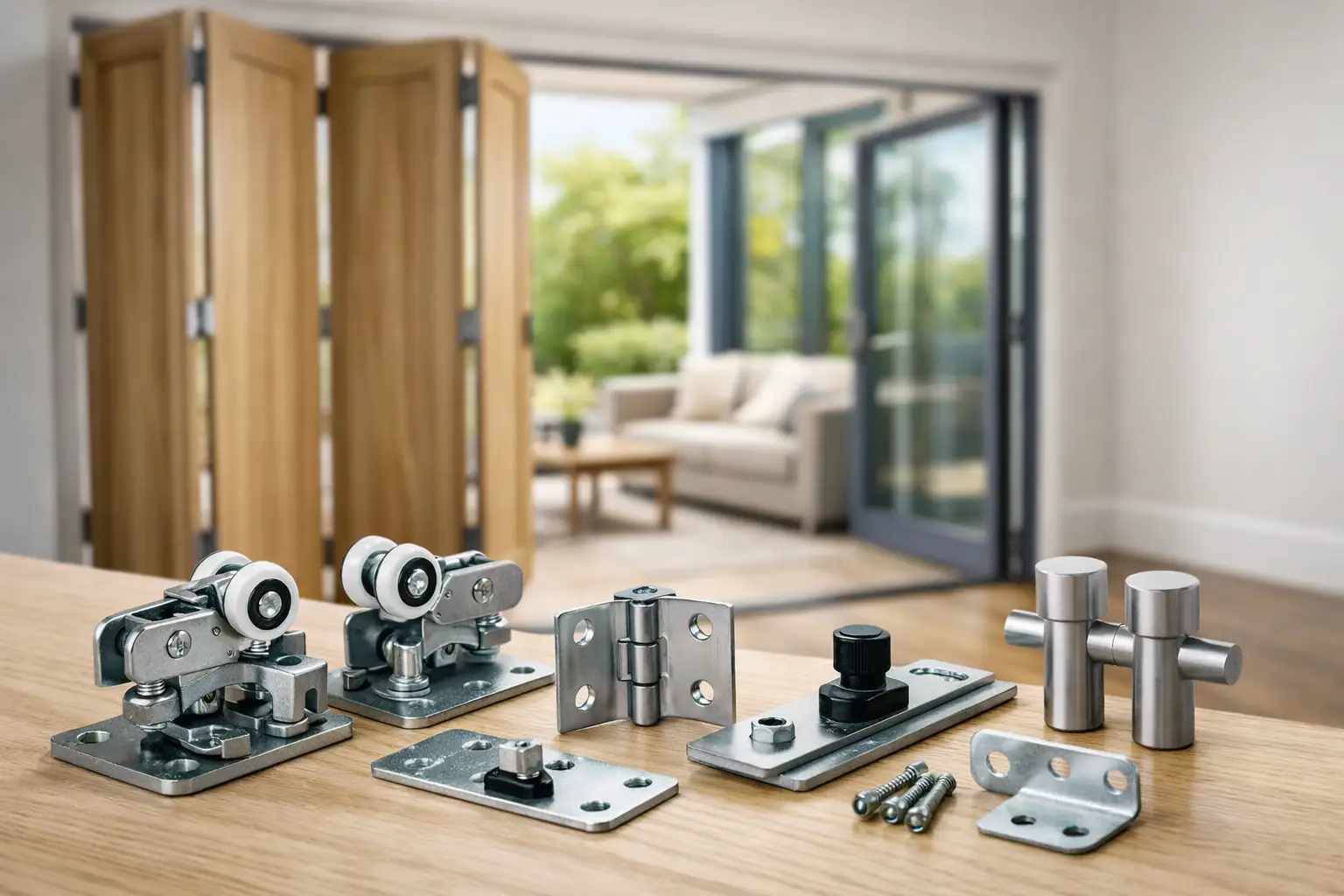
A bifold door can have slim aluminium sightlines, premium glazing and a striking powder-coated finish, yet still feel disappointing if the hardware is poorly specified. A panel that catches on its track, a handle that feels loose or a lock that needs force to engage quickly undermines the whole installation. The best bifold door hardware is not simply the most expensive option. It is a matched set of rollers, hinges, handles, locking components and track details designed for the door system, panel size and site conditions.
For homeowners, that means a door that opens easily, closes securely and continues to perform through changing British weather. For builders and installers, it means predictable fitting, correctly supported panel weights and fewer avoidable call-backs.
What makes the best bifold door hardware?
Hardware should be assessed as part of the complete aluminium bifold system, rather than as a separate add-on. The weight of modern double or triple glazing, the height and width of each sash, the opening configuration and whether the doors are inward or outward opening all affect what the hardware must do.
A quality system uses purpose-designed running gear and hinges that distribute panel weight correctly. The lead door should engage positively with the frame, intermediate panels should fold without excessive lateral movement, and the locking points should align without having to lift, push or pull the door into position. These details are particularly important on wide openings, where small inaccuracies become more noticeable over time.
The best specification also balances appearance with serviceability. Concealed or colour-matched hinges can create a cleaner elevation, but adjustment access still matters. Properly engineered components allow an experienced installer to fine-tune the doors after glazing and make sensible adjustments if a new-build structure settles or a renovation opening moves slightly.
Start with system-approved components
Aluminium bifold systems are tested as complete assemblies. That includes the profile, glazing, seals, reinforcement, locks, hinges and rollers. Replacing approved components with generic alternatives may affect operation, weather performance, security testing and warranty support.
This is why premium systems from Smart Systems, Schuco, Cortizo and Origin are specified with their compatible hardware packages. A Schuco ASFD75 Bifold Door, for example, should use hardware developed for its profile geometry, sash weights and locking arrangement. The same applies to the thermal performance and engineering of Cortizo Bifold Plus or Origin OB36 Bifold Doors.
The practical lesson is straightforward: compare door systems and their supplied hardware together. Do not choose a profile based only on a brochure sightline, then assume every supplier is offering the same quality of rollers, locks and handles.
Rollers and tracks: where smooth operation begins
The running gear carries the greatest mechanical load. On many bifold designs, the weight is supported through the bottom track, while other arrangements use top-hung hardware. Neither approach is automatically better. The right choice depends on the system, threshold requirement, opening size and installation detail.
Bottom-rolling systems can be an excellent choice for large glazed sashes because the load is transferred directly down to the supporting structure. They require a carefully prepared, level base and a track kept reasonably clear of grit, leaves and building debris. Top-hung configurations can create a very clean threshold detail, but the head structure must be capable of carrying the load without deflection.
Look for stainless steel or high-quality engineered rollers, protected bearings and a track designed to resist wear. A well-made door should glide with controlled resistance rather than feel loose or overly light. The panels should remain aligned as they move, with no scraping at the threshold or rubbing between sashes.
For large-format glazed doors, do not treat roller capacity as a minor technical figure. Panel weight can rise quickly with taller sashes, laminated glass, acoustic glazing or triple glazing. Hardware should be rated with a sensible margin for the actual glass specification, not just the bare aluminium sash.
Threshold choice affects hardware performance
A low threshold is often requested for extensions and garden rooms, particularly where a level transition is desired. It can be an attractive detail, but drainage, weather exposure and Building Regulations requirements need proper consideration. A sheltered opening may suit a lower threshold more readily than a coastal-facing elevation exposed to wind-driven rain.
The track and threshold must also be installed precisely. Even excellent rollers will not compensate for a poorly levelled cill, inadequate support beneath the frame or a threshold distorted by uneven fixing. This is one reason experienced installation is as valuable as premium hardware.
Hinges and carriers: controlling the fold
Bifold hinges do more than join the panels. They control spacing, carry movement through repeated opening cycles and help maintain a consistent sightline when the doors are closed. On a quality aluminium system, the hinges and carriers are engineered to work together so that folded panels stack neatly without clashing.
Colour-matched hardware is a popular choice for contemporary doors, especially in anthracite grey, black and bespoke RAL finishes. It keeps attention on the glazing and frame rather than interrupting the design with bright metal hinges. However, finish should follow function. Corrosion resistance, secure fixing and adjustability are more important than an attractive coating alone.
Ask how the hinges are secured within the profile and whether they can be adjusted after installation. On external doors, hardware must tolerate regular temperature changes, moisture and daily use. A well-specified hinge arrangement keeps the sash line consistent and reduces the chance of dropped panels affecting locks or weather seals.
Handles, locks and security hardware
The handle is the component you notice every day, so it should feel solid, operate cleanly and suit the finish of the door. Premium handles are available in matching, contrasting and stainless steel-style finishes, but the mechanism behind the handle deserves equal attention.
For external bifolds, multipoint locking is normally central to security. The master or traffic door should lock firmly into the frame, with locking points designed to resist forced entry. Depending on the system and configuration, shootbolts, deadbolts, hook locks and locking cylinders may form part of the arrangement. The exact combination varies, so buyers should confirm the tested security specification for the chosen product rather than relying on broad claims.
A high-security cylinder can be a worthwhile upgrade where a euro cylinder is used. Anti-snap, anti-drill and anti-pick features provide an additional layer of protection, particularly on easily accessible rear elevations. Keyed-alike options can also simplify a project with several external doors, provided the security and key-control requirements are considered.
Hardware must work with the door, not against it. If the handle requires unusual force or the key turns only when the sash is pushed hard into place, the issue may be alignment rather than the lock itself. Address it early. Continued forcing can accelerate wear on the locking mechanism.
Match the hardware to how the door will be used
A three-panel kitchen extension door opened twice a day does not need the same approach as a five- or six-panel opening connecting a living space to a terrace. The second arrangement is likely to involve heavier panels, more folded sashes, longer track runs and greater reliance on the traffic door.
For frequent use, prioritise a proven operating system, secure handle and lock action, and hardware that is easy to keep clean. For exposed sites, focus on corrosion-resistant finishes, drainage around the threshold and an installation detail suited to the elevation. For a renovation, confirm the structural support at the head and base before deciding between threshold and running configurations.
It also pays to think about the wider glazing package. A Smarts Visofold 1000 Bifold Door may be the right fit for a particular budget and opening, while a Schuco or Cortizo system may suit a project where refined detailing, larger sash sizes or a particular aesthetic are the priority. The best choice depends on the complete specification, not a single headline feature.
Installation and maintenance protect the investment
Even the best bifold door hardware needs accurate installation. Frames must be square, plumb, level and properly packed, with fixings placed in line with the system requirements. Glass setting, toe-and-heeling where required, sash adjustment and final lock alignment all contribute to the finished operation.
Once installed, maintenance is modest but worthwhile. Keep the track free from dirt and avoid using harsh cleaners on powder-coated aluminium or hardware finishes. Periodically check visible fixings, clean drainage points and operate each panel and lock correctly. Lubricants should only be used where the manufacturer recommends them, as unsuitable oils can attract grit or affect seals.
If operation changes noticeably, arrange an inspection rather than accepting a stiff door as normal. Early adjustment is usually simpler than dealing with worn rollers, misaligned locks or damaged track components later.
A bifold door should feel composed from the first turn of the handle to the final click of the lock. Specify approved hardware, choose a system suited to the opening and ensure it is fitted with care, and that everyday experience will match the quality promised by the glass and aluminium.