
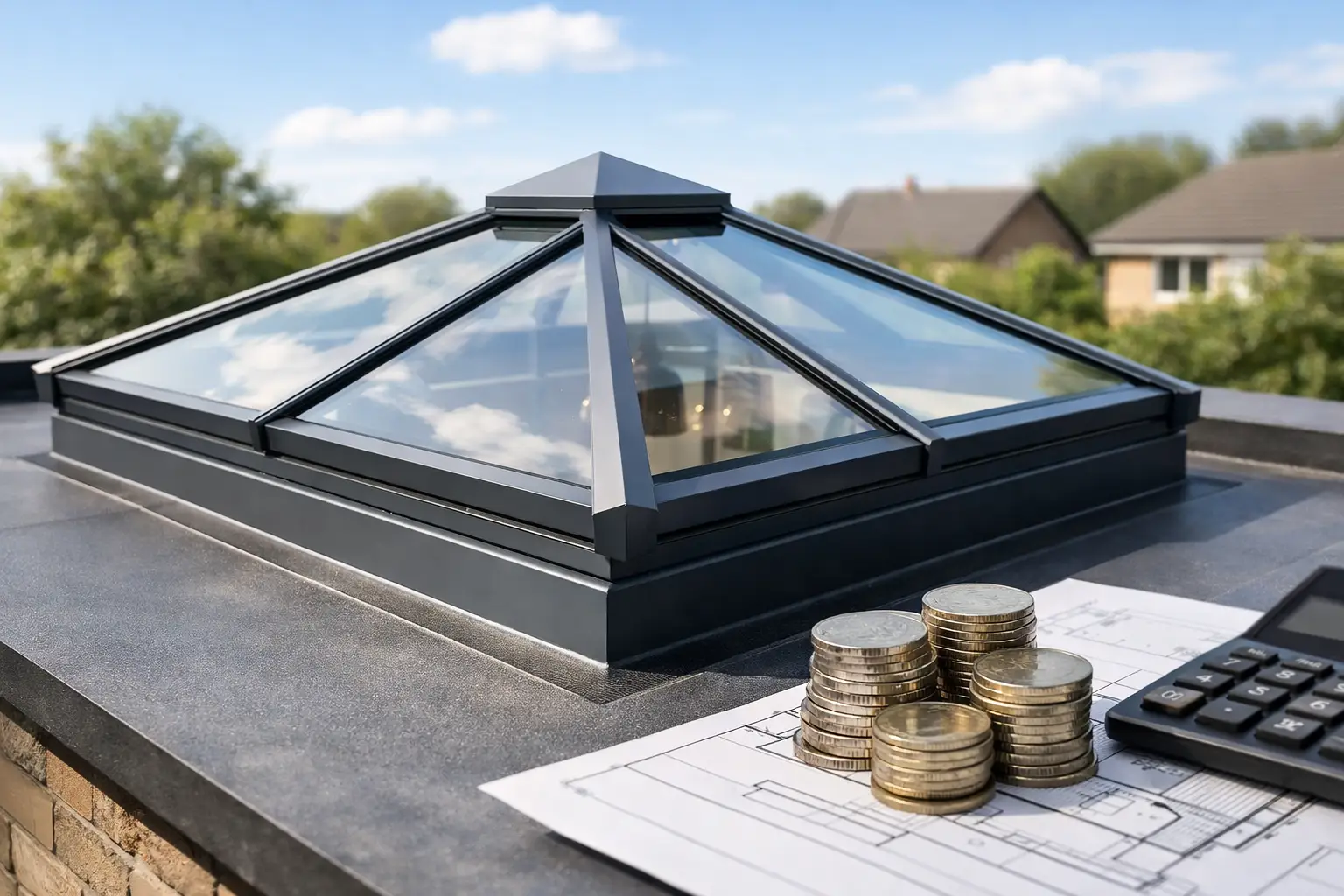
If you are pricing an extension, aluminium roof lantern prices can shift faster than most homeowners expect. Two lanterns may look broadly similar in a photo, yet the gap in cost can be substantial once size, glazing specification, roof pitch, colour choice and installation detail are factored in. That is why headline prices on their own rarely tell the full story.
For most buyers, the real question is not simply what a roof lantern costs. It is what you get for the money, how that product will perform through a British winter, and whether the finished result will look sharp from both inside and out. A well-specified aluminium lantern can transform a flat-roof extension with more daylight, better proportions and a stronger sense of height. A cheap one can quickly show its compromises.
What do aluminium roof lantern prices usually include?
In the UK market, aluminium roof lantern prices are normally quoted in one of two ways – supply only, or supply and installation. Supply-only pricing is common for builders, developers and experienced renovators managing their own project teams. Supply-and-install is more relevant when you want one specialist to handle survey, manufacture and fitting.
A base quotation may include the aluminium frame, glazing, cappings, internal and external finishes, and standard delivery. It may not include structural upstand work, plastering, making good, scaffolding, crane access or electrical work if the lantern sits alongside lighting or ventilation upgrades. This is where price comparisons can become misleading. A lower initial figure is not always the better buy if key elements are missing.
Typical aluminium roof lantern prices in the UK
As a broad guide, smaller standard-size aluminium roof lanterns often start from around £2,000 to £3,500 supply only. Mid-size options for typical kitchen extensions frequently sit between £3,500 and £6,500. Larger bespoke lanterns, especially those with upgraded glazing, premium finishes or more complex bar arrangements, can move well beyond £7,000 before installation is added.
Installed prices are naturally higher. Depending on access, roof preparation and the complexity of the opening, many projects land somewhere between £4,000 and £10,000 or more fully fitted. If you are comparing quotes, it helps to separate the lantern product price from the sitework cost. That gives you a clearer like-for-like view.
These figures are not fixed. They are working ranges, and the final number depends on specification far more than many buyers realise.
What affects aluminium roof lantern prices most?
Size and overall design
The most obvious cost driver is size. A larger lantern uses more aluminium, more glass and often requires stronger structural support. But size is only part of it. Shape matters too. A simple rectangular lantern is usually more straightforward to manufacture than a heavily customised design with unusual proportions.
The number of glazing bars also has an impact. Some premium systems are engineered to deliver slimmer sightlines and cleaner ridge details without looking overly busy. That refinement can cost more, but it also changes the finished appearance significantly.
Glazing specification
Glass is a major part of the total price. Double glazing is common, but not all double-glazed units perform at the same level. Solar control coatings, low-emissivity glass, argon-filled cavities, warm-edge spacer bars and laminated inner panes can all add cost.
This is often money well spent. Roof glazing takes more direct sun exposure than vertical windows, so solar gain can become a real issue in south-facing extensions. The cheapest glass may reduce the purchase price, but it can leave the room too hot in summer and less efficient in colder months.
Thermal performance
Not all aluminium lanterns are equal when it comes to insulation. A properly designed thermally broken system with energy-efficient glazing will perform better than a lower-grade alternative. That matters for comfort, condensation control and compliance.
Premium aluminium products justify part of their price through better engineered profiles and more reliable weather performance. If the room below is a heavily used kitchen, dining area or family space, paying more for a stronger thermal specification is often the sensible choice.
Colour and finish
Standard powder-coated colours are usually the most cost-effective option. Once you move into dual colours, specialist marine-grade finishes or bespoke RAL shades, prices typically rise. Anthracite grey, black and white remain popular because they suit contemporary extensions and often sit within standard pricing bands.
If your project includes matching glazing products elsewhere, such as Cortizo Hidden Sash Windows or a Cortizo COR Vision Sliding Door, coordinating finishes may be worth the extra spend for a more consistent overall look.
Installation complexity
Fitting a lantern into a prepared opening with clear access is one thing. Replacing an existing unit, working above a finished kitchen or dealing with awkward access is another. Installation costs climb when site conditions become more difficult.
You may also need to factor in lifting equipment, scaffold arrangements, roof alterations and internal making good. A good installer will flag these points early rather than leaving them to emerge later as extras.
Why cheaper roof lanterns are not always better value
Price matters, but roof lanterns are not a product where buying the cheapest version usually pays off. Aluminium should offer strength, slim framing and long-term durability. If the system is poorly designed or lightly specified, those benefits can be diluted.
The trade-offs usually show up in three places. First, sightlines can become chunkier and less refined. Second, thermal performance may be weaker, which affects comfort in the room below. Third, installation tolerances and weather sealing can be less forgiving, increasing the chance of future issues.
This is particularly relevant on higher-value extensions where the lantern is a focal point. Saving a modest amount on the product can look like false economy if the finished roofline feels heavy or the glazing balance is wrong.
Are bespoke aluminium roof lantern prices worth it?
In many projects, yes. Bespoke sizing allows the lantern to sit properly within the roof rather than forcing the design around a stock size. That can improve symmetry, daylight spread and furniture layout below.
A made-to-measure lantern is especially useful if you are working with a rear extension that also includes premium glazing elsewhere, such as Schuco ASE80 Sliding Door systems or Origin OB49 Bifold Doors. When all the glazed elements are considered together, proportion and alignment matter. A bespoke lantern can tie the design together more successfully than an off-the-shelf alternative.
That said, bespoke always comes with a price premium. If your opening matches a standard size and the visual result is still right, there is no reason to spend more for the sake of it.
Supply only or supply and install?
For trade buyers and experienced self-builders, supply only can offer better control and lower overall cost. If your builder is familiar with roof glazing and the structural opening is being handled correctly, this route can work well.
For many homeowners, supply and install is the safer option. It gives one point of responsibility and reduces the grey area between product supplier and fitter if anything needs adjustment. Businesses that use employed installation teams rather than loosely managed subcontract labour can usually offer more consistency here.
This is not just about convenience. It can affect the quality of the end result, particularly on larger lanterns where accurate setting out and weather detailing matter.
How to compare quotes properly
When reviewing aluminium roof lantern prices, ask what profile system is being supplied, what the glazing make-up is, whether the unit is thermally broken, and exactly what installation includes. Also check guarantees, lead times and whether the quote covers delivery, lifting and finishing trims.
It is worth asking about compliance and testing too. Reputable suppliers should be clear about approved system components and performance standards. A low price with vague product detail is rarely a strong sign.
If you are comparing your lantern alongside doors and windows for a wider extension package, look at the whole specification rather than treating each item in isolation. A coordinated order often produces a better result across sightlines, colours and overall value.
Where premium pricing makes sense
Higher aluminium roof lantern prices tend to make sense when the lantern is large, visually prominent or positioned above the main living area. They also make sense when overheating risk is high and glazing performance becomes more important.
Premium systems are also worth serious consideration if your project already includes high-end aluminium glazing, whether that is Smarts Alitherm 400 Windows, Schuco AWS80SC Casement Windows or a feature sliding or bifold door system. In those cases, an entry-level lantern can stand out for the wrong reasons.
For a straightforward utility room extension or secondary space, a simpler specification may be perfectly reasonable. It depends on where the lantern sits in the overall design and how heavily the room will be used.
A good roof lantern should earn its place every day – by bringing in clean natural light, holding heat efficiently and looking right with the rest of the glazing package. If you keep that in mind when assessing aluminium roof lantern prices, the cheapest figure becomes far less important than the right specification.