
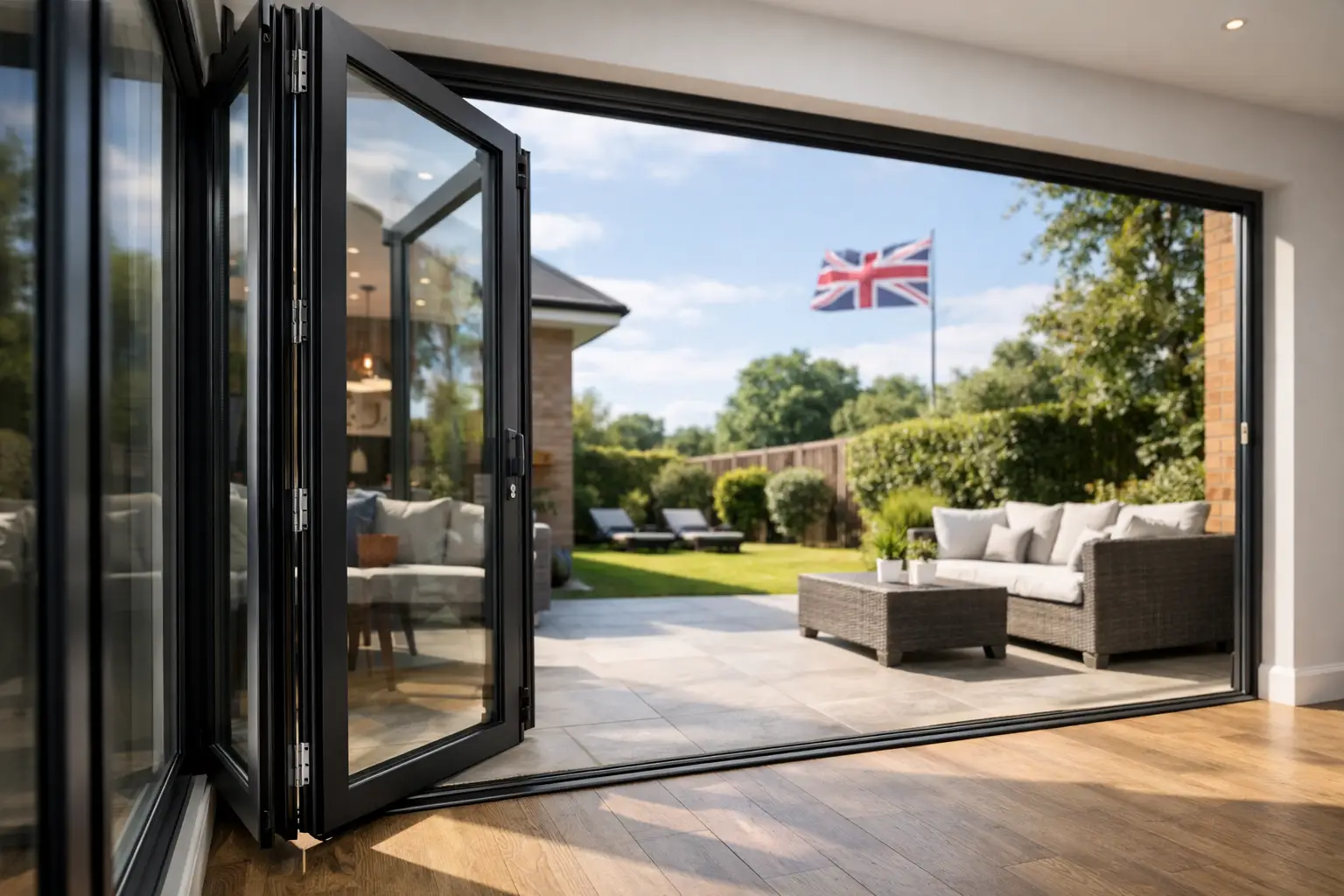
If you are comparing door systems for an extension, renovation or self-build, British-made aluminium bifolds deserve closer attention than they often get. The frame may look simple at first glance, but where and how a bifold is manufactured has a direct effect on fit, finish, weather performance, lead times and aftercare – all of which matter once the doors are in a real UK opening facing real UK weather.
For many buyers, the attraction starts with the look. Aluminium bifolds give you narrower frames than many older door systems, larger glass areas and a cleaner connection between house and garden. But appearance is only half the story. A well-made British system also needs to cope with repeated use, changing temperatures, wind, rain, threshold demands and the practical realities of installation on site.
What makes British-made aluminium bifolds appealing?
The strongest case for buying British-made is not patriotism for its own sake. It is control. When aluminium bifolds are manufactured within the UK using approved system components, there is usually better oversight of fabrication quality, more predictable sizing, clearer accountability and easier access to support if you need replacement parts, service input or technical clarification later.
That matters to homeowners, but it matters just as much to builders and installers. A door set that arrives correctly specified, properly glazed and ready for efficient installation saves time across the project. Delays caused by missing parts, poor machining or unclear documentation can quickly wipe out any headline saving.
There is also the issue of compliance. Reputable British manufacturing is closely tied to product testing, system approval and the correct use of hardware, glazing and thermal break technology. That does not mean every imported product is poor, because many are excellent, but it does mean buyers should look beyond marketing language and check exactly what is being supplied.
British-made aluminium bifolds and UK performance
A bifold door in Britain has a harder job than a showroom display suggests. It needs to deal with wet winters, wind exposure, seasonal movement and day-to-day use from a family that will not handle it delicately. That is why system design, fabrication quality and installation standards all need to line up.
Thermal performance is one of the biggest priorities. Modern aluminium Bifold Doors use a thermal break within the frame and energy efficient glazing to reduce heat loss and improve comfort near the opening. This is especially important in extensions with large glazed elevations, where poor-performing frames can make the room feel colder in winter even if the glass area looks impressive.
Weather resistance is just as important. Tracks, seals, drainage paths and panel alignment all contribute to how well the doors perform in driving rain and wind. On paper, many products can look similar. In practice, the difference between a well-manufactured system and a poorly assembled one usually appears after a few seasons of use.
Security should not be treated as an add-on either. Multipoint locking, quality cylinders, tested hardware and correctly fabricated frames all support a more secure door set. That level of detail is easier to trust when the supply chain is clear and the product is built around recognised system specifications rather than improvised substitutions.
Not all bifold systems are the same
This is where a lot of buying decisions go wrong. People ask for aluminium bifolds as if they are a single product category with minor cosmetic differences. They are not. The system brand, sash profile, threshold options, maximum panel sizes, sightlines and hardware specification can all vary significantly.
For example, Smarts Visofold 1000 Bifold Doors remain a popular option for buyers who want a proven, widely specified system with practical flexibility. Schuco ASFD75 Bifold doors and ASFD90.Hi Bifold Doors move further into premium territory, with strong engineering, refined detailing and very capable performance credentials. Cortizo Bifold Plus is often considered where slim aesthetics and a contemporary finish are high on the list. Origin OB36 Bifold Doors and Origin OB49 Bifold Doors appeal to buyers who specifically want a British-manufactured product from a well-known domestic brand with a broad colour and hardware offering.
The right choice depends on the opening, the budget and the performance target. A homeowner replacing tired patio doors in a standard extension may not need the same specification as an architect designing a large rear elevation with multiple traffic patterns and low threshold access. Trade buyers know this already, but homeowners often benefit from seeing products compared properly rather than being pushed towards a single default option.
What to look for beyond the brochure
Sightlines matter, but they should not be the only decision point. A very slim frame can be attractive, yet the wider buying question is whether the entire door set suits the project. That includes panel width, stack arrangement, opening direction, cill detail, threshold choice and how often the doors will be used as the main everyday access point.
Threshold selection is a good example. A low threshold may improve accessibility and reduce the visual barrier to the outside, but it can involve trade-offs in weather performance depending on location and exposure. A higher threshold can offer stronger weather management, but it changes how the opening feels underfoot. Neither is automatically right. It depends on the project.
Glazing specification deserves the same level of thought. Glass choice affects solar gain, privacy, acoustic performance and overall energy efficiency. South-facing openings may benefit from different glass performance than a shaded north-facing extension. If the room gets very warm in summer, the glazing package becomes just as important as the frame itself.
Powder-coated colour options and hardware finishes also carry more weight than they first appear to. A bifold is a large visual element. It should work with the brick, render, flooring and internal palette, not simply tick a box for anthracite grey because that is what everybody expects.
Supply only or installed?
For some buyers, supply only is the right route. Experienced builders, developers and glazing installers may already have the site management and fitting capability in place. In that case, accurate manufacturing, reliable lead times and detailed technical support become the key priorities.
For homeowners and many renovators, a full supply-and-install service is often the safer choice. Large aluminium bifolds are not forgiving of poor fitting. Frame level, structural opening tolerance, packers, sealants, glazing quality and final adjustment all affect how the doors perform. Even a premium system can disappoint if it is installed badly.
This is where the service model matters. A specialist supplier-installer with employed installation teams and product-specific experience generally offers more consistency than a loosely assembled chain of subcontracted responsibility. When problems arise, as they sometimes do on building projects, clear accountability becomes valuable very quickly.
Are bifolds always the best option?
Not always, and serious suppliers should say so. If your priority is the widest uninterrupted view with fewer vertical frame lines, a sliding system may suit you better. Products such as the Smarts Visoglide Plus sliding door, Schuco ASE60 Sliding Door, Schuco ASE80 Sliding Door, Cortizo COR Vision Sliding Door and Cortizo COR Vision Plus Sliding Door can outperform bifolds for pure glazed simplicity, especially on wider openings.
Bifolds still make excellent sense where you want a large proportion of the opening fully folded back, where corner openings are being considered, or where the user experience of opening up most of the elevation matters more than having the absolute minimum number of mullions in closed position.
That is why the best buying process is comparative, not generic. You are not simply choosing a door. You are choosing how the room will work every day.
The value of transparent specification
Price matters, but meaningful pricing depends on what is actually included. Two quotations for British-made aluminium bifolds can look close until you compare frame system, glazing, hardware, threshold type, colour finish, delivery scope and installation detail. One may be genuinely competitive. The other may be cheap because key elements have been stripped back.
A transparent quote should make it easier to see what you are getting and where upgrades are worthwhile. That is especially useful for self-builders and trade professionals balancing design ambition against budget discipline.
At Bifolding Door Factory, that product-by-product approach is central because buyers need clear comparisons, not vague promises. Premium glazing is a specification decision, and the more visible that specification is, the better the result tends to be.
British-made aluminium bifolds are at their best when they are chosen with the opening, the exposure and the user in mind. Get that right, and you do not just gain more glass – you gain a door system that looks sharp, works properly and still feels like the right decision years after installation.