
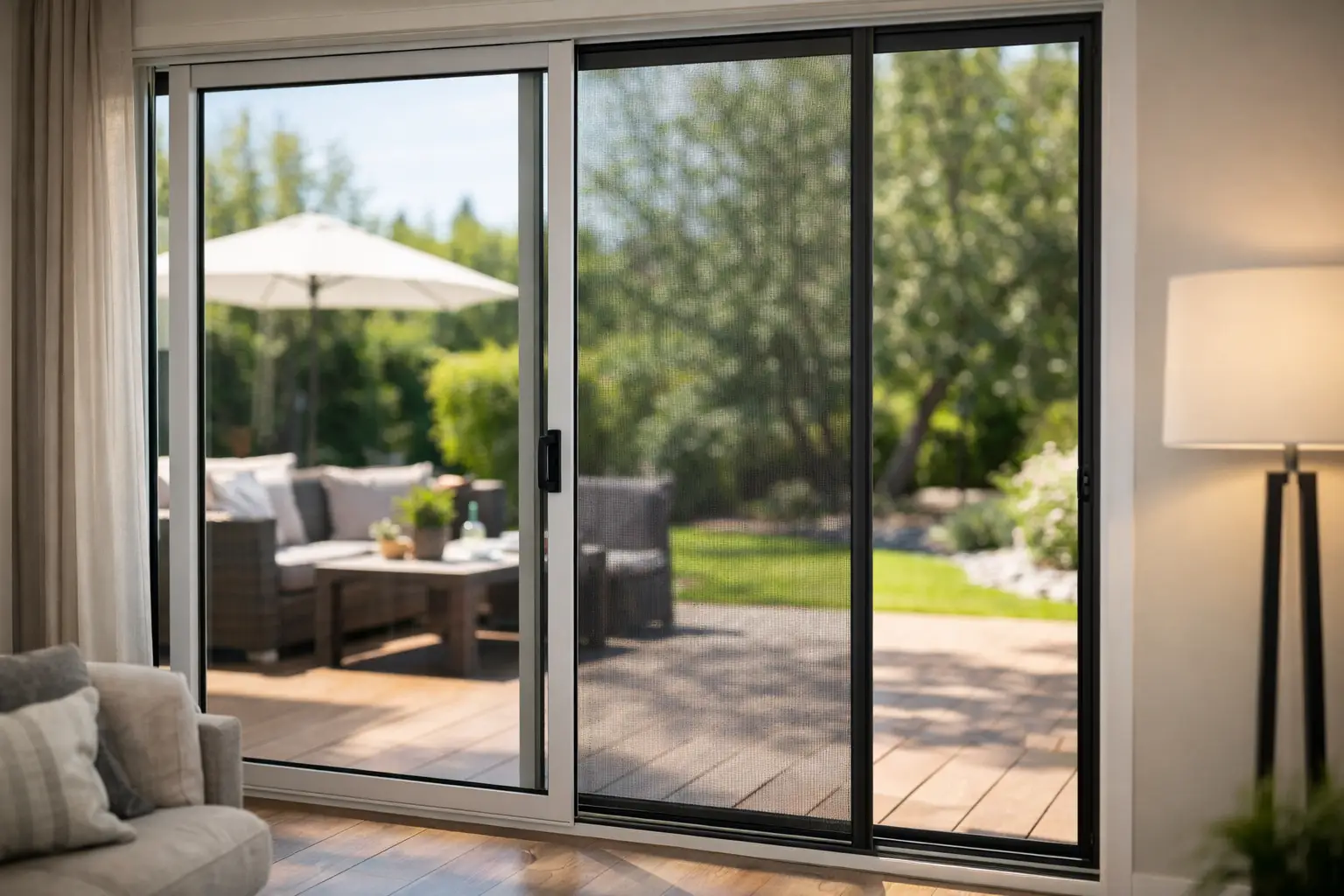
A large glazed opening looks brilliant right up until the first warm evening when you want fresh air without flies, pollen and leaves blowing indoors. That is exactly where sliding patio doors with screens earn their place. Done properly, they preserve the clean look of a modern glazed elevation while making the opening far more usable in day-to-day life.
For homeowners, that usually means better ventilation and fewer compromises. For trade buyers and specifiers, it means getting the detailing right so the screen works with the door system rather than looking like an afterthought. The difference matters, especially on premium aluminium doors where sightlines, thresholds and smooth operation are part of the reason for choosing the product in the first place.
Why sliding patio doors with screens are worth considering
The appeal is straightforward. You get the wide glass panels, slim frames and strong connection to the garden that make sliding doors popular, but you also gain practical insect protection when the doors are open. In the UK, that is useful through spring and summer, particularly in kitchen extensions, garden rooms and rear living spaces where doors stay open for long periods.
Screens also help in homes where ventilation is a priority. If you are trying to reduce overheating in a south-facing extension, or simply prefer natural airflow over relying on mechanical cooling, a well-designed screen gives you more confidence to leave the opening in use. That is particularly relevant in open-plan spaces where the patio doors do much of the work in drawing air through the room.
There is a design benefit too. Many buyers assume a screen will look bulky or spoil the view. Better systems avoid that by using slim screen frames and discreet tracks, so when the screen is retracted it stays largely out of sight. The result is a feature that feels integrated rather than added on later.
What type of screen works best with sliding patio doors?
Not every screen type suits every door. With sliding systems, the most common choice is a pleated or retractable screen. This style folds neatly to one side when not needed and can span wider openings than a basic hinged screen door. It also tends to suit contemporary aluminium products better because it keeps the visual lines cleaner.
A fixed screen is rarely the right answer for a main patio opening because it gets in the way of access and cleaning. Hinged flyscreen doors can work on smaller openings, but they are usually less elegant and less practical on larger glazed elevations. On a premium sliding door, most buyers want the screen to disappear when not required.
Pleated screens do have trade-offs. They introduce another track, another moving part and another element that needs accurate installation. If the opening is very wide, screen tension and alignment become more important. Cheaper products often feel flimsy, drag across the threshold or lose their neat action over time. That is why the screen should be considered alongside the door specification, not treated as a low-cost accessory.
The details that make a real difference
When comparing options, the first thing to look at is how the screen integrates with the door frame and threshold. A good screen should not create a clumsy step-up, obstruct drainage or compromise the low-threshold benefit that many sliding doors are chosen for. This is especially important where level access is part of the brief.
The second point is mesh quality. Fine mesh improves insect protection, but it can slightly affect visibility and airflow depending on the specification. Some homeowners prioritise the clearest outward view. Others care more about keeping even smaller insects out during evenings with internal lights on. There is no single right answer, but it is worth checking what the mesh is designed to do rather than assuming all screens perform the same.
Frame finish matters as well. On high-end aluminium systems, a poorly matched screen frame can stand out immediately. If your doors are anthracite grey, black, white or a bespoke powder-coated finish, the screen should sit comfortably within that scheme. The best result is one where visitors notice the doors, not the screening hardware.
Then there is operation. A screen should glide with very little effort and stop securely without springing back awkwardly. In family homes, ease of use is not a small detail. If the screen is fiddly, people stop using it.
Sliding patio doors with screens in new extensions and renovations
In a new extension, screens are easier to plan in from the start. That gives you more freedom to coordinate the threshold, drainage, floor finish and reveal detail so the end result looks intentional. It also allows the door and screen dimensions to be considered together, which is useful on wider openings or where multiple panels are involved.
Retrofitting screens to existing sliding doors is possible, but it depends on the available fixing space, the door configuration and the surrounding structure. In some renovations, there is enough room to add a retractable screen neatly. In others, particularly where trims, plaster returns or external finishes are already tight to the frame, the screen may look compromised or require additional making good.
For that reason, this is one of those areas where honest product advice matters. Not every opening will take every screen solution. A dependable supplier-installer should be clear about what will work well, what can work with compromise, and what should be avoided altogether.
How screens affect the look and performance of the door
A screen does not change the thermal performance of the sliding door when the door is shut. Your U-values, glazing specification and weather performance still come from the main door system, the glass unit and the quality of manufacture and installation. That means buyers should still focus on the core door first – frame profile, glass make-up, security testing, threshold choice and system brand all remain central.
What the screen changes is usability. It makes the opening more comfortable to live with in warmer weather and can encourage more natural ventilation. On projects where clients want large uninterrupted glass but also want the house to feel open in summer, that is a practical gain.
Aesthetic impact depends heavily on execution. Premium systems from established manufacturers already put a strong emphasis on slim frames and refined sightlines. If a screen is going to sit alongside that, it needs to respect the same design logic. Bulky add-ons can undermine the whole scheme. Integrated, well-finished screens do the opposite – they add function without stealing attention.
What buyers should compare before ordering
Price matters, but it should not be the only measure. A lower-cost screen paired with a high-spec aluminium slider can be a false economy if the finish, tracking or long-term operation falls short. In our experience, buyers get a better result by comparing the whole package: door brand, screen compatibility, frame finish, threshold detail and who is responsible for installation.
That is particularly relevant for supply-only projects. Trade professionals may be comfortable coordinating the parts themselves, but they still need accurate dimensions and proper system compatibility. Homeowners usually benefit from dealing with a specialist who understands both the door set and the screen arrangement, especially on larger openings where tolerances matter.
It is also worth asking whether the screen can be serviced or adjusted later. Mesh may need replacing eventually, and running components may need attention after years of use. A screen is not a high-maintenance product, but it is a moving part in a heavily used opening. Knowing that replacement parts and support are available is sensible.
The value of choosing a specialist supplier-installer
Sliding door projects often look simple on a screen and become more technical on site. Structural openings, floor levels, drainage, packers, threshold support and final alignment all influence how the finished product performs. Add a screen into that mix and precision matters even more.
That is why specialist glazing companies tend to deliver a better outcome than a generalist approach. At Bifolding Door Factory, the advantage is not just access to premium aluminium systems from names such as Cortizo, Schuco, Smart Systems and Origin. It is the ability to compare products properly, explain the trade-offs clearly and match the right configuration to the opening rather than forcing a one-size-fits-all answer.
For homeowners, that creates confidence. For builders and specifiers, it reduces risk. The screen should feel like part of the door package, not a separate compromise introduced after the main order has already been placed.
If you are considering sliding patio doors with screens, the best starting point is to think beyond the idea of insect control alone. Look at how you want the opening to function in summer, how clean the detailing needs to be, and whether the screen solution is genuinely suited to the door system you are buying. Get that right, and you keep the views, gain the airflow and avoid the sort of compromise that becomes obvious every time the doors are open.