
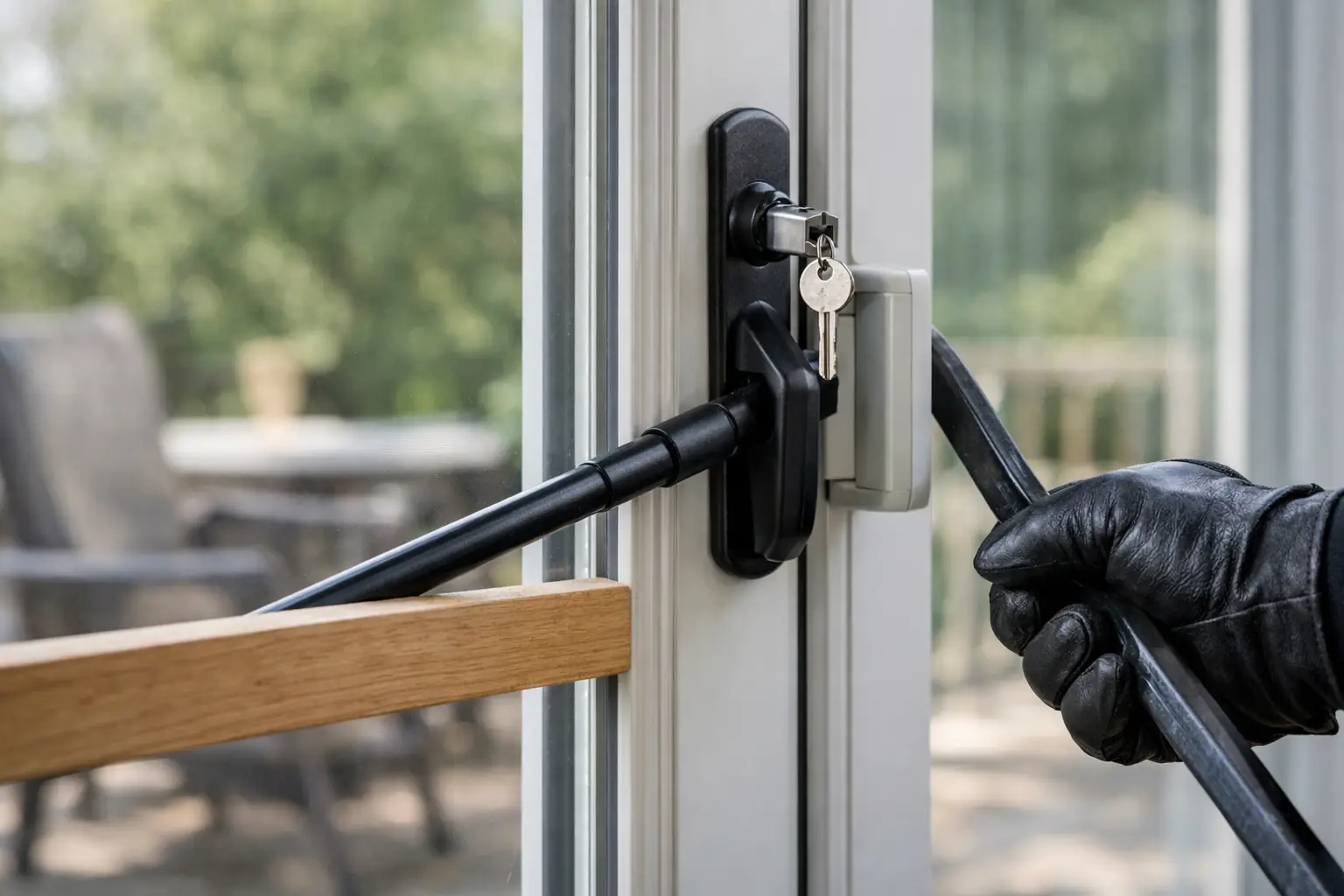
A sliding patio door should bring in light, open up the garden and make an extension feel bigger. It should not become the weakest point in the room. If you are researching how to secure sliding glass doors from break-ins, the answer is rarely one product on its own. Real security comes from the whole door set – frame, glass, lock, track, hardware and installation working together.
That matters even more with large-format glazing. The appeal of slim frames and wide panes is obvious, but security has to keep pace with the design brief. A well-made aluminium sliding door can be highly secure. A poorly specified or badly fitted one can still leave avoidable vulnerabilities, even if the door looks premium at first glance.
How to secure sliding glass doors from break ins properly
Most break-in concerns around sliding doors fall into three areas. The first is forced entry through weak locks or poorly reinforced meeting stiles. The second is lifting or levering the sash from the track. The third is attack on the glass itself. Each risk needs a slightly different response, which is why off-the-shelf add-ons only go so far.
For most homes, the best starting point is to assess whether the door was designed as a security-tested system or whether security has been retrofitted afterwards. There is a big difference. A modern aluminium system such as the Smarts Visoglide Plus sliding door, Schuco ASE60 Sliding Door, Schuco ASE80 Sliding Door, Cortizo COR Vision Sliding Door or Cortizo COR Vision Plus Sliding Door is engineered as a complete product. Locking points, frame sections, glazing beads and hardware tolerances are intended to work together. That is far more reassuring than relying on a timber dowel in the track and hoping for the best.
Start with the lock, but do not stop there
People usually begin with the lock because it is visible and easy to understand. That makes sense, but the quality of the lock body is only part of the picture. Multi-point locking systems are generally preferable because they secure the door at several positions rather than one central latch. This spreads the load and makes levering more difficult.
Anti-lift features are equally important on sliding doors. A common concern is whether an intruder can raise the panel off the track. On a properly specified modern system, the sash should be designed to resist that method. If you are replacing older patio doors, this is one of the clearest upgrades you can make.
Cylinder quality also deserves attention where a keyed lock is used. Basic cylinders can be vulnerable to snapping, drilling or picking. Security-rated cylinders improve resistance, but they need to be paired with compatible handles and hardware. A premium lock fitted into a weak assembly does not give you premium protection.
The glazing specification matters more than many buyers realise
If you want to know how to secure sliding glass doors from break-ins, look closely at the glass, not just the frame. Standard glazing may meet basic performance requirements, but security glass upgrades can make forced entry far harder and noisier, which often acts as its own deterrent.
Laminated glass is often the key upgrade here. Unlike standard toughened glass, which is designed to shatter safely, laminated glass includes an interlayer that helps hold the pane together when struck. That does not make it indestructible, but it significantly increases the effort needed to get through. In many projects, especially rear extensions with direct garden access, that extra resistance is well worth considering.
There is a trade-off. Security glazing can add cost and weight, and larger panes may influence what is practical within a given system. On some designs, the right answer is a targeted upgrade to the most vulnerable locations rather than applying the highest specification to every pane in the house.
Frame strength and system design are not marketing details
Slim sightlines sell doors, but narrow profiles still need structural integrity. Better aluminium systems achieve this through well-designed sections, quality hardware and tested fabrication methods. The frame should not flex excessively under attack, and the interlock area where panels meet should be designed to resist manipulation.
This is where established system brands tend to justify their price. A door that has been properly tested as a full assembly gives a buyer much clearer information than a generic product with limited technical detail. Security claims should be backed by recognised testing and correct manufacturing, not vague language.
For self-builders and specifiers, that means checking what has actually been tested. Ask whether the configuration you want matches the tested arrangement. A two-panel slider and a large triple-track slider may not perform identically. The more bespoke the layout, the more important it is to confirm the details rather than assume all versions carry the same credentials.
Installation can make or break door security
A high-specification sliding door is only as secure as its installation. This is one of the most overlooked parts of the job. Poor packing, weak fixings, out-of-square openings or incorrect adjustment can create play in the sash, reduce lock engagement and compromise weathering at the same time.
In practical terms, the installer needs to make sure the frame is fixed correctly to the structure, tolerances are tight and the panels slide and lock as intended. Misalignment is not just an annoyance. It can create exactly the kind of weakness an intruder looks for.
This is why employed installation teams and system-specific experience matter. Sliding doors are not generic joinery items. A large glazed panel has weight, precision hardware and specific adjustment requirements. The right installation standards protect security, longevity and day-to-day performance together.
Extra measures that genuinely help
Secondary security can be worthwhile, particularly on existing doors that are not being replaced yet. Track blockers, anti-lift devices and additional patio door locks can all improve resistance. Some are simple and effective. Others are more of a psychological comfort than a serious upgrade.
The useful question is whether the extra measure addresses a real weakness in your current door. If the lock is poor and the frame is loose, a visible alarm sticker or lightweight bar is not solving the actual problem. If the core door set is sound, a well-chosen secondary device may add useful delay and deterrence.
Good exterior lighting and clear sightlines also help. A rear elevation hidden by fencing and planting gives more cover than a well-overlooked opening. Security is rarely just about the door in isolation.
New door or upgrade existing one?
For some properties, an upgrade path is sensible. Replacing cylinders, improving handles, adding laminated glass in certain panes and fitting anti-lift protection can raise the standard of an older sliding door noticeably. That can be cost-effective when the frame itself is still sound.
But there is a point where upgrades stop making financial sense. Older uPVC or dated aluminium sliders may have inherent limitations in frame rigidity, hardware compatibility or glazing capacity. If the system was not designed around current security expectations, patching it up may cost money without delivering the confidence you want.
In those cases, replacement often becomes the better long-term option. A modern aluminium sliding system gives you better security, cleaner aesthetics, improved thermal performance and smoother operation in one move. That is especially relevant for renovation projects where the door is central to the design and heavily used every day.
What trade buyers and homeowners should ask before ordering
Whether you are a homeowner comparing quotes or a builder sourcing for a client, ask direct questions. Is the system security tested, and in what configuration? What locking arrangement is included as standard? Are laminated glass options available? How does the system prevent lifting or levering? Who is manufacturing and installing it?
Those questions usually separate specialist suppliers from generalists quite quickly. A proper answer should be specific. If the response is vague, or everything is treated as an optional extra without context, that is a warning sign.
For premium projects, it is also worth balancing security with everyday usability. A heavy-duty setup that is awkward to operate may annoy the client and end up being left unlocked more often. The best specification is one that people will actually use correctly.
Bifolding Door Factory works with established aluminium systems because buyers want more than a door that looks good in a brochure. They want clear information on performance, tested components, reliable installation and configurations that suit the opening rather than forcing compromise.
If you are planning a new extension, replacing ageing patio doors or specifying glazing for a renovation, think of security as part of the product selection from day one. It is much easier to build it into the frame, glass and installation package now than to retrofit confidence later. A sliding door should feel light to operate, not light on protection.