
Category: Bifold doors
Fingerprints around the handle, dust packed into the bottom track, and rain marks on the outer frame can make even premium doors look tired. If you are wondering how to clean aluminium bifold doors without damaging the finish, the good news is that the job is straightforward when you use the right method and avoid a few common mistakes.
Aluminium bifolds are built for durability, but they still benefit from routine care. Whether you have a slim modern system such as Cortizo Bifold Plus, a heritage-style configuration, or a larger traffic-door arrangement for everyday use, cleaning is about more than appearance. Done properly, it helps protect powder-coated surfaces, keeps hardware moving freely, and allows you to spot minor issues before they affect operation.
How to clean aluminium bifold doors step by step
Start with the least aggressive approach. In most cases, warm water, a soft cloth, and a small amount of mild washing-up liquid are enough for the frame and general grime. You do not need heavy-duty chemicals for regular maintenance, and in many cases they do more harm than good.
Begin by opening the doors fully so you can access the inside faces, outside faces, and track area. If the doors are particularly dusty, use a soft brush or vacuum with a brush attachment first. This removes grit that could otherwise scratch the surface when wiped across the aluminium.
Next, wipe down the frames with a clean microfibre cloth dipped in warm soapy water. Work from the top down so dirt does not run back onto sections you have already cleaned. Pay attention to corners, the meeting stiles, and around the handles where grease from hands tends to build up.
Once the grime has lifted, go over the surface again with clean water to remove any soap residue. Then dry the frames with a soft cloth. Leaving water to dry naturally can cause spotting, especially in hard water areas.
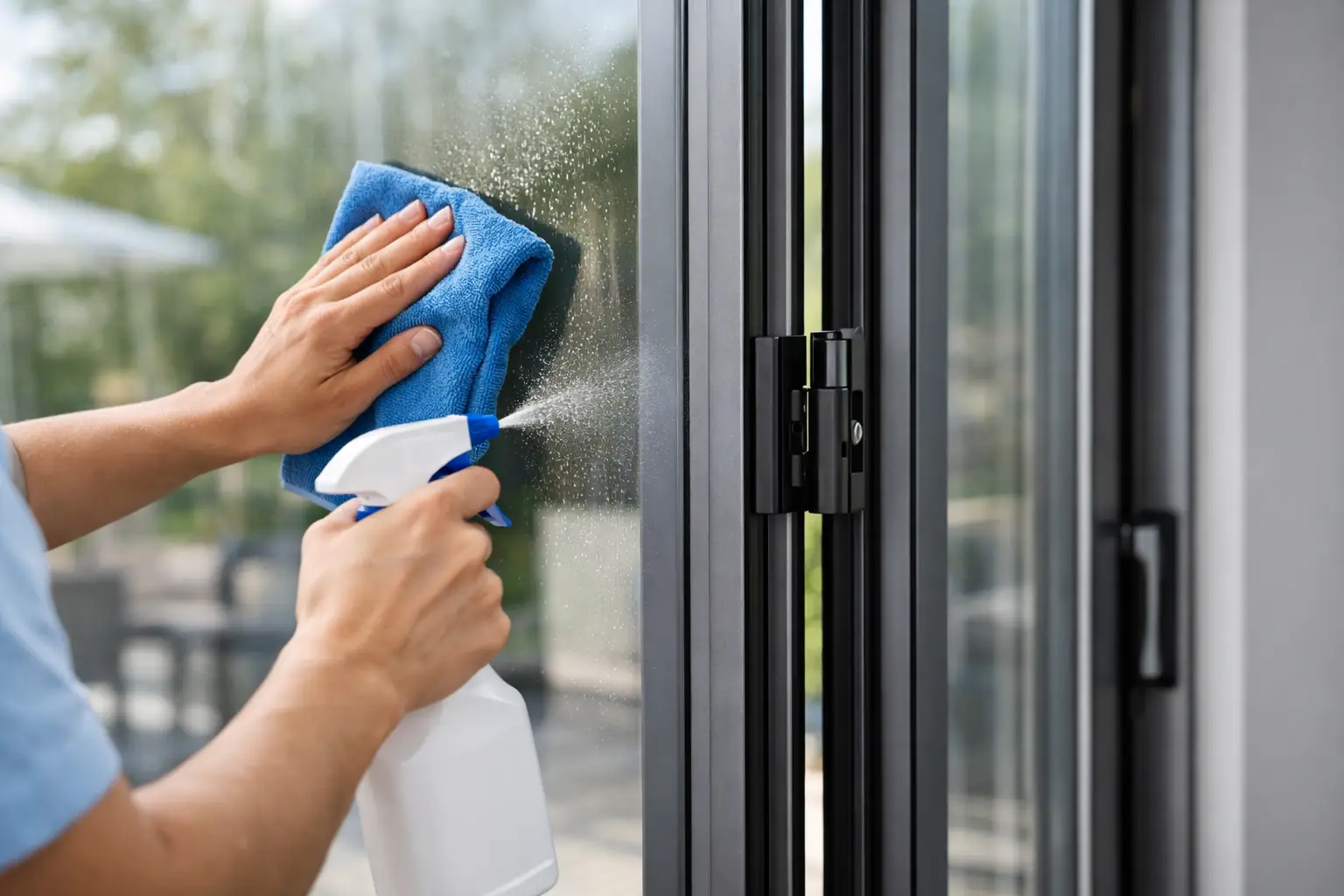
The glass should be cleaned separately. A standard glass cleaner can work well, but spray it onto the cloth rather than directly onto the door if you want to avoid overspray on gaskets and hardware. A simple solution of water and vinegar can also be effective for light marks, although it is sensible to keep any acidic mixture away from sensitive components and use it sparingly.
Cleaning the tracks without causing problems
The bottom track is where most maintenance issues start. Leaves, dust, pet hair, small stones, and general debris can collect there surprisingly quickly, especially in kitchen extensions and garden-facing openings. If left in place, that build-up can affect drainage and make the rollers work harder than they should.
Use a vacuum cleaner first to remove loose dirt from the track. After that, use a soft brush or old toothbrush to loosen anything stuck in the corners. Wipe the track with a damp cloth and a mild soap solution, then dry it thoroughly.
What you should not do is flood the track with water. Bifold door systems are designed with drainage paths, but soaking the track can simply move dirt further into places you cannot easily reach. Likewise, avoid forcing sharp tools into drainage holes. If a drainage point looks blocked, clear it gently.
This matters on all systems, from Smarts Visofold 1000 Bifold Doors to more premium-spec options such as Schuco ASFD75 Bifold doors. The engineering is designed for long-term performance, but clean tracks help the door glide as intended.
What to use on aluminium frames
Powder-coated aluminium is hard-wearing, but it is not indestructible. The safest cleaning method is still mild soap, warm water, and a soft cloth. If you have stubborn marks, such as bird droppings or greasy residue, let the damp cloth sit on the area for a minute or two before wiping. That is usually enough to soften the dirt without scrubbing aggressively.
Avoid abrasive pads, cream cleaners, bleach, solvent-based products, and anything marketed as heavy-duty degreaser unless the door manufacturer specifically approves it. These products can dull the finish, damage the coating, or affect adjacent seals and components.
This is particularly important on darker colours such as anthracite grey, black, or bespoke matt finishes, where surface damage tends to show more readily. Premium bifolds are chosen for slim sightlines and clean aesthetics, so preserving the finish matters as much as keeping the glass clear.
How often should you clean aluminium bifold doors?
For most homes, a light clean every month or two is enough to keep the doors looking good. A more thorough clean of the frames, glass, tracks, and seals every three to six months is a sensible routine.
That said, it depends on where the property is and how the doors are used. If you are near the coast, airborne salt can settle on the frames and should be cleaned off more frequently. If the doors open straight onto a patio, garden, or building site during renovation works, the tracks may need attention more often. Households with children, pets, or high daily use will also see dirt build up faster around handles and thresholds.
A simple habit works best. Light, regular maintenance is easier and safer than leaving dirt to harden and then trying to remove it with more force.
Don’t forget seals, hinges and hardware
When people ask how to clean aluminium bifold doors, they often mean the visible parts only. In practice, seals and hardware deserve just as much attention because they affect weather performance and day-to-day operation.
Rubber gaskets can be wiped gently with a damp cloth to remove dirt and residue. Avoid pulling or stretching them. If they are left coated in grime, they can lose their neat appearance and may not seat as cleanly against the glass and frame.
Handles, hinges, and running gear should be wiped with a soft cloth and dried. Be cautious with sprays and polishes around these areas. Some products leave residue that attracts more dirt, while others can interfere with moving parts.
Lubrication is a separate task from cleaning. If your manufacturer recommends it, use only the correct lubricant and only in the specified locations. More is not always better. Over-lubricating tracks, for example, can attract grit and make matters worse.
Common mistakes to avoid
The biggest mistake is assuming aluminium can handle any cleaner because it is a strong material. Strength and surface care are not the same thing. A harsh product may not dent the frame, but it can still mark or degrade the finish.
Pressure washers are another risk. They may seem like a quick solution for external grime, but they can force water into seals, around glazing, and into sensitive areas of the track and hardware. A hose on a gentle setting or a bucket and cloth is the safer option.
Be careful with metal scrapers, scouring pads, and magic-eraser style abrasives as well. They can leave fine scratches that are difficult to reverse. On premium systems with clean lines and high-spec powder coating, that damage is completely avoidable.
It is also worth avoiding generic maintenance advice copied across all door materials. Aluminium bifolds are not timber doors and they are not standard uPVC patio doors. Their finishes, gaskets, drainage details, and roller systems require a more considered approach.
When cleaning points to a bigger issue
If the doors still feel stiff after the tracks have been cleared and the surfaces cleaned, the problem may not be dirt alone. Misalignment, worn rollers, or an adjustment issue can all affect operation. Likewise, if you notice damaged seals, persistent water sitting in the track, or handles that have become loose, it is better to address the cause rather than keep cleaning around it.
This is one reason quality matters at the point of purchase. Better-designed systems with approved hardware, proper weather testing, and accurate installation tolerances tend to stay easier to maintain over time. Products such as Origin OB49 Bifold Doors or Schuco systems are engineered for frequent use, but even the best door benefits from routine care and occasional professional attention when needed.
A sensible maintenance routine for long-term performance
The most effective approach is not complicated. Keep the glass clean, wipe the frames with mild soapy water, clear the tracks before debris builds up, and treat seals and hardware gently. If you do that consistently, aluminium bifold doors will usually retain their appearance and smooth operation with very little effort.
For homeowners, that means protecting the investment and keeping the opening looking sharp year-round. For trade professionals and self-build clients, it is also about handing over a system that stays reliable with sensible aftercare. Premium doors are designed to perform in British weather, but they always look and work better when routine cleaning becomes part of the maintenance schedule.
A clean bifold door should not just sparkle on the day you wipe it down – it should slide, fold, and close exactly as a well-made system ought to.