
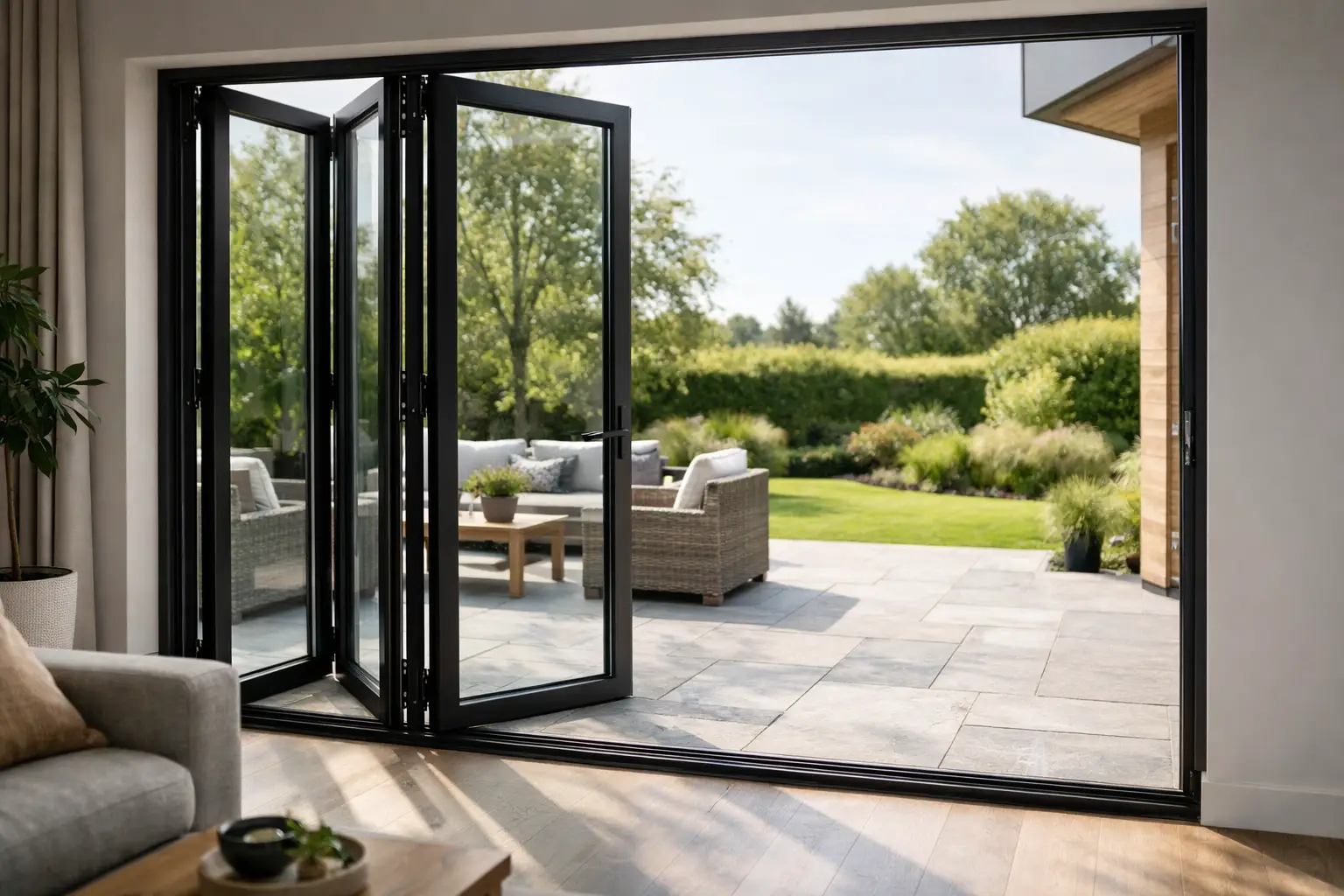
A set of bifold doors can look perfect in a showroom and still be wrong for your extension, opening or budget. That is usually where costly mistakes happen – not in the colour choice, but in the details people do not compare properly. If you are working out how to choose bifold doors, the best approach is to look beyond the headline price and focus on system quality, layout, thermal performance, security and who is actually making or installing them.
How to choose bifold doors without buying on looks alone
Most buyers start with the view. You want slim frames, wide panes and a clean opening onto the garden. That matters, but it is only one part of the decision. The right bifold door should suit the size of the aperture, the way the room is used, the exposure to weather and the level of performance you expect all year round.
A three-panel configuration for a modest kitchen extension will not be judged in the same way as a six-panel set spanning the rear of a self-build. Larger doors place more demand on rollers, profiles, glazing weight limits and threshold design. This is why branded systems such as Smarts Visofold 1000 Bifold Doors, Schuco ASFD75 Bifold doors, Cortizo Bifold Plus and Origin OB49 Bifold Doors are not interchangeable simply because they are all aluminium bifolds. They differ in profile design, sash sizes, styling, thermal values and overall feel in use.
The strongest buying decisions usually come from matching the door system to the project rather than chasing the lowest quote.
Start with the opening and configuration
The opening size shapes almost everything. It affects the number of panels, whether the doors open in or out, where the traffic door sits and how much frame you will see when the set is closed. If you use the doors every day, a convenient access leaf is essential. Without one, you may end up folding back the whole set just to step outside.
Panel count matters for sightlines and practicality. Fewer, wider panels can create a cleaner appearance, but only if the chosen system can handle larger sash widths without compromising operation. More panels may reduce individual sash weight, but they also introduce more vertical frames. There is always a trade-off between glass area, stack-back space and ease of use.
Outward-opening bifolds are often chosen to preserve internal floor space, which is useful in kitchens and dining areas. Inward-opening doors can work well where external obstructions are an issue. The right answer depends on furniture layout, patio levels and how the threshold meets the floor finish.
Frame quality matters more than many buyers realise
Aluminium bifold doors should not all be treated as equal. Good systems use well-engineered profiles with a proper thermal break, dependable hardware and approved components tested to work together. That gives you better longevity, smoother operation and more consistent weather performance.
This is especially important on larger openings. A premium system from Schuco, Cortizo, Smart Systems or Origin is designed around specific sash sizes, roller sets, locks and glazing specifications. That joined-up engineering is one of the reasons established systems perform better over time than generic alternatives assembled around price.
It is also worth looking at the visual style of the frame. Some homeowners prefer a more contemporary square-edged look, while others want the slimmest possible mullions. Origin OB36 Bifold Doors and Origin OB49 Bifold Doors, for example, appeal to different aesthetic priorities because the sightline and profile design are not the same. A small difference on paper can make a noticeable difference across a wide opening.
Thermal efficiency is not just a brochure number
When comparing quotations, U-values often appear near the top. They matter, but you should read them carefully. Ask whether the stated figure refers to the whole door set and what glazing specification has been used to achieve it. High-performance aluminium bifold doors rely on both the thermal break in the frame and energy efficient glazing.
For British conditions, this is not a box-ticking exercise. Doors across the rear of a property face wind, rain and winter temperature swings, so thermal performance has a direct effect on comfort. A well-specified aluminium system helps retain heat while still delivering large areas of glass and slim framing.
Glazing choices also affect solar gain, privacy and acoustic performance. South-facing extensions may benefit from glass that helps manage overheating, while homes near busy roads may want better sound reduction. Choosing bifold doors properly means treating the glazing unit as part of the product, not an afterthought.
Security and compliance should be clear, not vague
A premium bifold door should provide confidence as well as appearance. Multi-point locking, quality cylinders, secure hardware and tested system design all matter. If a supplier talks generally about security but cannot explain the locking arrangement or testing standard, that is a warning sign.
This is one area where buying from a specialist makes a real difference. Doors should be fabricated from approved system components and installed with care so the locks, keeps and alignment work as intended. Even a strong door system can perform poorly if it is badly glazed or poorly fitted.
For many buyers, especially on renovation and self-build projects, compliance is just as important as style. Knowing the product is based on a recognised system and manufactured to the required standard removes a lot of uncertainty.
Thresholds, weather performance and daily use
Threshold choice is often left until late, but it has a big impact on how the doors feel to live with. A low threshold can improve accessibility and create a cleaner transition to the outside. The trade-off is that threshold type must still be suitable for the exposure level and installation detail.
In a sheltered opening under a deep overhang, your options may be broader. On an exposed elevation facing prevailing weather, water management becomes more critical. The best choice depends on drainage, floor buildup, external paving height and how flush you want the finish to be.
This is also where installation quality becomes inseparable from product quality. A good system fitted badly will not give you the weather performance you paid for.
How to compare bifold door brands properly
If you are choosing between systems, compare like with like. Do not place a budget-driven quote beside a premium branded system and assume the difference is only margin. Look at sightlines, maximum panel sizes, threshold options, colour availability, lead times, hardware finishes and glazing specification.
Smarts Visofold 1000 Bifold Doors remain a solid choice for many domestic projects because they offer proven performance and flexible configuration. Schuco ASFD75 Bifold doors and ASFD90.Hi Bifold Doors are often selected where buyers want a more premium specification and stronger thermal credentials. Cortizo Bifold Plus can be attractive for contemporary projects where clean lines and performance both matter. Origin systems appeal to buyers who value British manufacturing, finish options and a refined look.
That does not mean there is one best bifold for every project. There is only the best fit for your opening, specification and budget.
Price is important, but so is what is included
The cheapest bifold quote is often cheap because something has been stripped out. That might be the glazing spec, the hardware quality, the threshold detail, the installation scope or even the survey accuracy behind the price. Transparent pricing matters because it lets you compare real value rather than assumptions.
For supply-only buyers, accuracy on dimensions, configuration and specification is crucial. Trade professionals and experienced renovators may be comfortable managing installation, but they still need confidence in manufacturing quality and technical support. For homeowners wanting a full package, employed installation teams usually provide more accountability than loosely assembled subcontractor arrangements.
It is worth asking what happens before and after the order. Is there a proper survey? Are the products being fabricated from recognised systems? Who installs them? Who resolves adjustments if required? These questions are just as important as the initial figure.
Choosing bifold doors for the way you actually live
The best bifold doors look impressive on day one and still feel right after years of use. That means thinking about how often they will be opened, whether children will use them, how you move between inside and outside, and whether your priority is a dramatic opening or a strong framed view when the doors are closed.
In some homes, a bifold is clearly the right answer. In others, a sliding door may suit the space better because it gives larger panes and less visible framing in closed position. A specialist should be willing to say that when it is true. Good advice is not about steering every buyer to the same product. It is about matching the product to the brief.
If you are serious about getting this right, ask better questions. Compare the system, not just the square metre rate. Check how the doors are built, glazed and installed. Look closely at thresholds, panel layout and everyday usability. That is usually where the right choice becomes obvious – and where a bifold door turns from a nice feature into one of the strongest parts of the whole project.