
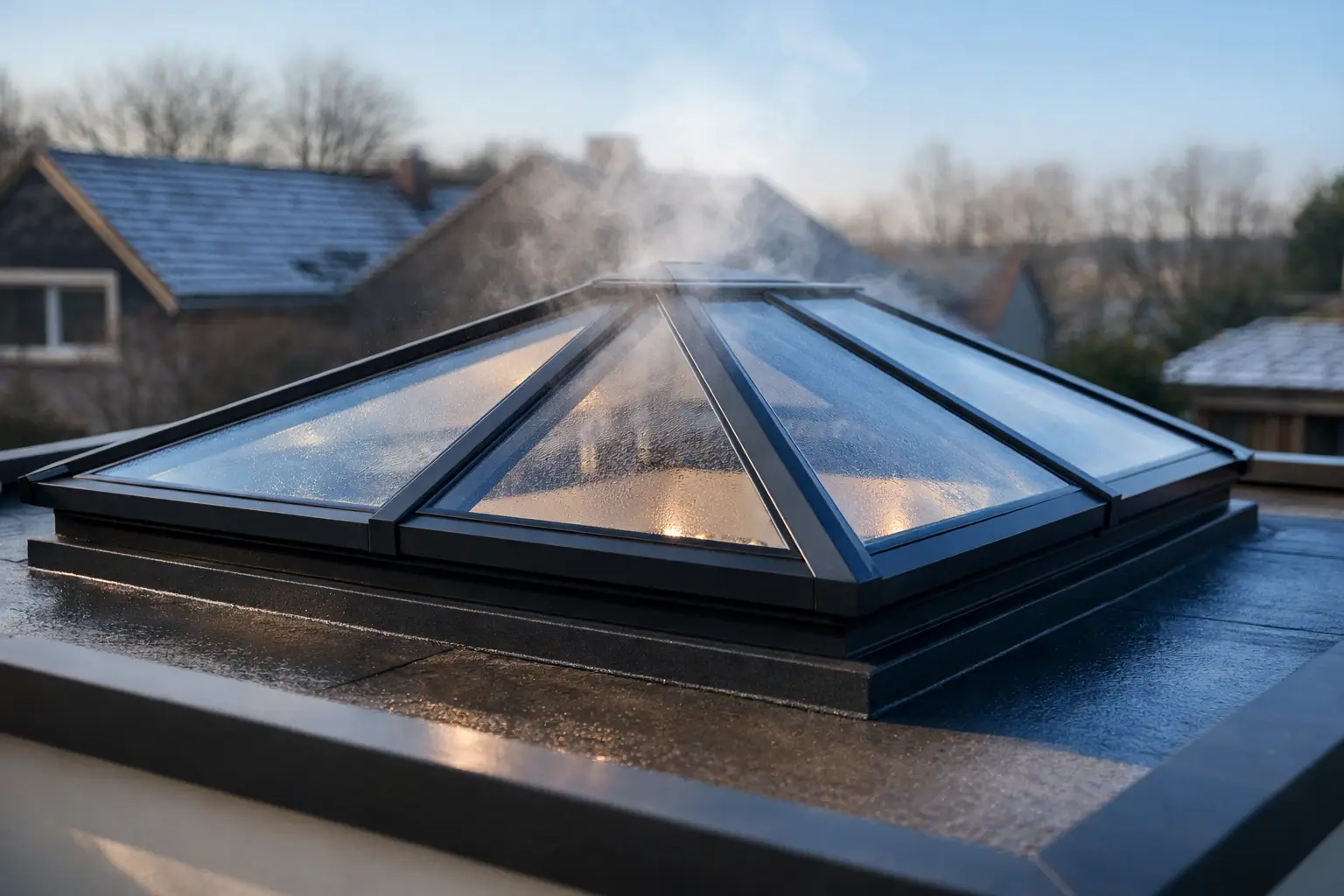
A roof lantern can transform a flat-roof extension from a dark back room into the brightest space in the house. The understandable concern is whether that extra glass will make the room expensive to heat. So, do roof lanterns lose heat? They can lose more heat than a well-insulated solid roof area, but a properly specified modern lantern should not make an extension feel cold or draughty.
The outcome comes down to the whole specification: glass, frame, size, orientation, roof build-up and installation quality. Treat a lantern as a glazed roof system rather than a decorative add-on, and it can deliver generous daylight without compromising the comfort of the room below.
Do roof lanterns lose heat compared with a solid roof?
Yes, glass is less insulating than the insulated roof surrounding it. Even high-performance glazing cannot usually match the thermal resistance of a modern warm roof construction filled with insulation. Replacing a large section of solid roof with glazing therefore increases the potential route for heat to escape in winter.
That does not mean every lantern is a poor thermal choice. Older roof lights with basic double glazing, conductive frames and weak perimeter seals performed very differently from current aluminium systems. A quality lantern combines thermally broken aluminium, insulated sections, low-emissivity glass, warm-edge spacer bars and sealed double or triple-glazed units. These details reduce heat transfer at the points where weaker products tend to struggle.
It is also worth separating the performance of the lantern from the performance of the extension as a whole. A room may feel cool because its walls, floor, roof junctions, doors or ventilation routes are underperforming. Blaming the roof lantern alone can obscure the real issue.
U-values explain the difference
A U-value measures how readily heat passes through a building element. Lower is better. When comparing lanterns, ask whether the stated value relates to the centre of the glass, the glazed unit, or the complete roof lantern. The whole-product figure is the more meaningful number because it accounts for the frame and glazing together.
Centre-pane glass values are often presented because they look especially impressive, but the frame and edge of the glass also matter. A slim, thermally broken aluminium system may provide the contemporary sightlines homeowners want while avoiding the cold bridging associated with uninsulated metal frames.
The correct target will depend on the lantern size, the extension design and the calculations required for the project. For replacement work and new extensions alike, the design should satisfy the relevant Building Regulations rather than relying on an isolated glass specification.
Why some roof lanterns feel colder than others
The biggest difference is rarely visible from the garden. It is found in the construction and the fitting. A low-cost lantern may appear similar at first glance, yet have less effective thermal breaks, thicker framing, lower-grade glass or less refined seals at the ridge and perimeter.
Glazing specification is central. Low-emissivity coatings reflect heat back into the room, while argon-filled cavities slow heat transfer between panes. Warm-edge spacers reduce the cold line around the perimeter of each glazed unit. Solar-control coatings can also be valuable, particularly on south- and west-facing extensions, because overheating is often a greater problem than winter heat loss.
Triple glazing can improve insulation, but it is not automatically the right answer for every roof lantern. It increases unit weight and cost, and the best choice depends on the system’s maximum pane sizes, the supporting roof structure and solar performance. A high-quality double-glazed solar-control unit in the right frame can be a more balanced specification than selecting triple glazing without considering orientation.
Size matters too. A modest lantern centred over a dining area has a very different effect from a full-width glazed roof. More glass means more daylight and a stronger architectural statement, but it also means a larger thermal and solar-management decision. The most effective designs use enough glazing to light the room well, rather than making the opening as large as possible by default.
Heat loss is only half the comfort question
A lantern that keeps heat in during January can still make a room uncomfortable in July if solar gain is ignored. Sunlight entering through overhead glazing is more direct than light through a vertical window, especially around the middle of the day. In a south-facing extension, this can raise internal temperatures quickly.
Solar-control glass helps limit the amount of solar energy passing into the room while retaining good natural light. The ideal balance depends on the orientation, shading from neighbouring buildings or trees, room use and the amount of other glazing. A kitchen extension with wide sliding doors may need a more considered solar-control strategy than a north-facing room with one modest lantern.
Ventilation is another practical consideration. Opening roof vents can release rising warm air, but they need to be selected and positioned carefully. For some projects, background ventilation, opening windows or doors, shading and solar-control glass will provide a better overall result. The right approach is the one that keeps the room useful throughout the year, not merely compliant on paper.
Condensation is a warning sign, not a normal feature
Internal condensation occurs when moist indoor air meets a surface cold enough for water vapour to turn into droplets. Cooking, showering, drying clothes and limited ventilation all raise indoor humidity. Because warm air rises, roof glazing is often where homeowners first notice the effect.
A well-specified lantern reduces the risk by keeping the inner pane warmer, but no glazed product can overcome persistently high humidity on its own. Regular condensation around the frame, glazing edge or plastered perimeter should prompt a check of ventilation, heating patterns, seals and the installation. It should not simply be accepted as part of owning a roof lantern.
Installation can protect or undermine thermal performance
Even an excellent lantern will not deliver its designed performance if it is fitted onto an uneven upstand, poorly sealed at the perimeter or connected badly to the roof insulation. This is where experienced installation makes a material difference.
The upstand must be correctly sized, level and insulated. The junction between the flat roof and lantern needs continuity of insulation and a reliable weatherproofing detail. Internally, careful sealing limits uncontrolled air leakage, while externally, flashing and roof finishes must direct water away from the system as intended.
There is also a structural point to consider. Roof lanterns must be supported properly, especially where the opening is wide or the roof layout is more complex. A survey should assess the roof structure, existing drainage, access for glazing and whether the proposed design affects planning or Building Regulations requirements.
For supply-and-install projects, Bifolding Door Factory uses product-specific specifications and employed installation teams to help ensure the frame, glazing and roof interface are treated as one package. For supply-only buyers, the same principle applies: the installer should receive the correct technical details before the roof is finished, not on the day the lantern arrives.
How to specify a warmer roof lantern
Start with the room, not the brochure image. Consider how the extension faces, how much existing glass it has, whether it is used all day, and whether there are likely to be heat-producing appliances such as ovens or large cooking ranges beneath it.
Then compare complete-system thermal figures, glazing build-ups and solar-control options. Ask for confirmation that the proposed glass is suitable for overhead use and that the chosen pane sizes sit within the manufacturer’s limits. Laminated inner panes are commonly used for overhead glazing, providing a safer solution should breakage occur.
Frame design should not be overlooked. Aluminium remains a strong choice for roof lanterns because it is rigid, durable and allows refined sightlines, but it must incorporate an effective thermal break. Quality powder-coated finishes also provide lasting colour stability with low maintenance, which matters on a roof position that is exposed to rain, sun and changing temperatures.
Finally, be realistic about the trade-off. If the priority is the lowest possible heat loss, an insulated solid roof will always have an advantage. If the priority is a brighter, more open extension that feels connected to the sky, a carefully designed roof lantern offers a highly worthwhile compromise.
The practical answer for UK extensions
Modern roof lanterns do lose some heat relative to the insulated roof they replace, but they do not have to create a cold extension. Choose a thermally broken aluminium system, appropriate energy-efficient glazing, sensible sizing and an installation that maintains the roof’s insulation and airtightness.
The best lantern is not necessarily the largest or the cheapest. It is the one specified around the way the room will actually be used, so the light that makes the extension special is still welcome on a frosty February morning and a bright July afternoon.