
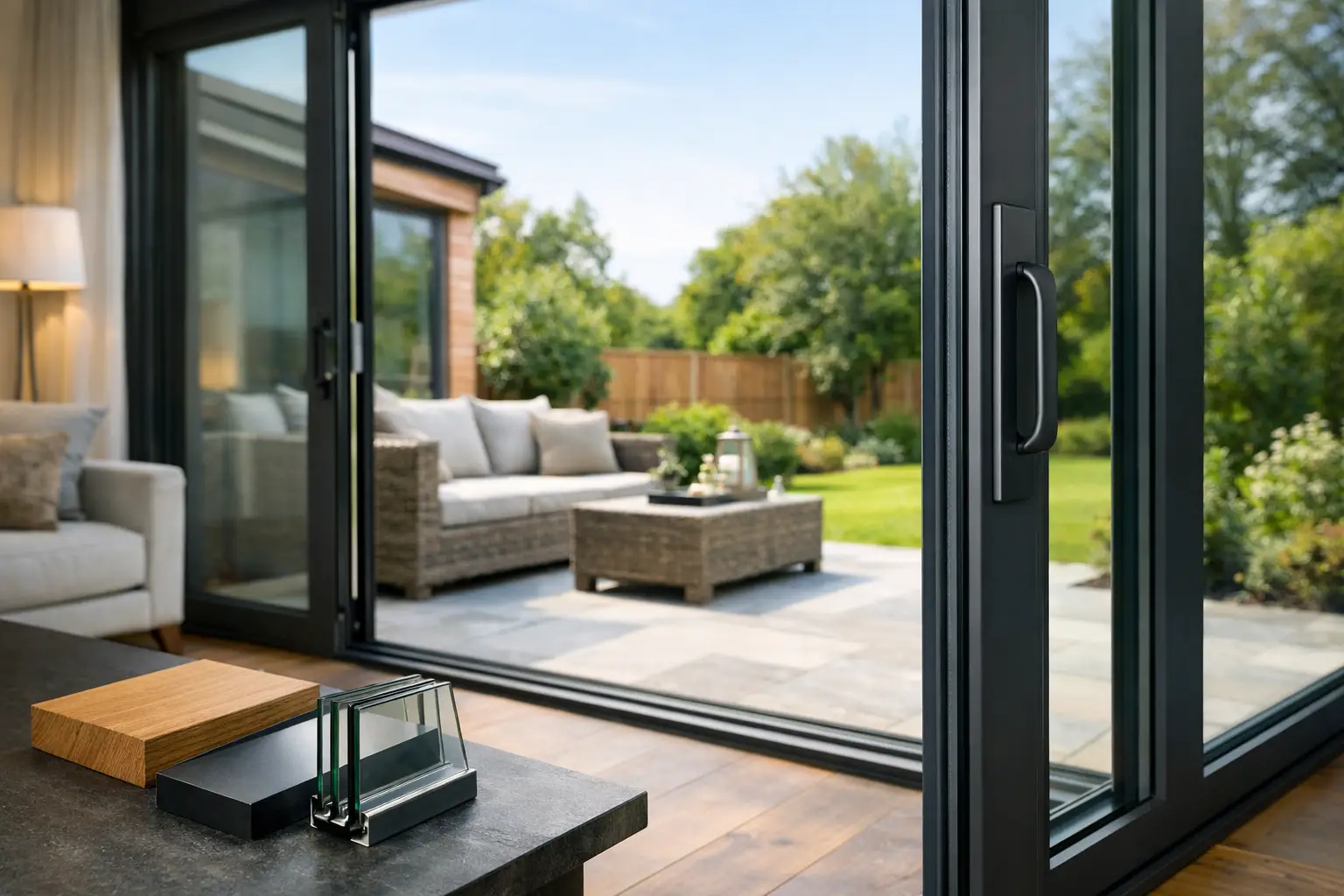
A sliding door can make or break an extension. Get it right and you have wide glass, better light and a cleaner connection to the garden. Get it wrong and you are left with bulky frames, poor weather performance and a door that looked better in the showroom than it does after a winter in the UK. That is why so many buyers start by asking about British made sliding doors.
It is a sensible place to start, but it is not the whole answer. Where a door is made matters. So does which system is being fabricated, how closely the manufacturer follows the system house specification, what glazing is used, and whether installation is handled properly. If you are comparing products for a renovation, self-build or trade project, the best decision usually comes from looking at the full package rather than the badge alone.
Why British made sliding doors appeal to UK buyers
For many homeowners and specifiers, British manufacturing brings a few obvious advantages. Lead times are often more predictable, support is easier to access, and products are built for the conditions they will actually face. That means wind, driving rain, colder months and the day-to-day use that comes with family homes rather than ideal showroom conditions.
There is also a practical compliance point. A well-made aluminium sliding door manufactured in Britain should be supplied against recognised system specifications, with the right glazing, hardware and thermal break details for UK building requirements. That does not automatically make every British product better than every imported one, but it does make due diligence easier when you are buying from a specialist that understands testing, certification and correct configuration.
For trade buyers, there is another benefit. Communication tends to be clearer when manufacturing, technical support and aftersales sit closer to the market being served. On live projects, that can make a real difference.
What matters more than the label
The phrase British made sliding doors sounds straightforward, but sliding doors are rarely simple products. Most are based on a branded aluminium system designed by a system company, then manufactured by an approved fabricator. The end result depends on both parts of that equation.
A premium system from a recognised brand gives you a known starting point. Products such as the Smarts Visoglide Plus sliding door, Schuco ASE60 Sliding Door, Schuco ASE80 Sliding Door, Cortizo COR Vision Sliding Door and Cortizo COR Vision Plus Sliding Door each have distinct strengths around sightlines, sash sizes, thermal values and overall feel. But even an excellent system can underperform if it is fabricated poorly, glazed incorrectly or installed without care.
That is why product comparison should go beyond country of manufacture. Ask how the door is built, what glazing make-up is being used, whether hardware is system-approved, and what the installer is responsible for on site. A good supplier should be comfortable answering all of that.
Sightlines, glass and the look of the door
Most buyers are drawn to sliding doors for one reason first – glass. The attraction is slim aluminium framing and larger panes that keep the view open. This is where the differences between systems become more obvious.
If the brief is minimal frame and a more architectural finish, a system such as the Cortizo COR Vision Sliding Door or Cortizo COR Vision Plus Sliding Door will usually be in the conversation. These products are designed to reduce visible aluminium and maximise glass area. That creates a sharper, more contemporary result, especially on rear extensions and open-plan kitchen spaces.
Other systems may offer a slightly chunkier look but bring advantages elsewhere, such as cost control, configuration flexibility or more familiar specification routes for certain types of project. The right choice depends on priorities. If you want the slimmest possible interlock, that narrows the field. If you need a broader balance of price, performance and panel size, the shortlist may change.
Thermal performance is not just a brochure number
A sliding door has a lot of glass, so thermal efficiency needs to be taken seriously. Aluminium remains the preferred material for many modern projects because it is strong, stable and capable of very slim sections, but it only performs properly when the profile includes an effective thermal break and the glazing specification is doing its job.
This is where brochure figures need context. A quoted U-value can depend on door size, pane arrangement and glass unit specification. Triple glazing is not always necessary, and in some cases a carefully chosen double-glazed unit gives the best balance of thermal performance, weight and overall cost. It depends on the door system and the project.
For UK homes, the key question is not just whether the number looks good on paper. It is whether the complete door set – frame, glass, seals and threshold details – will perform reliably through the year. Good British made sliding doors should feel considered in that respect, not merely assembled to hit a headline figure.
Security and weathering need proper attention
Large glazed openings have to do two things well. They must keep unwanted visitors out and they must keep British weather out. Neither should be assumed.
A quality sliding door should be built around tested locking arrangements, durable rollers and hardware designed for the panel weights involved. Lift-and-slide and inline systems can both work very well, but they differ in operation and feel. Larger panels often benefit from the engineering confidence that comes with a more premium system, particularly where smooth movement matters over years of use rather than on the first day.
Weather performance matters just as much. Threshold choice, drainage design and installation accuracy all influence how the door behaves in heavy rain and exposed conditions. A flush threshold may look excellent and improve accessibility, but it has to be chosen with the setting in mind. Ground levels, drainage strategy and exposure all matter here.
Choosing between premium systems
This is usually where buyers need straight answers. Not every project needs the most expensive door available, but cheaping out on a large aluminium slider is rarely money well saved.
The Smarts Visoglide Plus sliding door is often considered when buyers want a trusted aluminium system with broad application and sensible value. It works well across many residential projects and can be a strong option when budget and performance need to stay in balance.
Schuco ASE60 Sliding Door and Schuco ASE80 Sliding Door sit higher in the market and are often chosen by buyers who want refined engineering, strong thermal credentials and a more premium overall finish. The difference between them will depend on required sizes, performance targets and specification level.
Cortizo COR Vision Sliding Door and Cortizo COR Vision Plus Sliding Door are regularly selected for projects where sightlines and contemporary styling are a major priority. They suit modern extensions particularly well, especially where the visual goal is to reduce the frame as much as possible.
There is no single best answer across every house. A modest rear extension, a high-end self-build and a trade development plot may all point to different products for good reasons.
Supply only or supply and install?
This choice affects more than price. If you are a builder or experienced trade buyer, supply only may be the right route, especially if you already have trusted site teams and clear programme control. In that case, manufacturing accuracy, lead times and technical support become the priority.
For homeowners and many self-build clients, supply and install often provides better protection against the usual weak point in glazing projects – site execution. A well-made door still needs correct survey work, structural allowance, packers, sealing, glass handling and final adjustment. Employed installation teams generally offer more consistency than loosely managed subcontract arrangements, because responsibility stays clearer from order through to completion.
That matters with large sliding doors. Tolerances are tight, panel weights are high and minor errors can affect operation, weathering and appearance.
Questions worth asking before you buy British made sliding doors
Ask who manufactures the door and which system it is based on. Ask what glazing is included as standard and whether the quoted thermal performance relates to your actual configuration. Ask about sightlines, maximum sash sizes and threshold options. Ask who installs it, or if supply only, what support is available to your site team.
You should also ask about colour choices, hardware options and whether the visible finish will match the rest of the glazing package if you are ordering windows or bifolds alongside it. On larger projects, consistency across products matters more than people expect.
A specialist supplier should be able to compare options clearly rather than steering every enquiry to the same product. That is usually the best sign that the recommendation is based on fit, not convenience.
If you are weighing up British made sliding doors, the strongest choice is rarely the one with the loudest claim. It is the one that combines a proven system, proper fabrication, the right glazing specification and installation support that matches your project. When those pieces line up, the result tends to look better, work better and stay that way for the long term.