
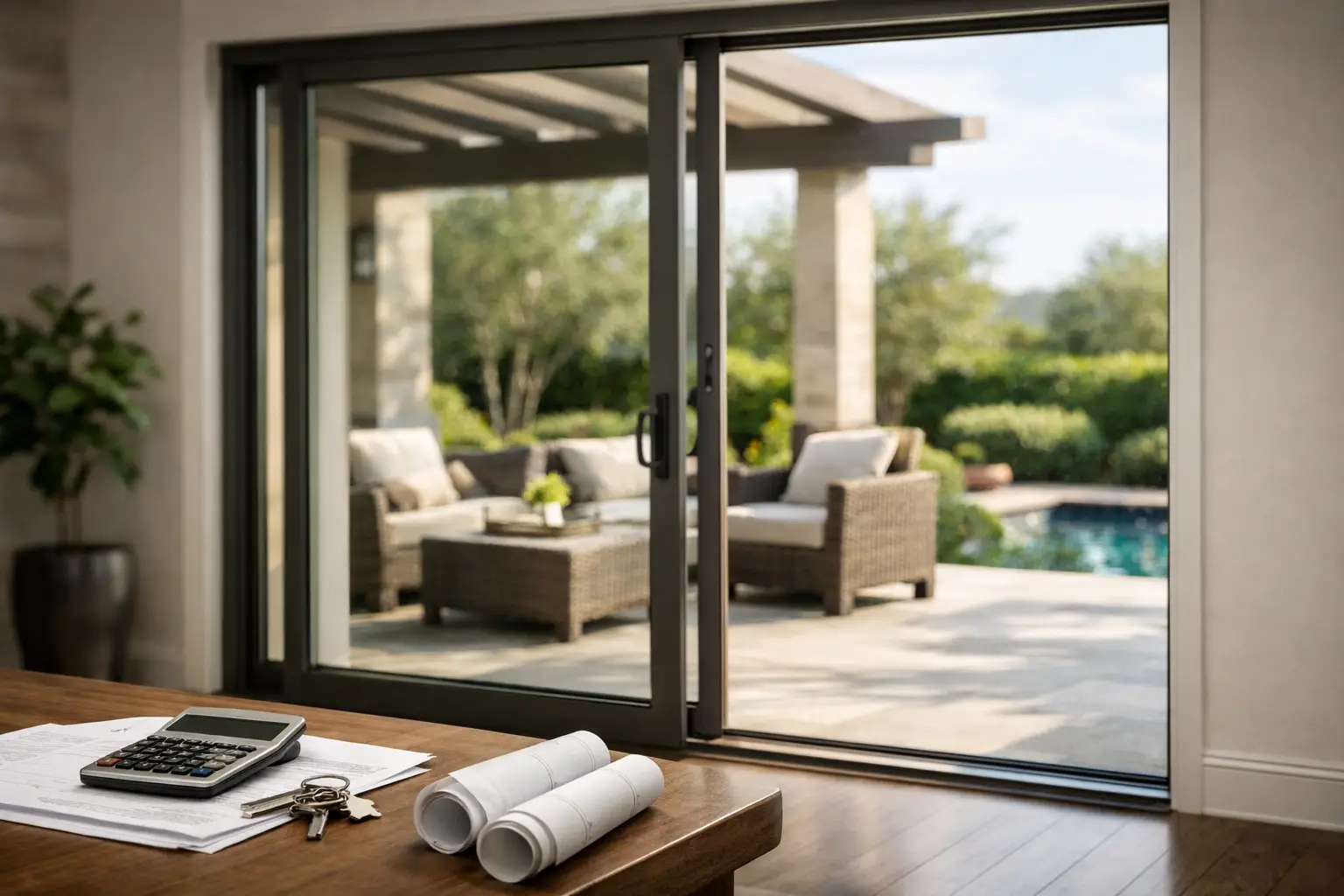
If you have had one quote for £2,500 and another for more than £8,000, you are not comparing like with like. Sliding patio doors cost can vary sharply because the visible glass is only part of the product. Frame system, pane size, glazing specification, threshold detail, colour finish and installation complexity all change the final figure.
For homeowners and trade buyers alike, the right question is not simply what sliding doors cost, but what level of door system you are pricing. A basic inline patio door for a modest opening sits in a very different category to a premium aluminium sliding system with large panes, slim sightlines and upgraded thermal performance.
Sliding patio doors cost in the UK
As a practical starting point, a standard aluminium sliding patio door for supply only often begins at around £2,000 to £3,500 for smaller, straightforward configurations. Move into larger openings, better-known premium systems and more advanced glazing options, and supply-only pricing commonly reaches £4,000 to £7,000 or more. For large-format designs with minimal frames and high-spec finishes, it can go well beyond that.
With installation included, many projects fall somewhere between £3,500 and £9,000, although complex openings, structural alterations or premium brands can push pricing higher. That range is broad, but it reflects the reality of the market. A two-panel door replacing existing patio doors is usually far more straightforward than a new extension opening requiring lifting equipment, finishing work and exact threshold coordination.
The quickest way to read those numbers is this: size matters, but specification matters just as much. Two doors with near-identical widths can still be priced very differently if one uses a heavier-duty premium profile, triple glazing, special glass or bespoke colour.
What affects sliding patio doors cost most?
The biggest cost driver is usually the door system itself. Not all aluminium sliding doors are engineered to the same standard. Premium names such as Cortizo, Schuco, Smart Systems and Origin each occupy slightly different positions in the market, with differences in profile design, maximum sash size, sightlines, thermal values, hardware options and overall finish quality.
A slimmer frame often commands a higher price because it relies on more advanced engineering. Larger panel sizes do the same. Clients usually want more glass and less visible aluminium, but larger panes are heavier, which means stronger profiles, more specialised rollers and tighter manufacturing tolerances.
Glazing specification is another major factor. Standard double glazing will keep cost lower than solar-control glass, laminated safety glass, acoustic upgrades or triple glazing. The right choice depends on the project. A south-facing extension with a lot of solar gain may benefit from performance glass, but that will add to the overall quote. Equally, homes near busy roads may justify acoustic glazing even though it increases cost.
Colour and finish also influence price. Standard powder-coated colours are usually more cost-effective than dual colours, textured finishes or special RAL selections. If you want one colour inside and another outside to suit the internal scheme and external brickwork, expect a premium.
Then there is configuration. A simple two-pane slider is generally the most economical route. As soon as you move to three or four panes, corner designs or wider stacked arrangements, price increases with the amount of material, glass and hardware involved.
Supply only vs supply and install
This is where buyers need to be clear from the outset. Supply-only prices can look attractive, but they exclude site survey responsibility, fitting, adjustment, sealing and final handover. For experienced builders and installers, that can be exactly the right route. For homeowners, it often makes more sense to compare a full installed cost.
Installation is not a flat add-on. A straightforward replacement in an existing prepared opening is very different from fitting doors into a new extension or renovation where tolerances, packers, waterproofing and threshold detailing need to be managed carefully. If access is difficult, if panes require specialist lifting equipment, or if finishing works are needed around the opening, labour cost rises quickly.
This is one reason transparent pricing matters. A proper quotation should make clear whether it covers the frame and glass only, or survey, delivery, installation and finishing details as well. Bifolding Door Factory works with both supply-only and supply-and-install customers, which is often the best way to keep comparisons realistic rather than mixing incomplete numbers.
Brand and system choice
When buyers ask why one aluminium slider costs more than another, the answer often sits in the profile system. Premium systems are not simply a branding exercise. They can offer larger sash capabilities, better weather performance, stronger thermal credentials and finer detailing.
For example, some systems are designed around slim interlock sightlines to maximise glass area. Others prioritise easier access to a lower price point. Neither is automatically right or wrong. It depends on the opening, the budget and what matters most in the finished room.
If the brief is a high-end rear extension with wide uninterrupted views, spending more on a better-engineered sliding system is usually justified. If the project is a straightforward replacement where budget is tighter, a more economical but still compliant aluminium system may be the sensible choice.
Size, sightlines and why larger glass costs more
Clients are often surprised that the jump from a standard opening to a larger one can increase cost disproportionately. That happens because glass gets heavy very quickly. Once you move into bigger panels, the frame, running gear and installation requirements all become more demanding.
There is also a design trade-off. Very slim sightlines are desirable, but they require a system built to handle heavy glazed units without looking bulky. Better aesthetics and larger panes usually mean a more premium product, not just more material.
For architects and self-builders, this is worth deciding early. If you want a near-minimal look, it is better to cost that accurately from the start rather than value-engineering down later and ending up with a door that looks heavier than expected.
The hidden extras that change the quote
Some of the most important price differences sit in details buyers do not always notice at first. Threshold choice is one. A low threshold for easier access can affect drainage design and installation method. Trickle vents, cills, internal and external handles, upgraded locking, integral blinds and specialised glass can all add cost.
Site conditions matter too. If existing doors need removing, waste disposing of, reveals making good or structural openings checking, those elements should be priced clearly. A quote that looks cheaper at first can become more expensive once those practical items are added back in.
This is especially relevant in renovation work. Older openings are rarely perfectly square, and that can influence both manufacturing allowances and time on site. A thorough survey reduces unpleasant surprises.
Are expensive sliding doors worth it?
Sometimes yes, sometimes no. If your priority is a clean contemporary aesthetic, better thermal performance, trusted hardware and long-term reliability, premium sliding doors are often worth the extra investment. They tend to feel better in daily use, look sharper when closed and cope better with larger openings.
If your opening is modest and your goal is simply to replace dated patio doors with something modern and durable, you may not need the top end of the market. The key is to avoid paying for features you will not value while not cutting back on core performance such as weather resistance, security and build quality.
Cheap sliding doors can look similar in a photo, but differences in frame refinement, roller quality, locking systems and finish become obvious over time. This is one of those purchases where the lowest initial price is not always the best value.
How to get an accurate sliding patio doors cost
The best quotes come from clear information. Door width and height, number of panels, preferred colour, opening arrangement and whether the project is supply only or fully installed should all be defined as early as possible. If you have drawings, use them. If you know the orientation of the opening and any performance concerns such as overheating or road noise, mention those too.
It also helps to compare products on a like-for-like basis. Ask what system is being quoted, what glazing is included, whether installation is covered, and whether site survey is part of the service. Without that detail, two prices can look comparable while covering very different specifications.
For many buyers, the right approach is to set a realistic range rather than chase a single number. A good aluminium sliding door is an investment in light, access and everyday use. The best value comes from matching the product to the project properly, not from choosing the cheapest quote on the page.
If you are budgeting now, treat price as part of the decision rather than the whole decision. A well-specified sliding door should look right, perform well through a British winter, and still feel solid years after the build dust has gone.