
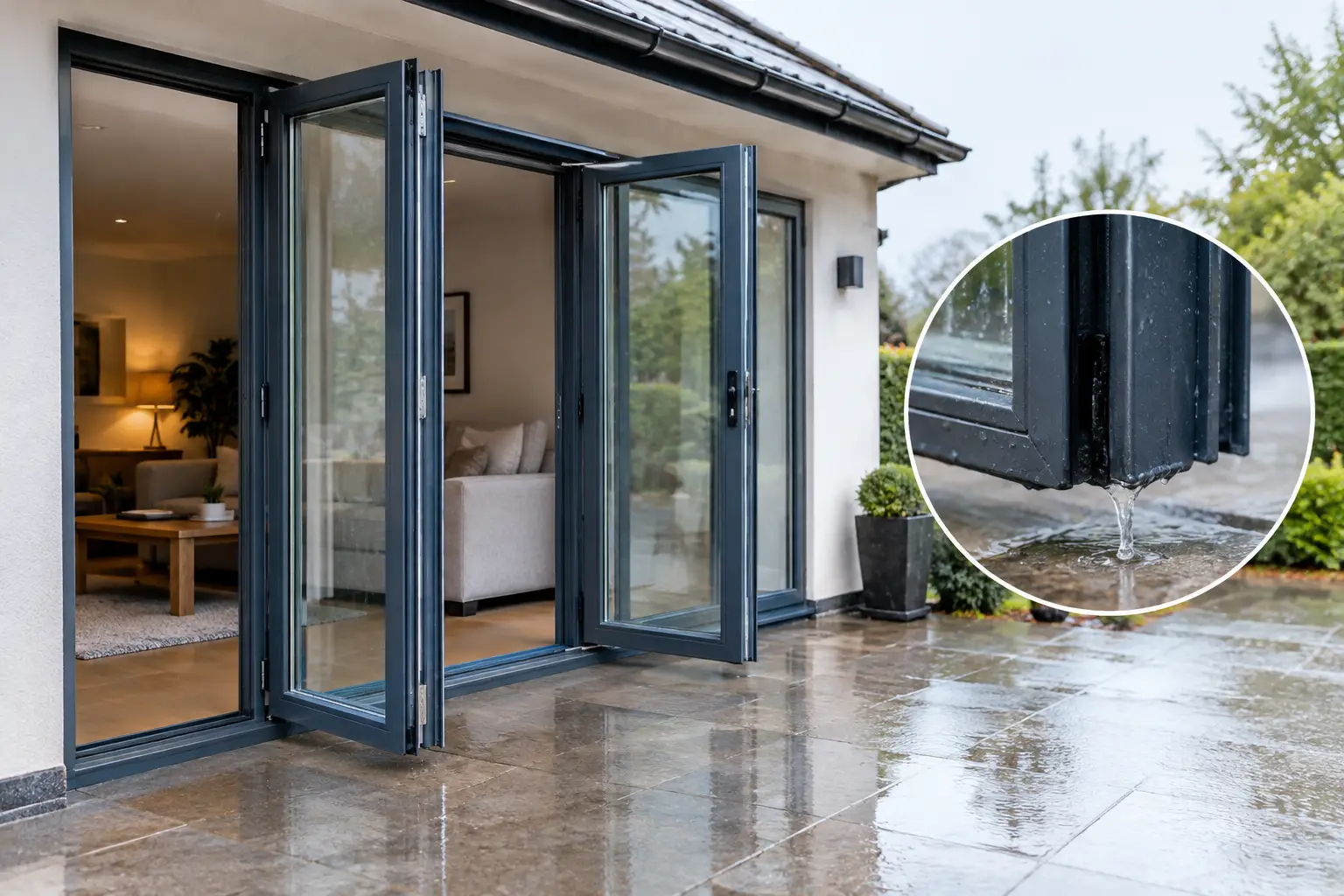
A puddle beside a new rear extension door is understandably alarming, particularly after investing in a large glazed opening. So, do bifold doors leak? Properly specified, manufactured and installed aluminium bifolds should not allow water into your home under normal British weather conditions. If water ingress occurs, it is usually a sign of an installation, drainage, threshold or maintenance issue rather than an unavoidable feature of bifold doors.
The important distinction is that exterior doors are designed to manage rainwater, not simply block every drop at the outer face. High-performance systems use weather seals, pressure equalisation and internal drainage channels to direct water safely back outside. For that process to work, the door must be level, correctly sealed into the building fabric and fitted with the right threshold detail for the project.
Why quality bifold doors resist water ingress
A well-engineered aluminium bifold is built as a complete weathering system. The frame incorporates gaskets around each sash, while the threshold and outer frame contain drainage paths known as weep holes. Rain that reaches the outer chamber is collected and discharged to the exterior, rather than travelling into the room.
Thermally broken aluminium systems also offer a stable, durable frame that is well suited to large glass panels. Products such as Smarts Visofold 1000 Bifold Doors, Schuco ASFD75 Bifold Doors and Cortizo Bifold Plus are designed around approved profiles, seals and hardware that work together. This matters because mixing unapproved parts, altering drainage channels or making poor on-site adjustments can compromise the performance originally tested for the system.
No external door should be described as invulnerable in every conceivable condition. Exceptional wind-driven rain, a blocked drain directly outside the opening or floodwater rising above the threshold can overwhelm even a high-quality installation. That is very different from a door leaking during ordinary rainfall.
The most common reasons bifold doors leak
In practice, most reported leaks can be traced to the junction between the door and the building, rather than a failure in the glass or aluminium profile. Finding the source correctly prevents expensive but ineffective repairs.
Poor sealing around the outer frame
The perimeter gap between the frame and the brickwork, render or extension structure needs a properly planned weather seal. An external sealant bead alone is not always enough. Depending on the wall construction, installers may use backing materials, appropriate membranes and internal air seals to create a reliable weather-tight junction.
Cracked render, failed sealant or movement in a new extension can open a path for water around the frame. The water may then appear at the threshold or beside a jamb, making it look as though the door itself is leaking. A close inspection during or shortly after rainfall often reveals whether the water is entering from above or at the side.
Blocked threshold drainage
Bifold door thresholds have small drainage routes that must remain clear. Leaves, moss, sand, construction debris and even an overenthusiastic application of sealant can obstruct them. Water then builds up inside the threshold chamber and, in severe cases, finds its way indoors.
This is particularly common where an external patio has been laid too high. The finished paving level should not cover drainage outlets or bridge the damp-proof course. A threshold needs a sensible fall away from the building, and a drainage channel may be needed where levels are tight.
Incorrect fitting or adjustment
Bifold doors are precision products. If the outer frame is not level and square, or the folding panels have not been adjusted correctly, compression on the weather seals can be inconsistent. You may see a small gap at one corner when the doors are closed, or notice that one panel needs forcing into place.
Alignment can also change over time if fixings are inadequate or the surrounding structure moves. New builds and extensions can experience minor settlement, which is why a professional post-installation check is valuable. The answer is not normally to apply more silicone to the moving parts. The doors should be assessed, adjusted and tested by someone familiar with the system.
Worn, damaged or contaminated seals
Gaskets are designed to withstand years of use, but they still need basic care. Paint, plaster, abrasive cleaning products and trapped grit can damage the sealing surfaces. A torn gasket, flattened brush seal or missing end cap can leave a weak point for wind-driven rain.
Keep the seals clean with a soft cloth and mild soapy water, then check that they sit evenly in their grooves. Avoid oil-based products unless they are specifically recommended for the door system. If a seal has perished or become detached, a like-for-like approved replacement is the sensible solution.
Condensation mistaken for a leak
Water on the inside face of the glass or around the lower frame is not always rainwater. Condensation forms when warm, moisture-laden indoor air meets a cold surface. It is most noticeable in kitchens, newly plastered extensions, utility rooms and homes with limited ventilation.
Modern double or triple glazing and thermally broken aluminium significantly reduce the risk, but cannot remove indoor humidity. If moisture appears on the room side of the glass on cold mornings, with no rainfall, ventilation and heating patterns are the first places to investigate. Moisture trapped between the panes, however, points to a failed sealed unit and should be inspected.
How to tell where the water is coming from
Before arranging a repair, take clear photographs and make a note of when the issue occurs. Does water appear only during heavy rain from one direction? Is it present after the doors have been washed? Or does it form overnight without rain? These details help separate a drainage issue from condensation or a perimeter seal failure.
There are four useful checks homeowners can make without dismantling anything:
- Inspect the exterior drainage slots and threshold channels for visible debris.
- Check whether paving, decking or gravel has been installed above the intended threshold level.
- Look for gaps, cracks or lifting sealant around the outer frame and adjacent render.
- Close the doors and inspect the meeting stiles and corners for uneven gaps or loose seals.
Do not block drainage holes in an attempt to stop a draught or prevent insects entering. They are there to allow water to escape. Likewise, avoid injecting sealant into the threshold channels, as this can trap water inside the frame and make the problem worse.
Preventing leaks when choosing bifold doors
The best protection starts before the order is placed. Choose an aluminium bifold system with credible weather performance, suitable glazing and a threshold that matches how the opening will be used. A fully weathered threshold offers the strongest defence against rain, while a low or flush threshold improves accessibility and indoor-outdoor flow but requires more careful attention to external drainage and finished ground levels.
For exposed properties, coastal locations or wide openings facing prevailing weather, specification becomes even more important. The direction of the opening, roof overhang, patio design and local exposure all affect how much water reaches the door. A survey should consider the whole opening detail, not just the frame size and panel configuration.
Installation quality is equally important. At Bifolding Door Factory, experienced installation teams work with the correct system components and planned threshold details, whether the project is a straightforward replacement or a large extension. For supply-only projects, builders and installers should receive accurate information on structural openings, sill arrangement, external finishes and drainage before fitting begins.
Ongoing care for weather-tight bifolds
A small amount of seasonal maintenance helps preserve the door’s performance. Clear the threshold channels regularly, especially in autumn. Clean the tracks and seals, check that handles operate smoothly, and arrange adjustment if the panels begin to catch, drag or need unusual force to lock.
If you spot water ingress, act early. Repeated moisture can damage internal finishes, insulation and timber trims even where the door itself is undamaged. A professional inspection can identify whether the remedy is a straightforward drainage clean, a seal replacement, frame adjustment or repair to the surrounding building work.
Well-specified aluminium bifolds should give you bright, open living space without a recurring battle against rain. The practical goal is simple: keep the drainage clear, protect the frame-to-wall junction and make sure the door is fitted as the tested system intended.