
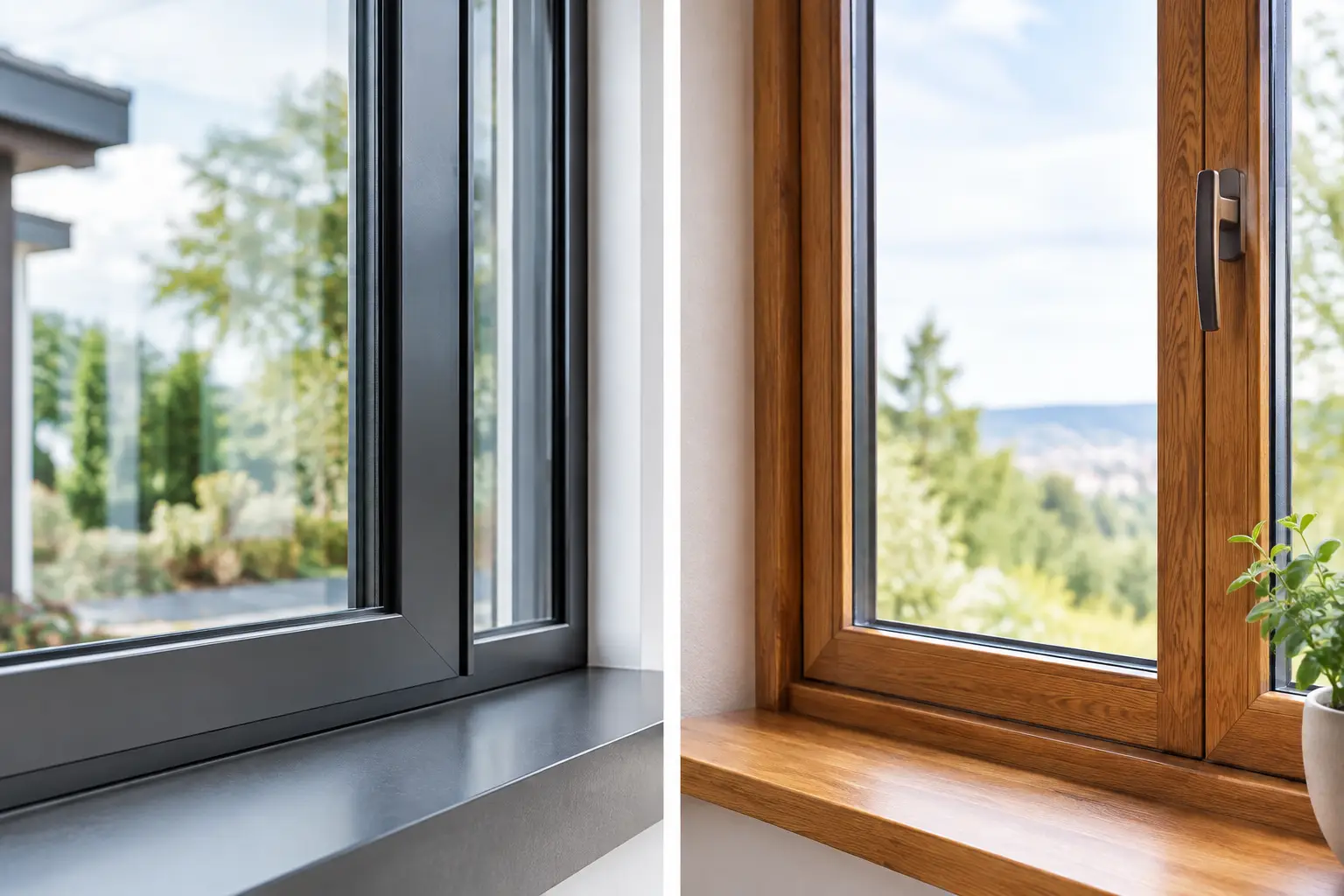
A window replacement can change the character of a house more than almost any internal finish. When weighing up aluminium windows versus timber windows, the right answer is not simply modern versus traditional. It comes down to the architecture, exposure to weather, desired sightlines, maintenance appetite and how the windows need to perform over decades.
For a contemporary extension, a carefully specified aluminium system can create larger glazed areas with slim, crisp frames. For a period property or conservation-led renovation, timber may be the material that protects the building’s original character. Both can be excellent choices, but they ask different things of the homeowner and the project team.
Aluminium windows versus timber windows: the key difference
Timber is a natural insulator with a depth and grain that no coated metal frame can fully replicate. It has long been used in British housing and remains particularly suitable for sash windows, cottages, listed buildings and properties where traditional profiles are central to the design.
Aluminium is stronger for its weight, allowing narrower profiles and larger panes. Modern aluminium windows use a polyamide thermal break, which separates the inner and outer sections of the frame to reduce heat transfer. Combined with energy-efficient double or triple glazing, this makes a well-designed aluminium window a thermally efficient option for UK renovation and new-build projects.
The practical distinction is clear: timber delivers heritage appeal and visual warmth, while aluminium offers precision, low maintenance and greater scope for expansive glazing. Neither material is automatically better in every setting.
Design, sightlines and glazing area
Frame width matters wherever a project is designed around daylight, views or a clean contemporary finish. Aluminium’s inherent strength means it can support large insulated glass units without requiring the same frame bulk as timber. That can be valuable in an extension with wide picture windows, corner glazing or doors and windows that need to sit together in a consistent elevation.
Systems such as Smarts Alitherm 400 Windows, Cortizo Casement Windows and Cortizo Hidden Sash Windows are specified for projects where refined sightlines and a modern architectural appearance matter. A hidden sash design can make the opening section appear similar to the fixed panes from outside, creating a particularly disciplined façade.
Timber can also look elegant and finely detailed, especially when it is painted and made with traditional mouldings. Yet large openings generally demand more substantial timber sections. This is often entirely appropriate on a Georgian, Victorian or rural property, where a frame that looks too thin can feel out of place.
Colour is another consideration. Aluminium offers a wide choice of durable powder-coated finishes, including popular anthracite greys, black, white and many RAL colours. Dual-colour frames can have one finish externally and another internally. Timber can be painted in almost any shade too, but exposed paintwork will need an ongoing maintenance plan.
Thermal performance is about the whole window
It is tempting to compare frame materials alone, but a window’s thermal performance is determined by the complete specification. Glass type, spacer bars, frame thermal break, seals, installation quality and the proportion of glass to frame all affect the result.
Timber naturally has good insulating properties. Aluminium needs its thermal break to perform well, which is why older non-thermally broken aluminium frames should not be compared with current systems. A modern thermally broken aluminium window, fitted with suitable low-emissivity glazing and correctly sealed around the opening, can achieve strong whole-window performance.
Triple glazing can improve thermal performance in the right circumstances, particularly on larger elevations or highly exposed sites. It also adds weight, changes the appearance of the glass unit and may not always be necessary to meet the project target. For many renovations, high-quality double glazing with warm-edge spacers is the more balanced specification.
Ask for the whole-window U-value rather than focusing only on the centre-pane figure. The latter describes the glass, not the frame, edge seals or overall installed window.
Maintenance and British weather exposure
This is where aluminium often has the clearest advantage. A quality powder-coated aluminium frame does not rot, swell or need repainting. Routine care is usually limited to washing down the frame, clearing drainage paths and checking that hinges, handles and seals remain clean and operational.
Timber needs more attention, especially on south-facing elevations and homes exposed to driving rain. Modern engineered timber, factory finishing and good detailing have greatly improved durability, but coatings still need inspecting and renewing when required. Neglected timber can absorb moisture, leading to peeling paint, movement and eventually decay.
That does not make timber unsuitable for the British climate. It means the owner must be willing to protect it. On a carefully restored period home, that commitment may be worthwhile. On a busy family extension with hard-to-reach first-floor windows, low-maintenance aluminium is often the more practical long-term choice.
Security, weathering and everyday operation
A frame is only as dependable as the system behind it. The locking points, glazing method, hardware, drainage design and fitting quality all contribute to security and weather resistance.
Aluminium systems are engineered with stable, accurately manufactured sections that retain their shape through seasonal temperature changes. They can accommodate multi-point locking and modern security hardware while maintaining slender proportions. For ground-floor openings, it is sensible to consider laminated glass and key locking where appropriate, rather than treating the frame material as the entire security decision.
Timber windows can also be highly secure when fitted with quality hardware and glazing. However, their performance over time depends more heavily on the condition of the coating and the integrity of joints. If water is allowed to penetrate, movement in the timber can affect the way the sash closes and seals.
Installation remains critical whichever option is chosen. Even a premium window will underperform if it is poorly packed, fixed, sealed or integrated with the cavity and external finish. Accurate surveys, approved components and experienced fitting teams protect the performance promised on paper.
Cost: purchase price versus ownership cost
Initial prices vary considerably with size, opening style, glazing, finish, hardware and site complexity, so a material-only comparison can be misleading. Bespoke timber windows can be expensive, particularly where they replicate historic profiles. Premium aluminium windows may also carry a higher upfront cost than standard uPVC, but their longevity, finish options and design flexibility can justify the investment.
The useful comparison is lifecycle cost. Timber may need regular decoration and occasional repair. Aluminium normally requires far less intervention, which can narrow the price difference over the lifetime of the windows. Conversely, if a property requires timber for planning, heritage or visual reasons, selecting aluminium solely to reduce maintenance may create a design compromise that costs more in the wider project.
For trade buyers and self-builders, include access, making-good, scaffold requirements, glazing specification and installation in the budget. These items can have as much effect on the final figure as the frame material itself.
When timber is the stronger choice
Timber is often the right specification when the building’s history leads the decision. Listed homes, conservation areas and properties with original box sashes may require matching materials and detailing. Planning conditions can be specific, so confirm expectations before placing an order.
It also suits homeowners who want painted joinery, visible grain or a softer internal finish. Timber can bring warmth to bedrooms, living rooms and traditional kitchens in a way that feels integral to the building. Choose a reputable manufacturer, durable engineered sections and a coating system suited to the elevation, then plan for maintenance from the outset.
When aluminium makes more sense
Aluminium is particularly effective for modern extensions, replacement windows with larger openings, new builds and projects where glazing needs to coordinate with bifold or sliding doors. Matching the window frames to systems such as a Cortizo COR Vision Sliding Door or an aluminium bifold can create a consistent colour, sightline and hardware language across the rear elevation.
It is also a compelling option where windows are exposed, difficult to access or expected to remain low-maintenance. The combination of thermally broken frames, high-performance glazing, durable finishes and narrow profiles suits homeowners who want more light without taking on a decorating cycle.
Schuco AWS80SC Casement Windows, for example, can be considered where premium engineering and a refined casement appearance are priorities. The final choice should still be based on the exact opening sizes, glazing build-up, ventilation requirements and desired external appearance.
Specify the window before choosing the material
The best decision starts with the building, not a generic material preference. Look at the planning context, wall construction, orientation, window sizes, door systems, shading, ventilation strategy and the level of maintenance the owner will realistically carry out. Then compare like-for-like quotations with the same glazing, finish, security specification and installation scope.
For homeowners who want slim profiles, dependable weather performance and minimal upkeep, aluminium is frequently the practical choice. For a home whose character depends on traditional joinery, timber can be worth the additional care. A detailed survey and a properly matched specification will do more for comfort, appearance and long-term value than choosing either material on reputation alone.